

Why Costa Rica?
Costa Rica lets you visit rainforest, volcanoes and beaches in a single day. More than 25% of its land is protected in national parks, biological reserves and wildlife refuges — one of the highest shares of any country, and the reason it became one of the world’s first ecotourism destinations.
It is also one of the most stable, safe and welcoming countries in Latin America: a long-standing democracy with no army, good roads and tourism infrastructure, and a friendly, laid-back culture. Costa Ricans sum up their outlook with the phrase “Pura Vida” — a relaxed, easy-going approach to daily life that you will hear used as a greeting, a thank-you and a state of mind.
Location and Getting Around
Costa Rica lies in Central America, between Nicaragua to the north and Panama to the south, with the Pacific Ocean on one side and the Caribbean Sea on the other. It runs on Central Standard Time (CST), the same as Chicago, with no daylight saving.
There are two international airports: Juan Santamaría (SJO) near San José in the centre, and Daniel Oduber (LIR) in Liberia, handy for the northern Pacific beaches. Distances are short, so most trips combine several regions. You can travel by private transfer, rental car, tourist shuttle or short domestic flight — we arrange the logistics so the connections line up.
History of Costa Rica
Long inhabited by indigenous peoples, the region came under Spanish rule in the 16th century and gained independence in 1821. Coffee, grown here since the early 1800s, and later bananas shaped the early economy. After a short civil war in 1948 the country abolished its army, and has had no standing military since — a decision still central to its identity.
Government and Political System
Costa Rica is a democratic republic with a four-year presidential term and a strong record of peaceful, stable government. With no military to fund, it invests instead in healthcare and education, both among the strongest in the region.
Economy and Income Sources
Three sectors drive the economy: tourism, agriculture (especially coffee, bananas and pineapple) and a growing technology and services industry. Sustainable tourism is a national priority, backed by an official certification programme for hotels and operators.
Money: Currency, Cards and Tax
The local currency is the colón (CRC), which trades at roughly 540–600 per US dollar. US dollars are widely accepted in tourist areas, though you will often get change in colones. Credit and debit cards (Visa and Mastercard especially) are accepted almost everywhere, and ATMs are common in towns. Note a 13% sales tax (IVA) on most goods and services; restaurants usually add a 10% service charge, so extra tipping is optional.
Climate and When to Visit
Costa Rica is tropical, but conditions vary by region:
- Pacific coast: a clear dry season from December to April, and a greener, wetter season the rest of the year.
- Caribbean coast: its own rhythm, with rain possible year-round and often sunny spells in September and October.
- Highlands: cooler and fresher — in places like Monteverde and San Gerardo de Dota, temperatures can drop to the 40s°F (5–10°C) at night.
The dry season (roughly December–April) is the busiest and driest. The green season (May–November) brings lush scenery, fewer crowds and lower prices, usually with sunny mornings and afternoon showers — a good-value time to travel.
Top Destinations and Natural Attractions
A few of the country’s best-known places:
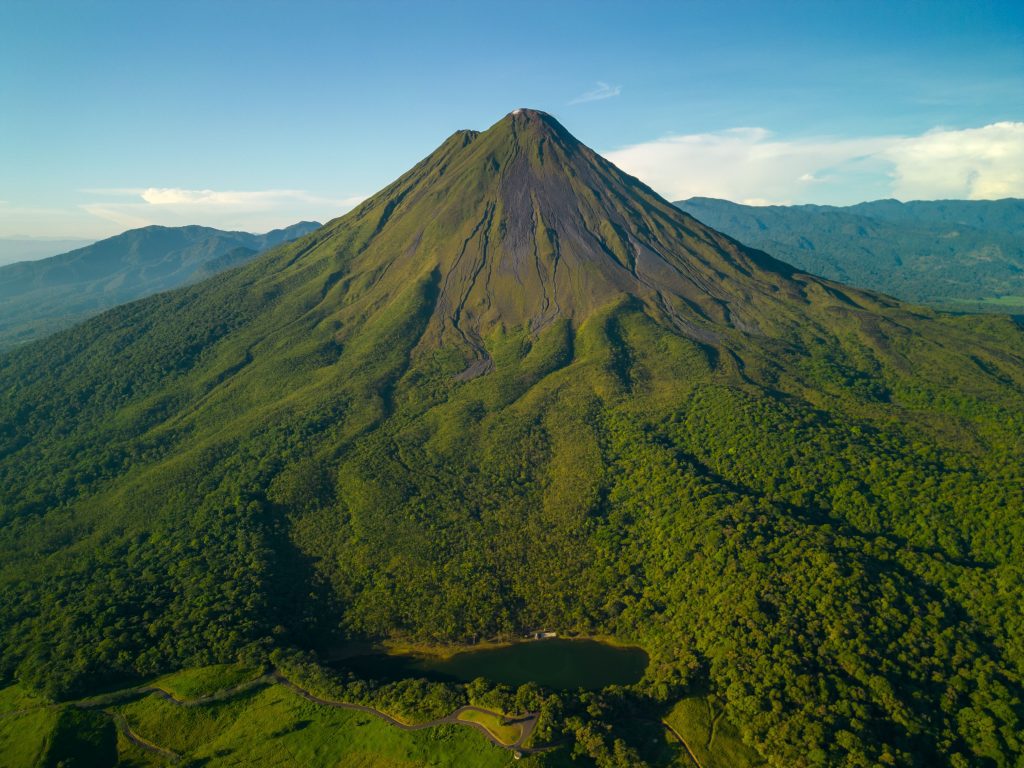
- Arenal Volcano (La Fortuna): hiking, hanging bridges, waterfalls and natural hot springs.
- Monteverde Cloud Forest: misty trails, canopy tours and rare birds, including the Resplendent Quetzal.
- Manuel Antonio National Park: beaches beside rainforest, with monkeys, sloths and birds.
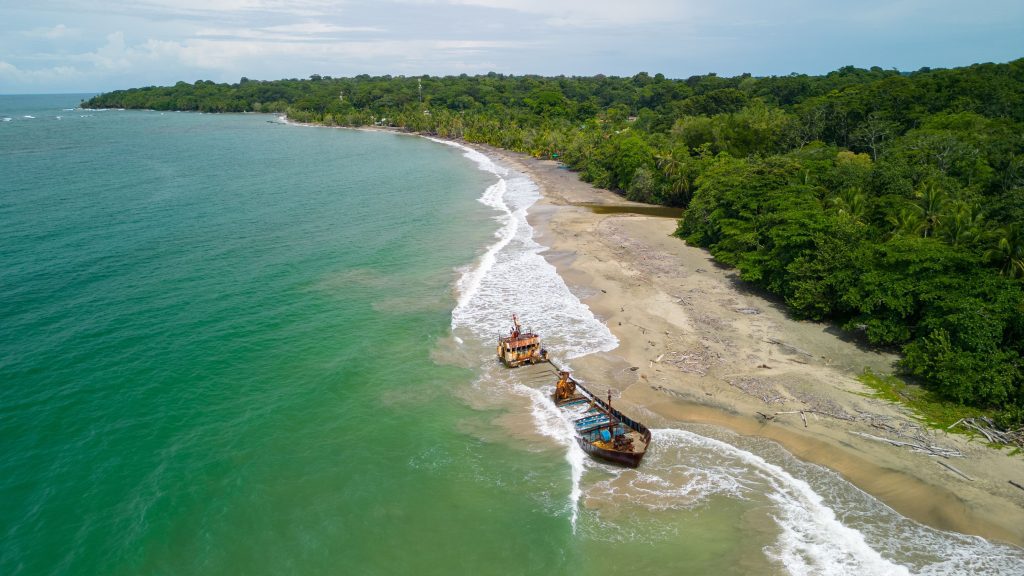
- Tortuguero National Park: jungle canals explored by boat, and nesting sea turtles in season.
- Guanacaste and Nicoya beaches: golden sand and warm water on the northern Pacific coast, popular with surfers and families.
- Osa Peninsula and Corcovado: the wildest, most biodiverse corner of the country, on the southern Pacific.
- Puerto Viejo and the Caribbean: Afro-Caribbean culture, reefs and a slower pace.
- Rincón de la Vieja and Río Celeste: volcanic landscapes, mud pots and a famously turquoise river.

Biodiversity
Costa Rica holds an outsized share of the world’s wildlife: more than 500,000 species, including over 850 species of birds, across some 30 national parks and many private reserves. You may see howler and squirrel monkeys, two- and three-toed sloths, poison dart frogs, toucans and — if you are lucky — a jaguar. Strong conservation policies help keep these habitats intact.
Costa Rican Cuisine
Local food is fresh and simple, usually built around rice, beans and seasonal ingredients. You will eat well and affordably at a soda, the typical family-run local eatery:
- Gallo pinto: rice and beans, the classic breakfast, often with eggs and tortillas.
- Casado: a filling lunch plate of rice, beans, plantain, salad and meat or fish.
- Olla de carne: a hearty beef-and-vegetable stew.
- Ceviche: fresh fish marinated in lime, served with tortilla chips.
Add tropical fruit you may never have tried, and the coffee: Costa Rica was the first Central American country to grow it, and it is still among the best places to enjoy a cup.
Practical Tips
- Language: Spanish is official; English is widely spoken in tourism.
- Electricity: 110V, US-style two-pin plugs — no adapter needed for US devices.
- Water: tap water is safe to drink in most of the country, including San José and the main tourist areas.
- Entry: many nationalities (including the US, Canada, UK and most of the EU) need no visa for tourism; you will need a passport valid for your stay and proof of onward travel.
- Health: no special vaccinations are required, except a yellow-fever certificate if you arrive from certain countries.
- Safety and emergencies: Costa Rica is one of the safer countries in the region; use normal precautions in cities. The emergency number is 911.
Did You Know? A Few Facts About Costa Rica
- No army since 1948: the military was abolished and the funds redirected to healthcare and education.
- Biodiversity powerhouse: just 0.03% of the Earth’s surface, but home to about 5% of the world’s biodiversity.
- Powered by nature: over 98% of the country’s electricity comes from renewable sources.
- Blue Zone: the Nicoya Peninsula is one of the world’s Blue Zones, where many people live into their 100s.
- Volcanic landscape: more than 200 volcanic formations, including five active volcanoes.
Plan your Costa Rica trip with us
Whatever kind of trip you have in mind — active, relaxed, or a mix of both — we can help you plan it. As a local, ICT-licensed operator we handle the route, the hotels and the transfers. Get in touch and we will put together an itinerary that fits.