

The Central Pacific Coast, Costa Rica
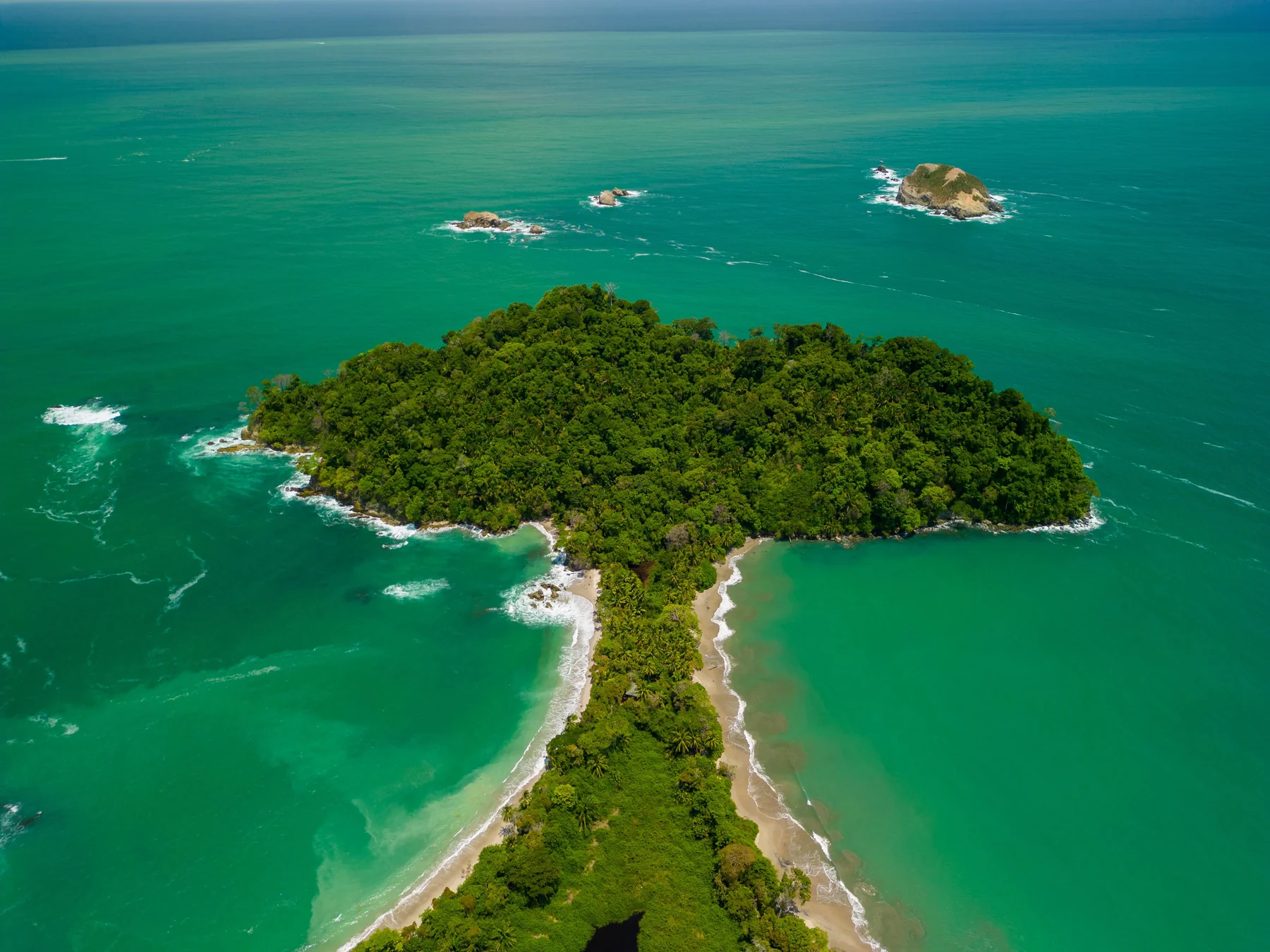
At Manuel Antonio the rainforest reaches the beach, which is why the region is so popular.
The central Pacific is the shortest hop from San José to a beach – under three hours on a good road – and the one place in Costa Rica where dense rainforest runs straight into the sea. That combination is why it is the most visited coast in the country.
It suits people who do not want to choose between wildlife and a beach. You can watch capuchins and sloths in the morning and swim in the afternoon without getting in a car. For families and for couples with only a week, it is often the sensible answer.
The trade-off is company. Manuel Antonio National Park is small and popular, and in high season the main trail is busy from mid-morning. We book the early entry and get you out before the crowd arrives; the difference is considerable.
The places

Manuel Antonio and Quepos
The national park, four beaches and a ridge road lined with hotels that look out over the ocean. Quepos, ten minutes away, is the working town and the sport-fishing harbour.

Jacó and Playa Hermosa
Ninety minutes from San José and the closest surf to the capital. Jacó is lively and not to everyone’s taste; Playa Hermosa next door is a serious surf beach with far less going on.
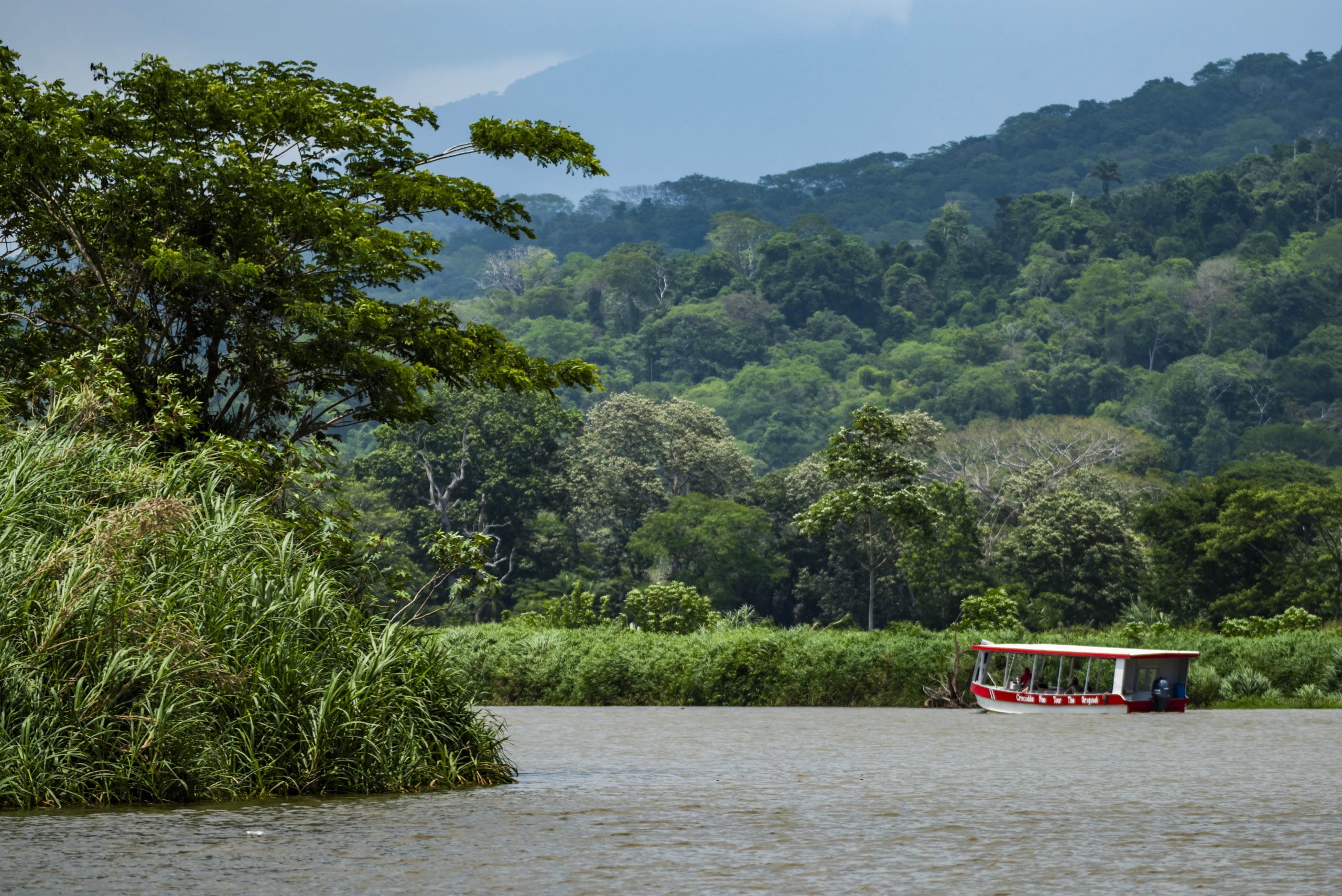
Carara and the Tárcoles river
Carara sits where the dry north meets the wet south, so the bird list is unusually long. The river below it is the easiest place in the country to see scarlet macaws and very large crocodiles.

Wildlife you will actually see
This is one of the few places where the wildlife finds you rather than the other way round. Capuchin and howler monkeys move through the trees around the hotels on the Manuel Antonio ridge; sloths are common and easy to spot once someone shows you what to look for; and scarlet macaws fly over the Tárcoles valley in pairs, loudly, every evening.
Squirrel monkeys – the small orange ones – live only on this stretch of coast and in the far south. Manuel Antonio is the easiest place in the country to see them.
Where we put people
- Si Como No Resort & Spa – on the Manuel Antonio ridge with the view you came for, and one of the first hotels in the country to take sustainability seriously.
- Makanda by the Sea – adults only, small, on the same ridge. Our usual answer for couples.
- Arenas del Mar – the only hotel here with direct beach access as well as rainforest behind it.
- Hotel Parador and Gaia Hotel & Reserve – larger, with more facilities, better for families who want a pool to come back to.
- Villa Caletas, above Jacó – on a headland with what is arguably the best sunset view on this coast.
- Los Sueños Marriott – the all-inclusive option, with a marina, for people who want that.

What people actually do here

The national park, early
Two to three hours with a guide who carries a telescope. Go at opening or not at all.

The Tárcoles river by boat
Crocodiles, macaws and roseate spoonbills, in the late afternoon when the light is good.

Sport fishing, rafting and surf
Quepos is a serious billfish port. The Savegre and Naranjo rivers are twenty minutes away for rafting, and Playa Hermosa is one of the country’s best surf breaks.
Honestly, when to come
December to April is dry and sunny, and busy. Book the good hotels early.
May to August is green, quieter and cheaper, with rain mostly in the afternoon.
September and October are the wettest months on this coast and the one time we might steer you elsewhere – though the whales are offshore and the hotels are half price.
Practical notes
Getting there. Two and a half to three hours from San José on a good road, or a twenty-five minute domestic flight to Quepos. It is the easiest coast to reach in the country.
How many nights. Three is the usual: one for the park, one for the river or the sea, one to do nothing. Add nights if you are here to fish or surf.
The ridge road between Quepos and the park is steep and narrow, and the best views are from the hotels along it. If walking down to the beach and back up matters to you, say so – some of these hotels are a shuttle ride from the sand.
Do not feed the monkeys, and keep the balcony door shut. They are practised thieves.
Trips that include the Central Pacific
Every trip we run is built from scratch, so treat these as starting points. Each one spends real nights on this coast rather than passing through on the way to somewhere else.
- Costa Rica Nature & Wildlife Tour — eight days from Arenal to Monteverde and then down to Quepos and Manuel Antonio. The classic first-trip route.
- Family Explorer: Volcano, Rainforest & Beach — nine days ending with three nights at Manuel Antonio, with the guided park hike included.
- Costa Rica Adventure: Pacuare Rafting, Arenal & Manuel Antonio — two days rafting the Pacuare first, then kayaking and snorkelling out of Manuel Antonio.
- Costa Rica Off the Beaten Path: Isla Chiquita Glamping — a short week built around Carara and the Tárcoles river, for people who care more about macaws and crocodiles than beach time.
Talk to someone who lives here
Tell us roughly when you want to travel and what the rest of your trip looks like, and we will tell you honestly how many nights the central Pacific is worth for you – and whether it belongs at the start or the end. There is no charge for a proposal.
Trips built around a theme: honeymoons · birdwatching · diving · tailor-made trips