


Tailor-Made Birdwatching Tours in Costa Rica
Costa Rica holds more than 900 recorded bird species in a country smaller than Lake Michigan, and the reason is elevation. In a single journey you can bird Caribbean lowland rainforest at sea level, foothill forest at 500 metres, cloud forest at 1,500 and oak forest above 2,200 — each with a different set of species, and often only a few hours’ drive apart. From Resplendent Quetzals in the Talamanca highlands to macaws, toucans and antbirds in the lowlands, we design private birding journeys around the species you want to see, the pace you want to travel at and your level of birding experience.
- Costa Rica specialists since 1998
- Private, tailor-made itineraries
- Specialist birding guides
- Local team based in Costa Rica
What Kind of Birdwatching Trip Are You Looking For?
Not every birder wants the same trip. Tell us which of these sounds most like you and the itinerary changes accordingly — the regions, the number of nights per site, the start times and the guiding.

Dedicated Birding
Early starts, specialist guides and a route built to cover as many habitats as your dates allow. Fewer rest days, more time in the field, and site selection driven by what you still need for your list.

Birds & Wildlife
Excellent birding alongside the rest of Costa Rica: monkeys, sloths, frogs, rainforest hikes and volcanoes. Birding stays central but the days are gentler and there is room for other things.

Bird Photography
A slower route with fewer moves. More nights per location, time at feeders and productive perches, and lodges chosen for light, hides and access rather than only for comfort.

Private Birding Groups
Bird clubs, photography groups, societies and groups of friends. We handle logistics, guiding, vehicles and lodges, and can build the programme around a group leader’s own itinerary.
Iconic Birds to Look For in Costa Rica
Nobody can promise a bird. What we can do is put you in the right habitat, in the right season, at the right time of day, with a guide who knows the current sites. These are among the species birders most often ask us about.

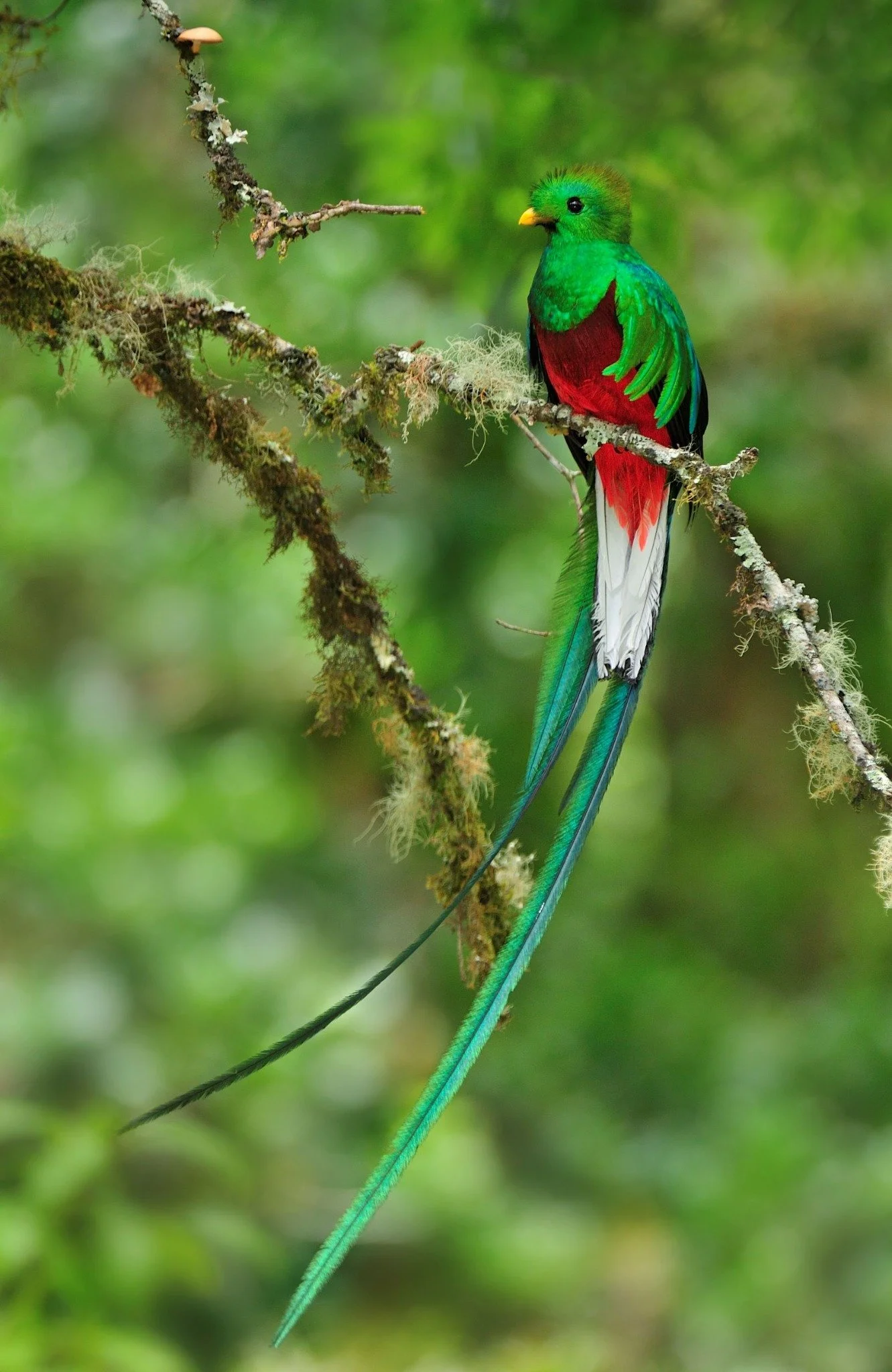
Resplendent Quetzal
Pharomachrus mocinnoWhere to look: San Gerardo de Dota and the Talamanca highlands; also MonteverdeQuetzals follow the fruiting of wild avocados and other trees in the laurel family, which is why a local guide who knows which trees are in fruit that week makes such a difference.

Scarlet Macaw
Ara macaoWhere to look: Carara and the Central Pacific; the Osa Peninsula and South PacificAround Carara they move between forest and coastal mangroves, and the late afternoon flights across the Tárcoles river are one of the more reliable spectacles in Costa Rican birding.
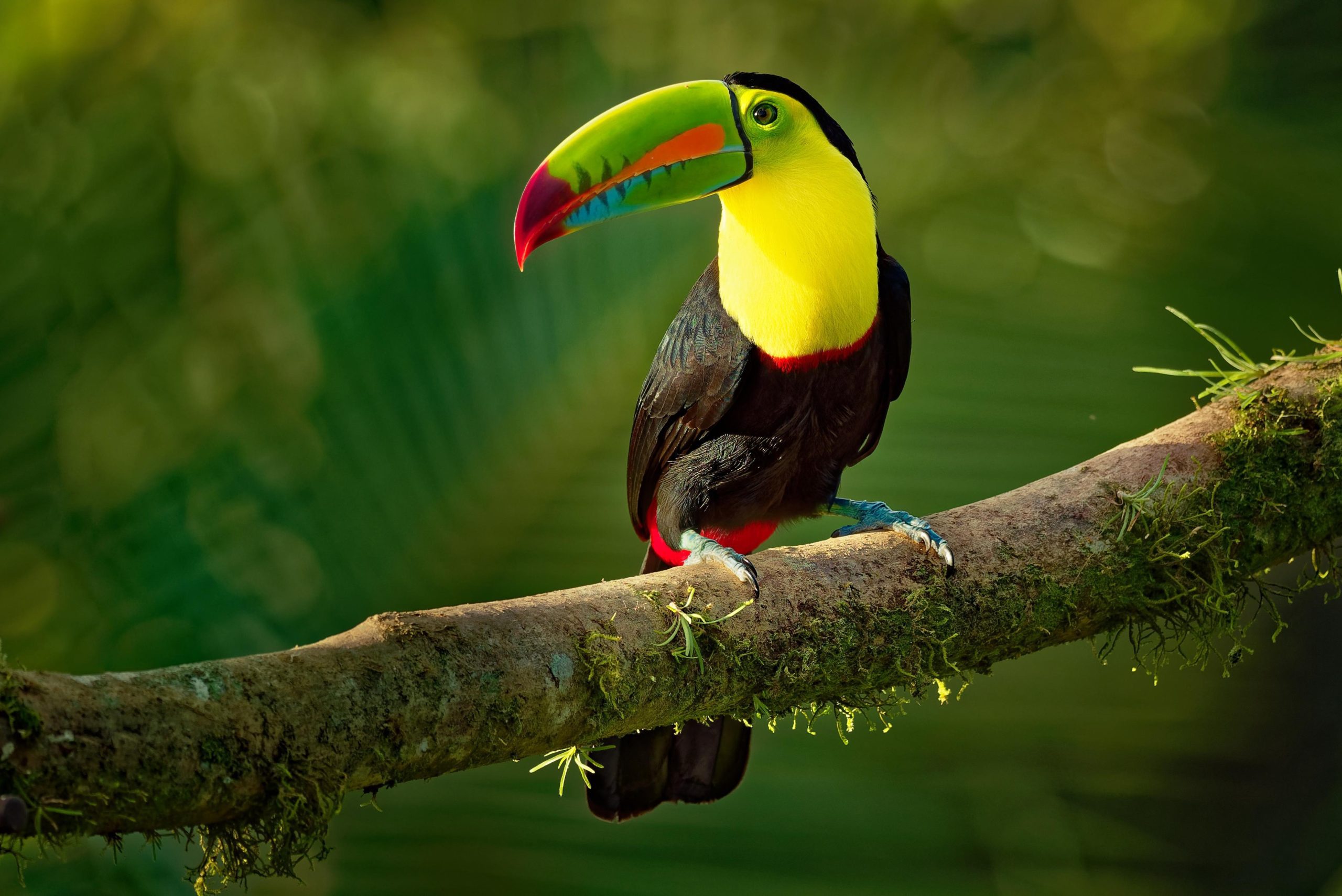
Keel-billed Toucan
Ramphastos sulfuratusWhere to look: Caribbean lowlands and foothills; Sarapiquí and the northern zoneThe multicoloured bill is far lighter than it looks — it is mostly hollow, braced inside with thin bony struts.
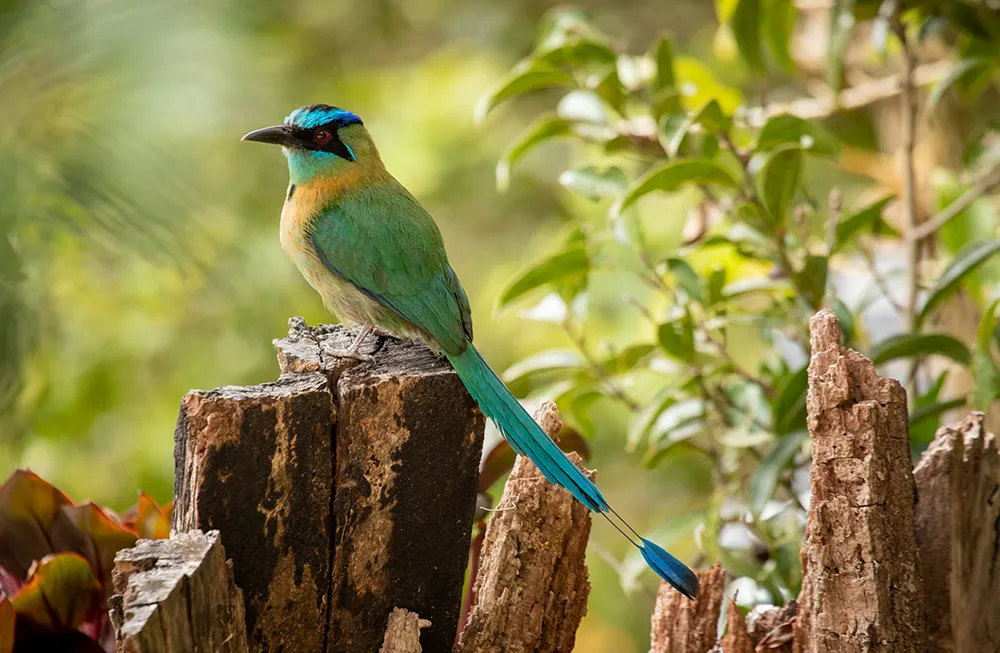
Lesson’s Motmot
Momotus lessoniiWhere to look: Central Valley, Caribbean lowlands and the northern zoneFormerly treated as part of the Blue-crowned Motmot before that group was split — worth knowing if you are working from an older field guide.
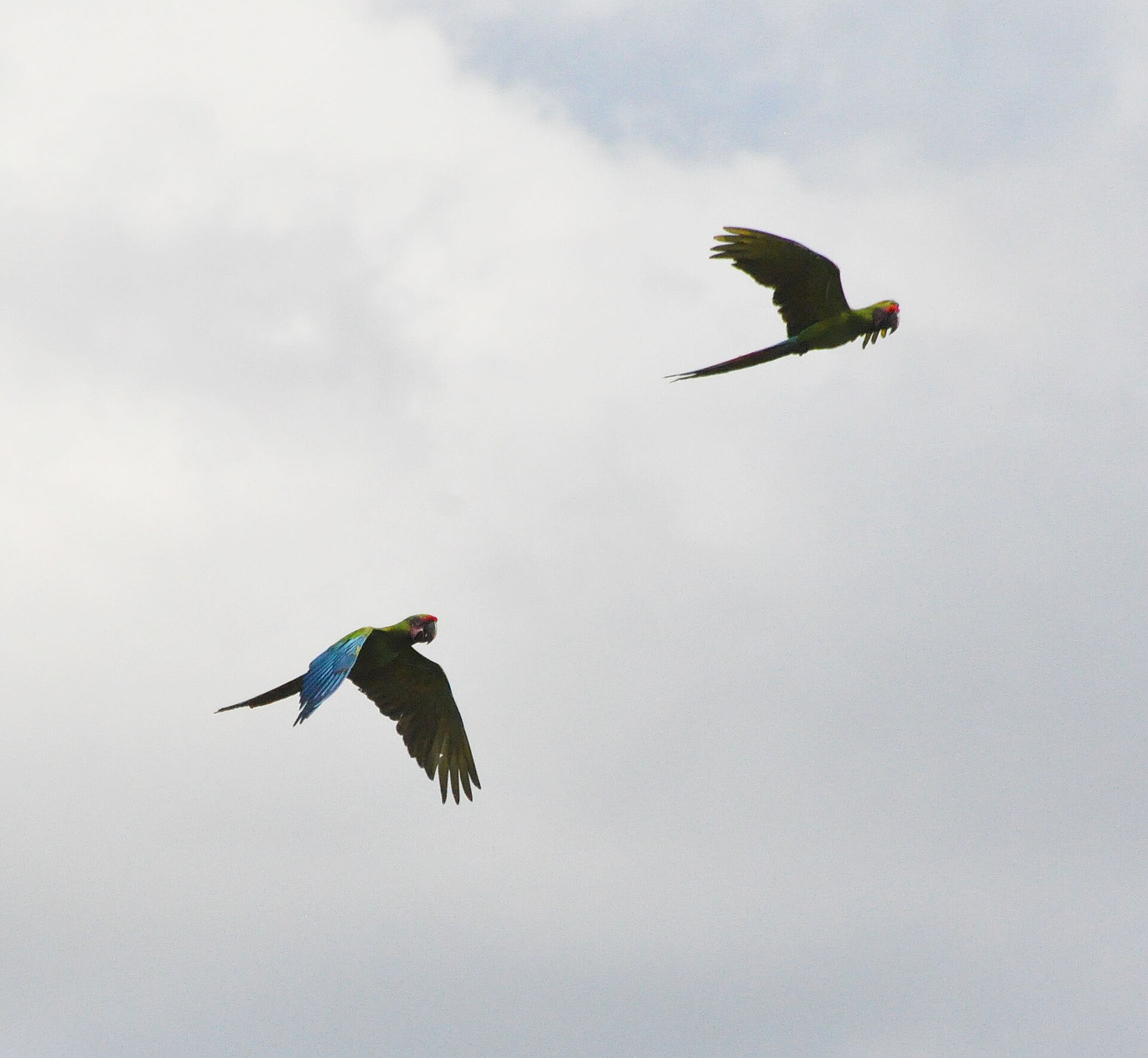 Photo: Don Faulkner (CC BY-SA 2.0), via Wikimedia Commons
Great Green Macaw
Ara ambiguusWhere to look: Boca Tapada and the northern Caribbean lowlands; SarapiquíCritically Endangered, with a world population estimated at 500 to 1,000 birds, and closely tied to the almendro tree (Dipteryx oleifera) for both food and nest sites.
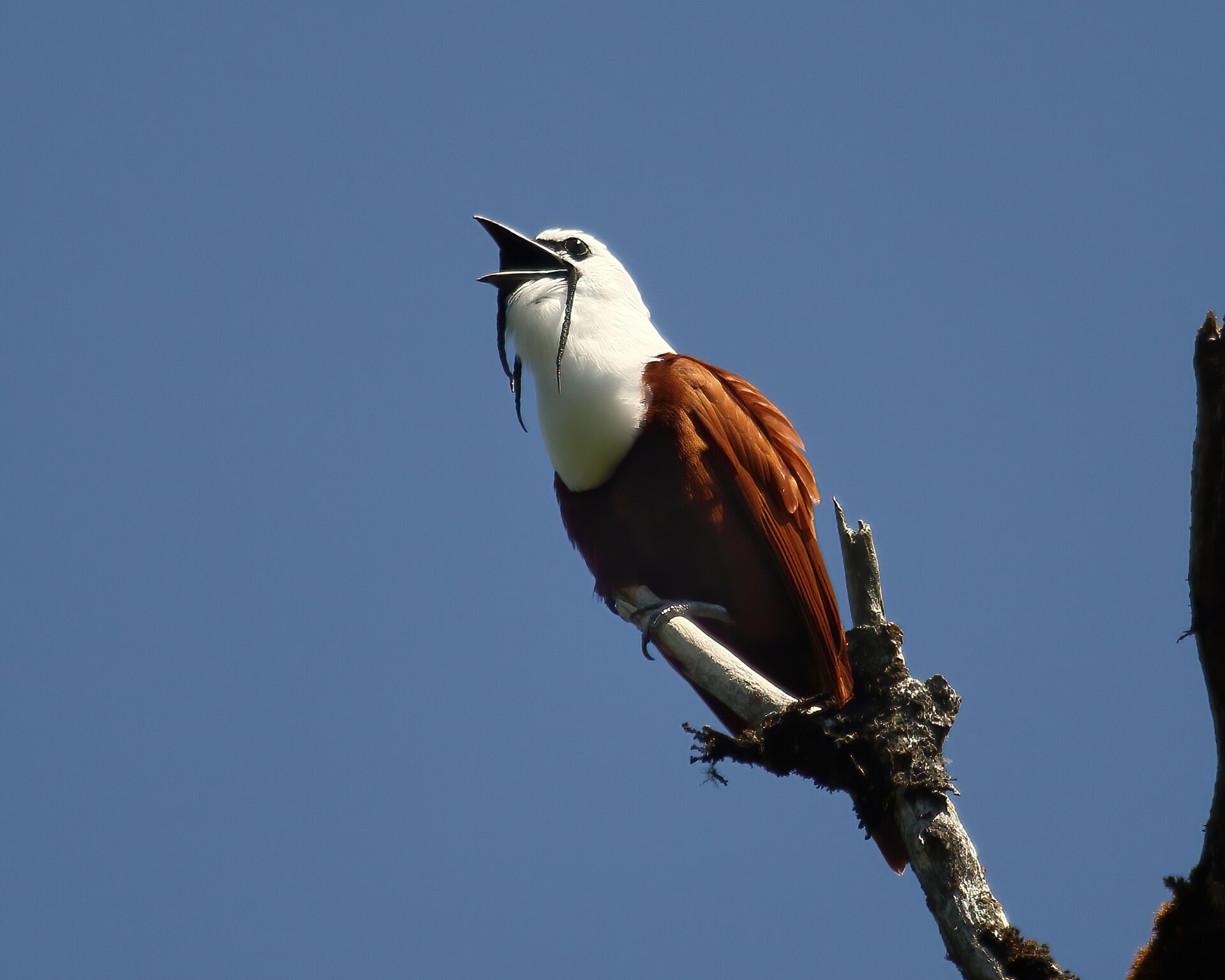 Photo: Cephas (CC BY-SA 4.0), via Wikimedia Commons
Three-wattled Bellbird
Procnias tricarunculatusWhere to look: Monteverde and the Tilarán highlands in the breeding season; foothills at other timesAn altitudinal migrant with a metallic call that carries a remarkable distance through cloud forest — timing matters more for this bird than location.
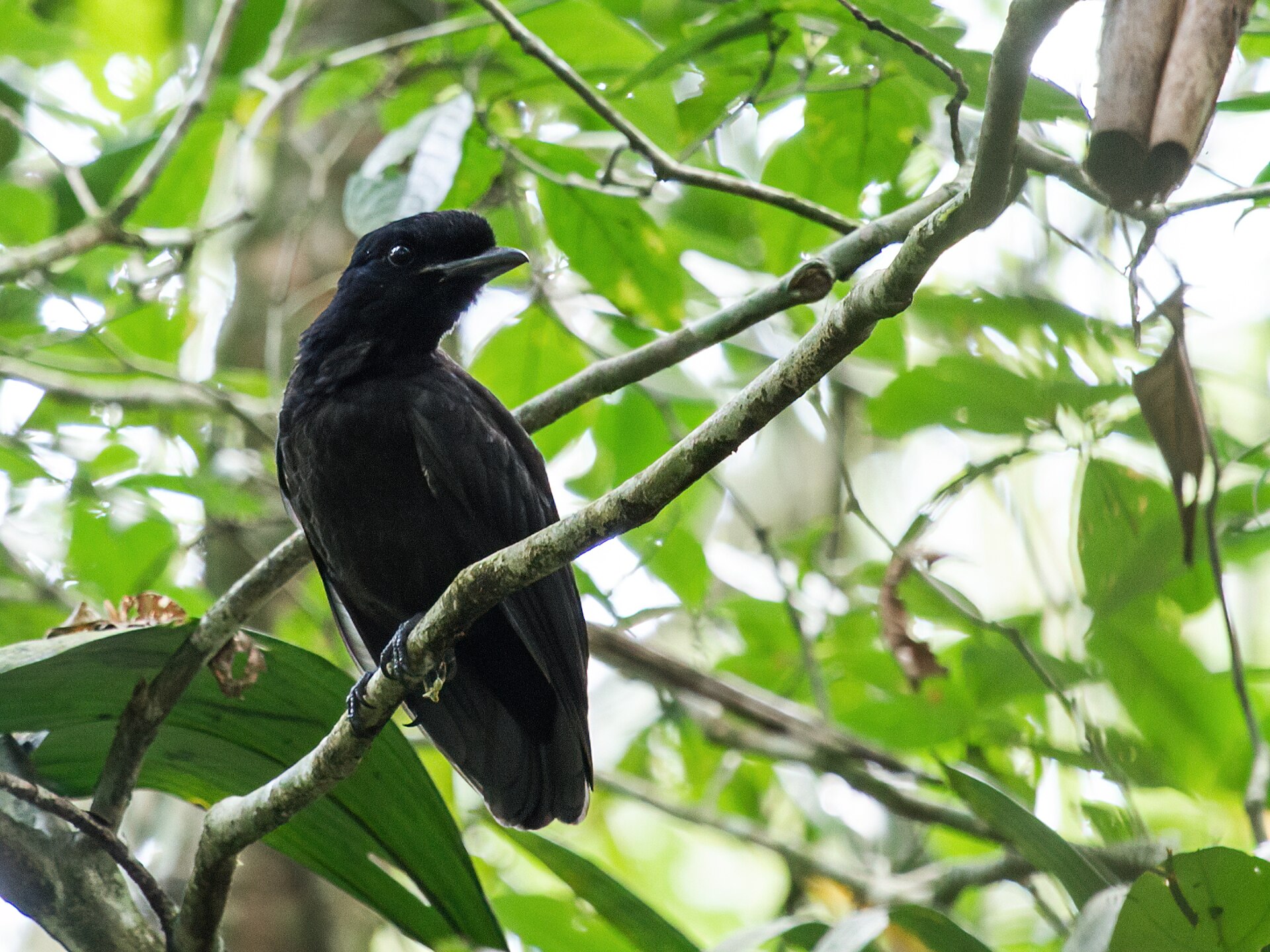 Photo: Nick Athanas (CC BY-SA 2.0), via Wikimedia Commons
Bare-necked Umbrellabird
Cephalopterus glabricollisWhere to look: Caribbean foothill forest; Braulio Carrillo, the Sarapiquí foothills and the Tilarán rangeEndangered and restricted to Nicaragua, Costa Rica and Panama, it moves up and down the Caribbean slope with the fruiting seasons, so it is very much a right-place, right-month bird.
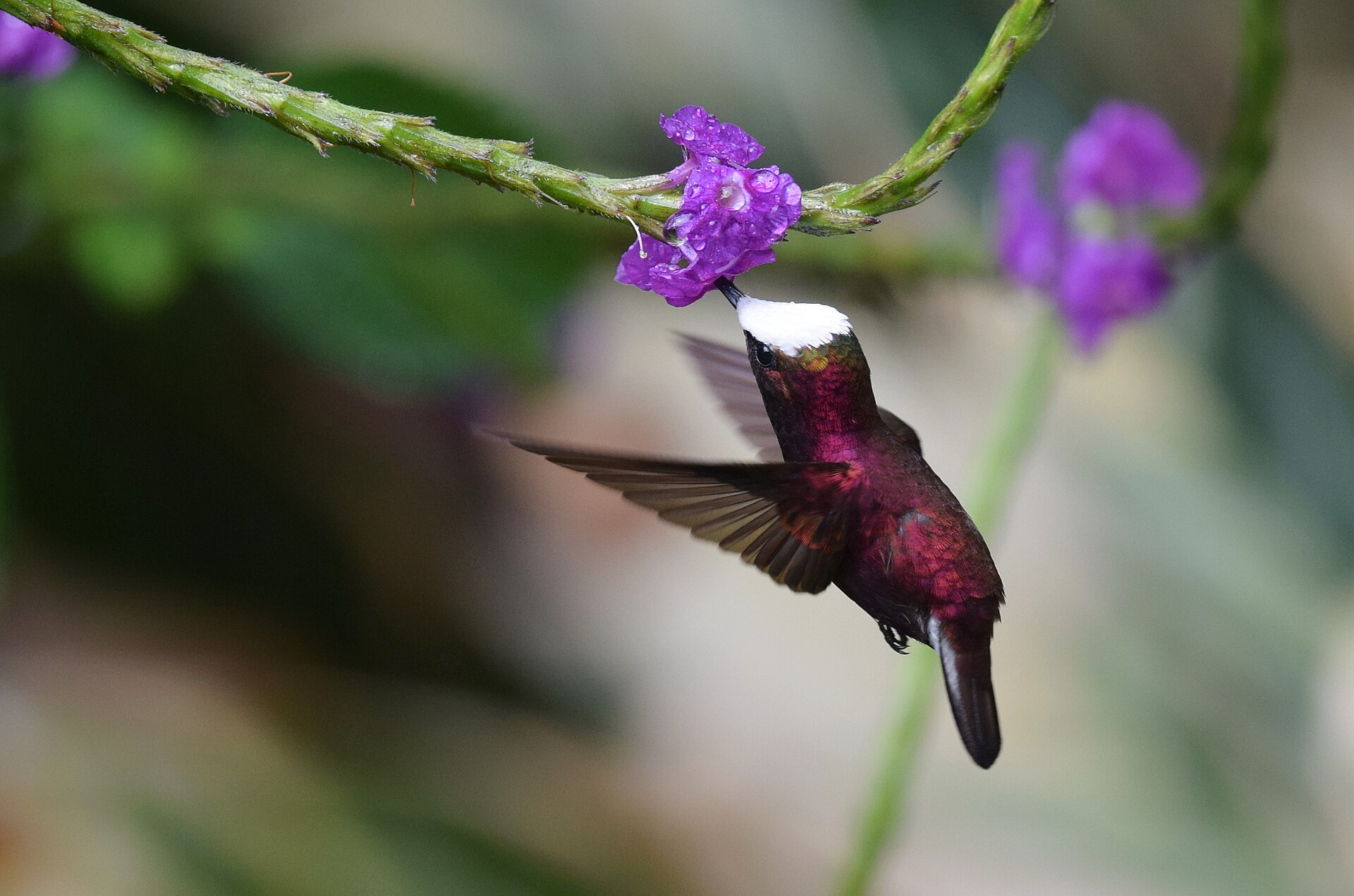 Photo: Andy Reago & Chrissy McClarren (CC BY 2.0), via Wikimedia Commons
Snowcap
Microchera albocoronataWhere to look: Caribbean foothills between roughly 300 and 800 metres; Rancho Naturalista and El Tapir are classic sitesA tiny purple hummingbird with a white cap that occupies a narrow elevation band — one reason the Turrialba foothills earn a place on a serious itinerary.
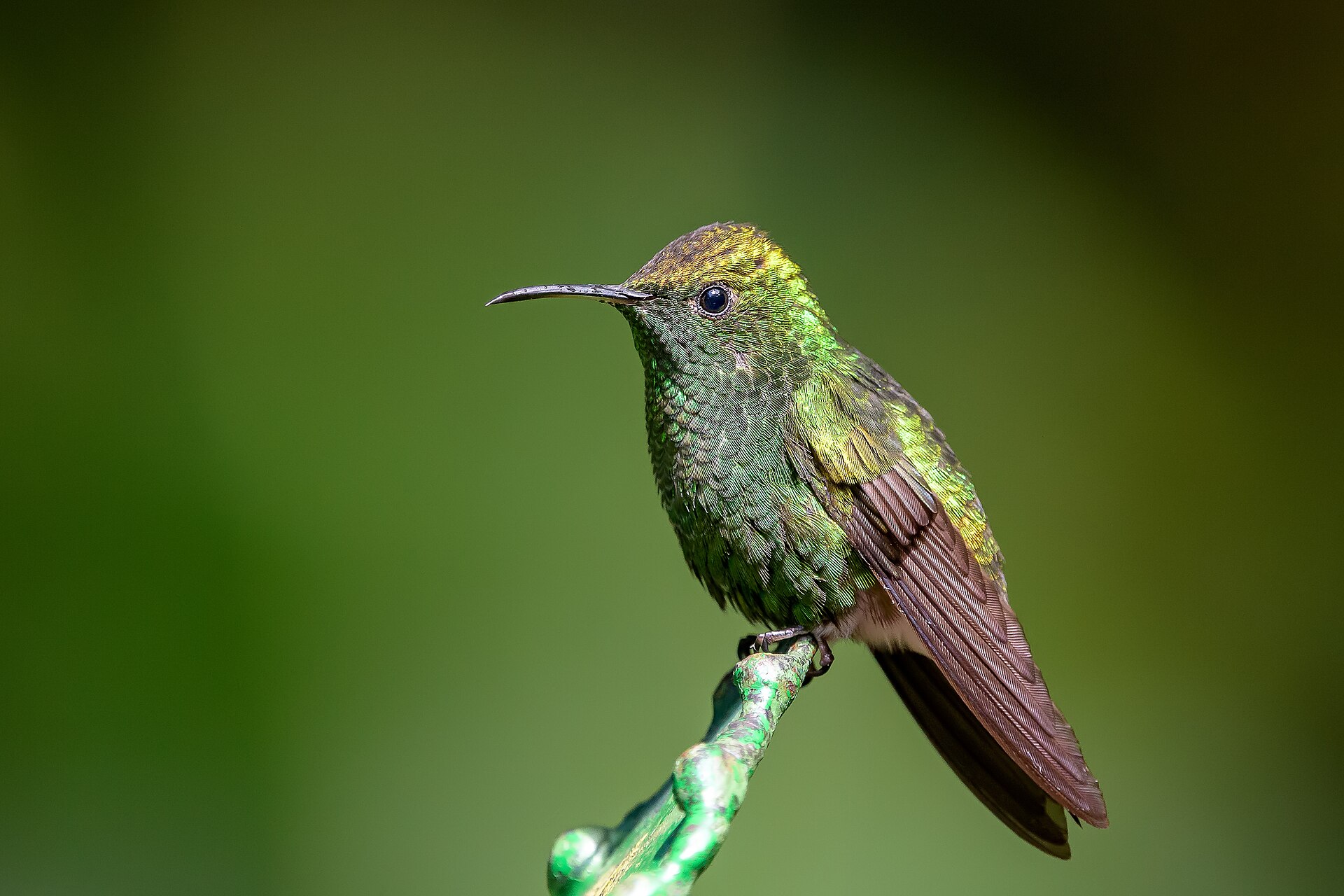 Photo: Becky Matsubara from El Sobrante, California (CC BY 2.0), via Wikimedia Commons
Coppery-headed Emerald
Microchera cupreicepsWhere to look: Middle elevations of northern and central Costa Rica, mainly the Caribbean slope; regularly seen around MonteverdeOne of the country’s small number of true endemics: it occurs nowhere else in the world.
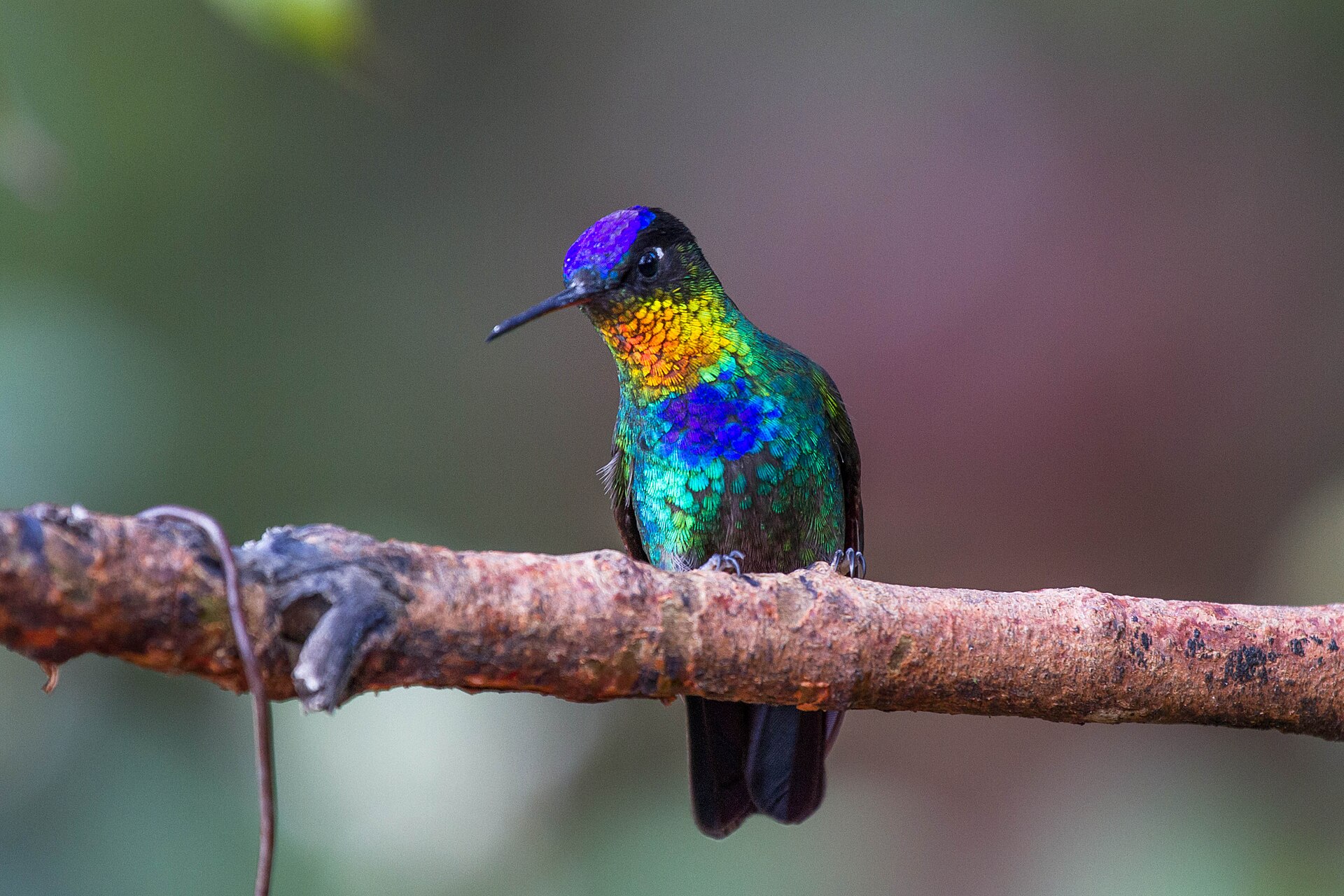 Photo: Bruno Conjeaud (CC BY-SA 3.0), via Wikimedia Commons
Fiery-throated Hummingbird
Panterpe insignisWhere to look: High Talamanca; Cerro de la Muerte, San Gerardo de Dota, Poás and IrazúRestricted to the highlands of Costa Rica and western Panama, and it needs direct light before the throat shows anything at all — a detail worth planning the morning around.
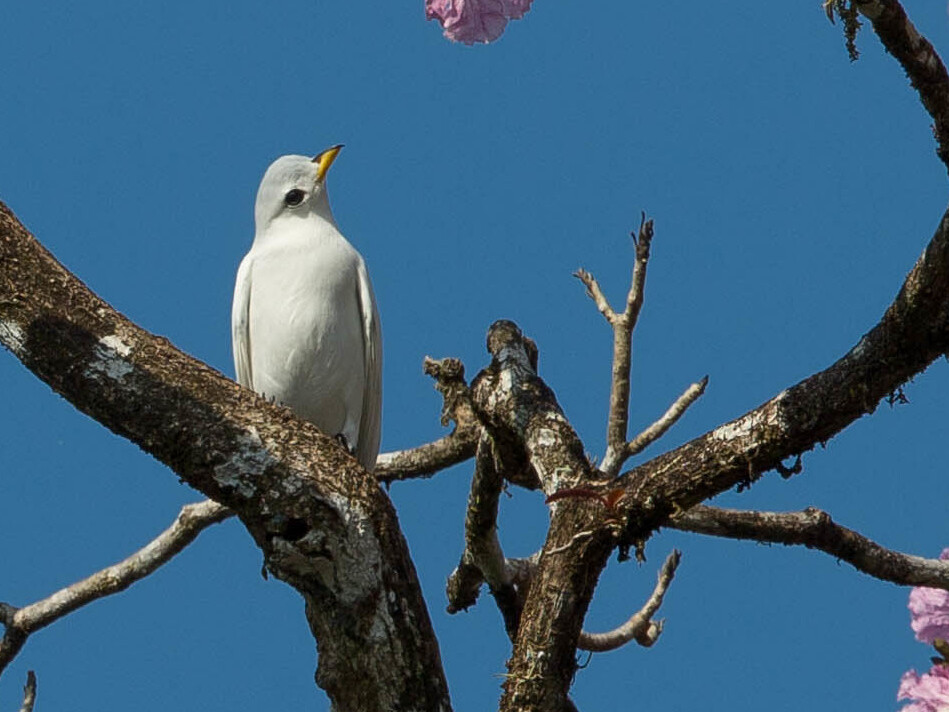 Photo: Bruno Conjeaud (CC BY-SA 2.0), via Wikimedia Commons
Yellow-billed Cotinga
Carpodectes antoniaeWhere to look: South Pacific mangroves and adjacent lowland forest; the Térraba-Sierpe wetlands and the Osa regionA regional endemic of southern Costa Rica and northern Panama, dependent on mangrove habitat and genuinely scarce, so it is a target rather than an expectation.
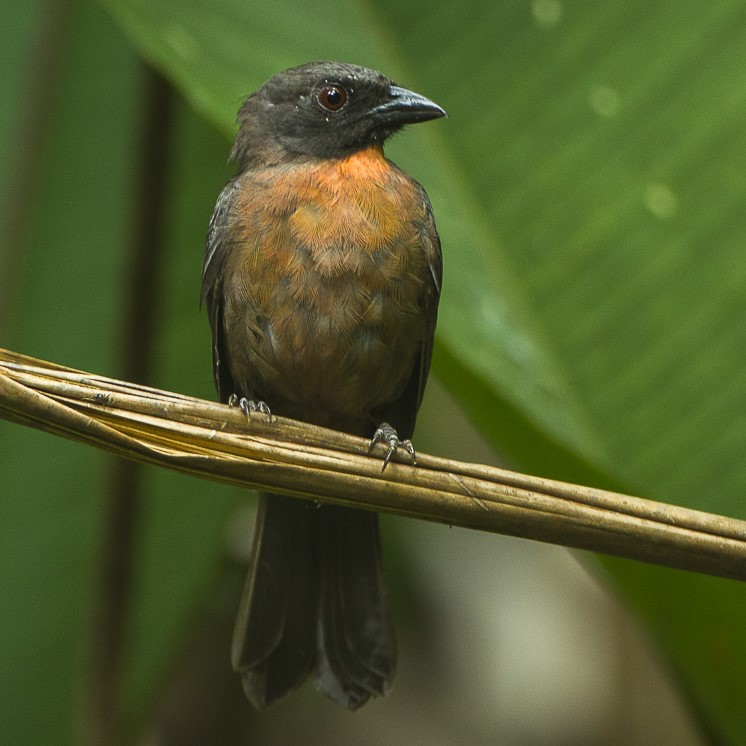 Photo: Francesco Veronesi from Italy (CC BY-SA 2.0), via Wikimedia Commons
Black-cheeked Ant-Tanager
Habia atrimaxillarisWhere to look: Effectively restricted to the Osa region and around the Golfo DulceFound nowhere else on earth, which is why birders working on a Costa Rica list almost always build in nights on the Osa.
Working from a longer list? Send it to us and we will tell you honestly which species are realistic in your dates and which would need a different route or a different season.
Already Have a Target List?
Send us your target species, your trip list, an eBird life list, the habitats you want to prioritise, or simply the ten birds you would most like to see. We will come back with a route that puts those species in reach: which regions to combine, how many nights each one needs, where a specialist regional guide is worth the money, and where your list is realistic in your travel window and where it is not.
If a species you want needs a season you are not travelling in, we will say so. That is more useful to you than a brochure.
Best Birdwatching Regions in Costa Rica
A good Costa Rican birding itinerary is not a list of famous names. It is a sequence of elevations and slopes chosen so that each stop adds species the previous one could not. These are the regions we build from.
San Gerardo de Dota & the Talamanca Highlands
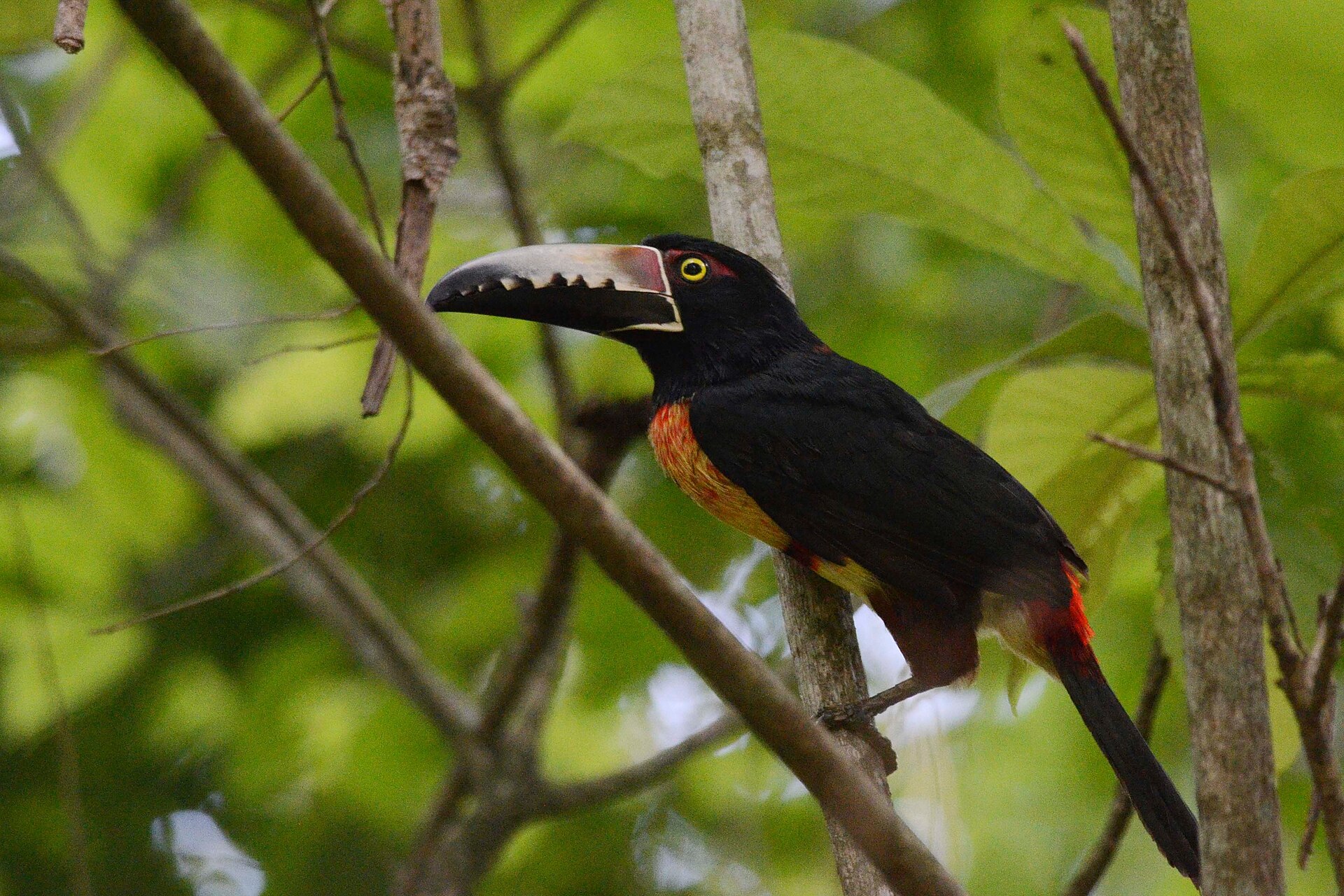 Photo: Amado Demesa from DF, México (CC BY-SA 2.0), via Wikimedia Commons
Sarapiquí & the Caribbean Lowlands
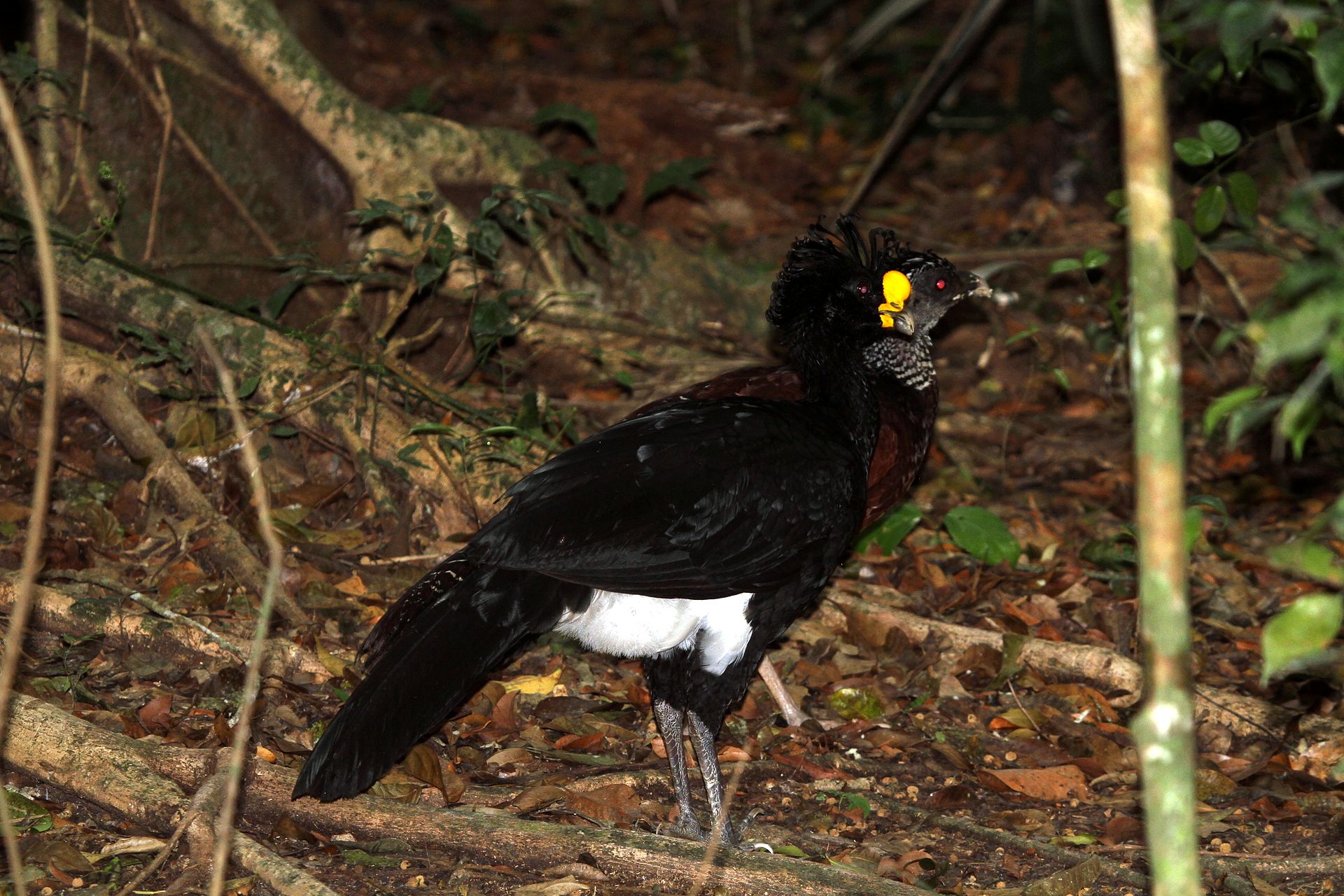 Photo: Greg Schechter from San Francisco, USA (CC BY 2.0), via Wikimedia Commons
Boca Tapada & the Northern Lowlands
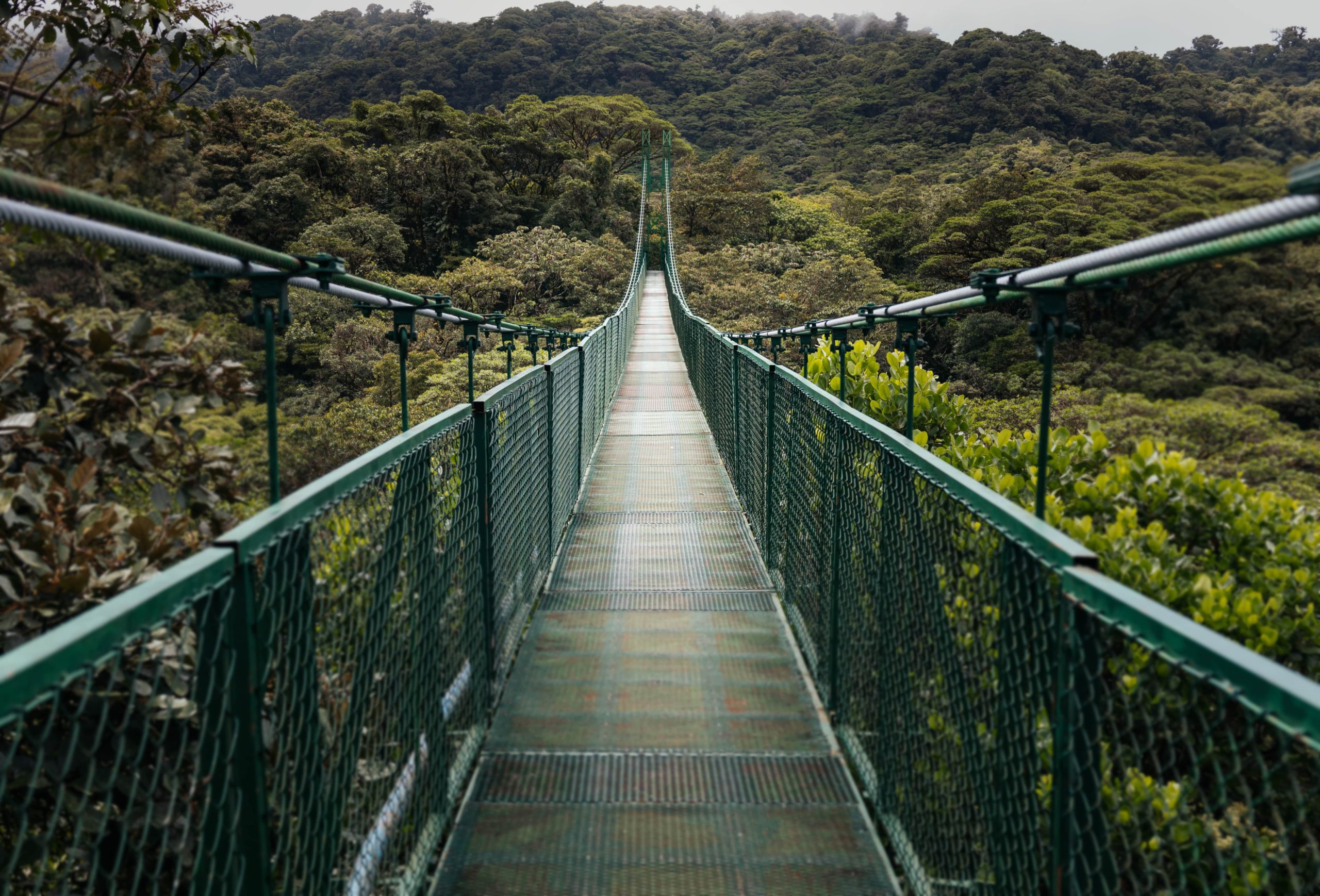
Monteverde & the Tilarán Range
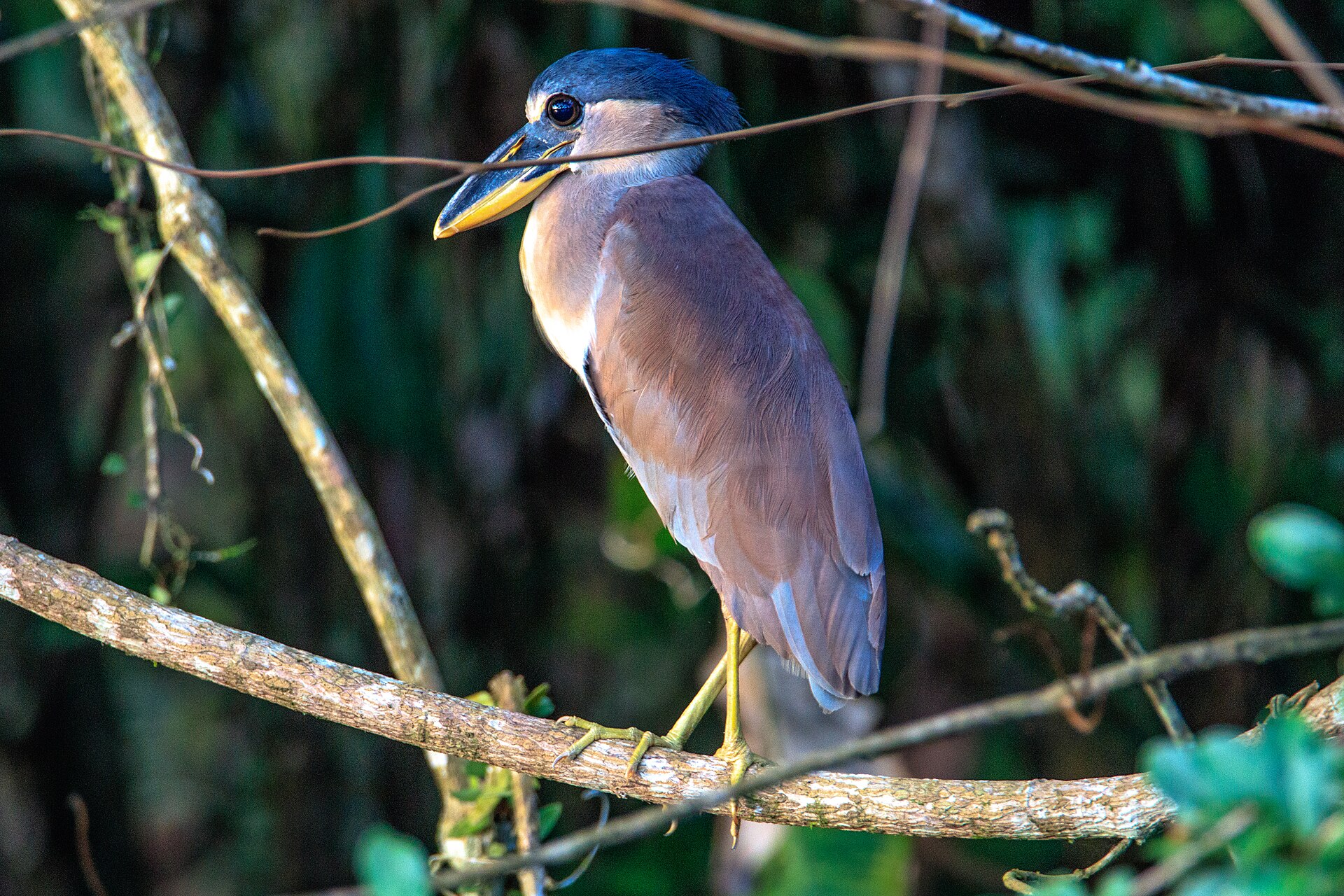 Photo: Murray Foubister (CC BY-SA 2.0), via Wikimedia Commons
Carara & the Central Pacific

Osa Peninsula & the South Pacific
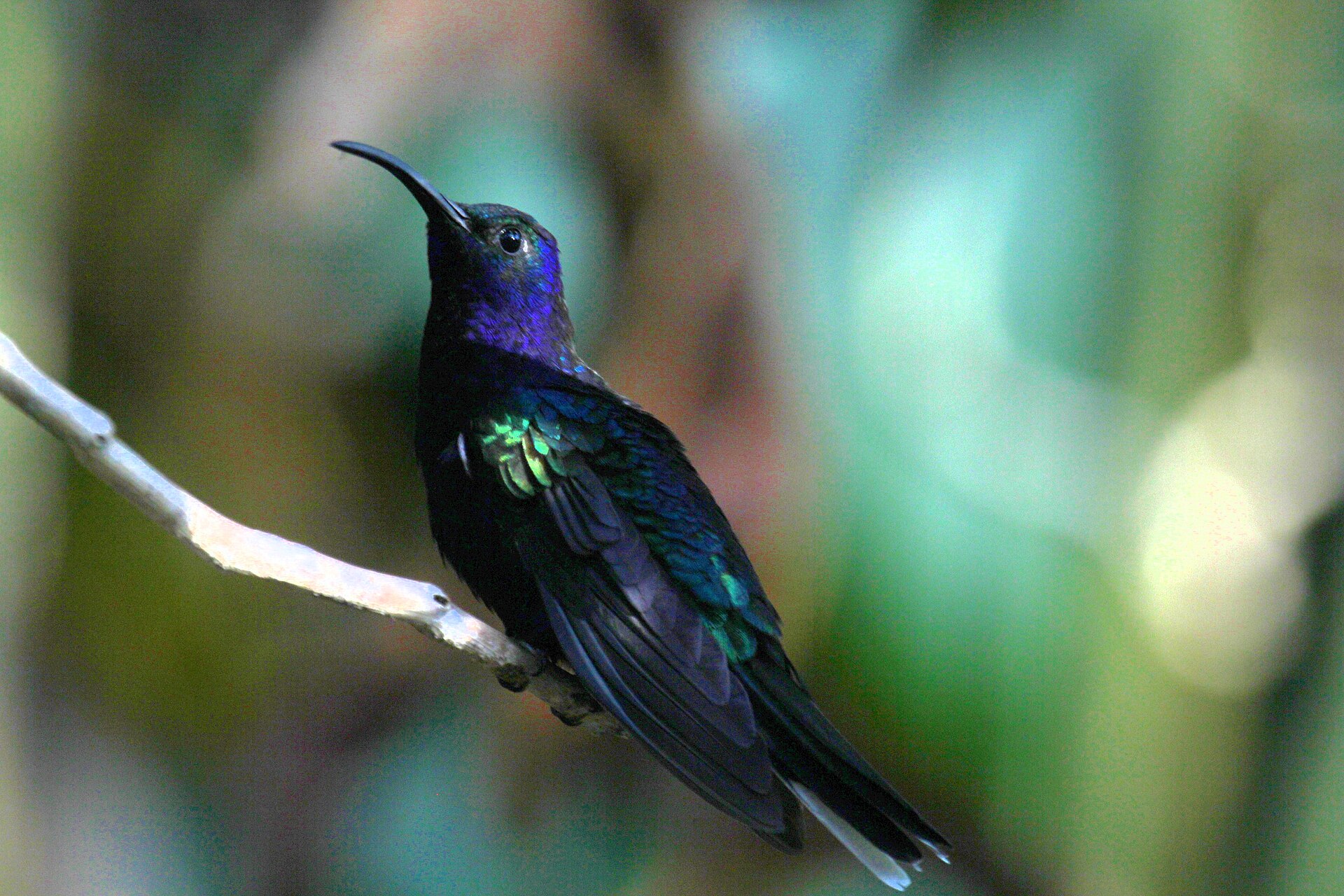 Photo: Alastair Rae from London, United Kingdom (CC BY-SA 2.0), via Wikimedia Commons
Turrialba & the Caribbean Foothills
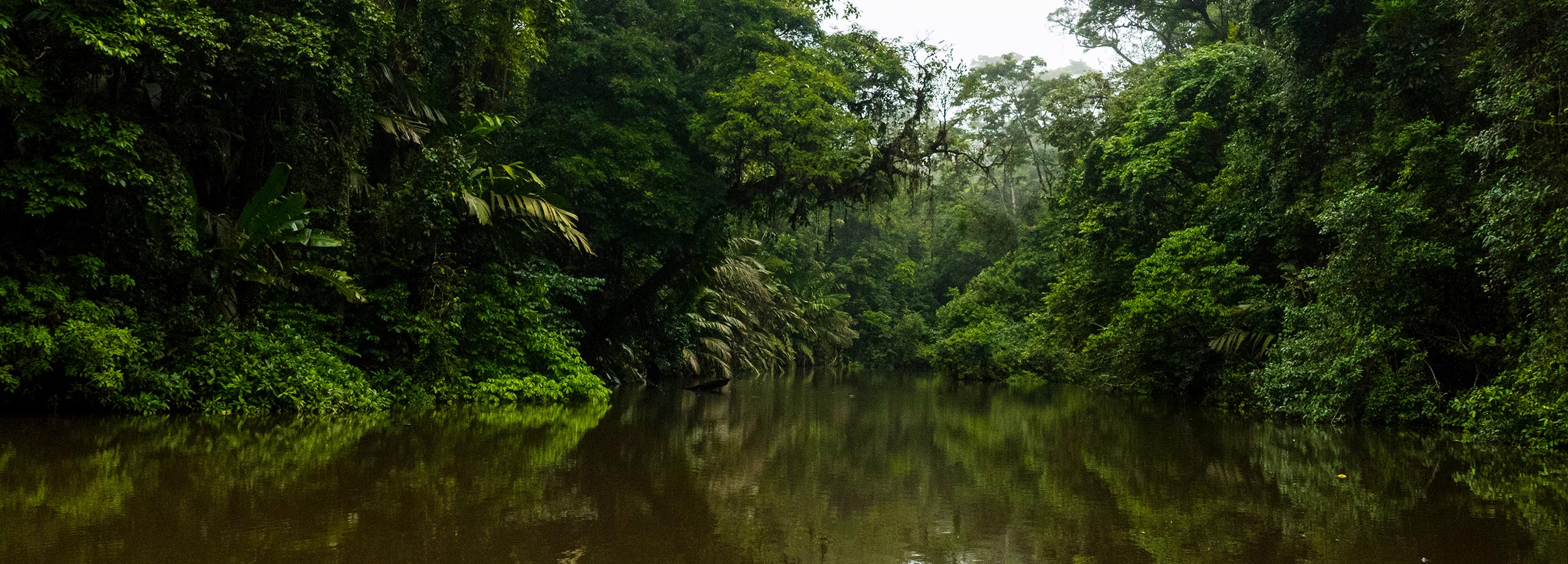
Tortuguero & the Northern Caribbean Coast
Featured Birdwatching Itineraries
These are starting points, not fixed departures. Every one of them is private, and every one of them gets rebuilt around your dates, your list and your pace.


None of these are fixed departures. If you want the 13-day route with four extra nights on the Osa, or the 9-day route with the Palo Verde section swapped for Caribbean foothills, that is a normal request. Longer trips of 15 nights and more, built around range-restricted species in the northern lowlands and the Osa, are arranged on request.
When Is the Best Time for Birdwatching in Costa Rica?
The honest answer is that Costa Rica is good for birding in every month, and that the best month for you depends on what you are trying to see.
December to April is the dry season on the Pacific side and also when North American migrants are wintering here, so species counts are high and roads and trails are at their easiest. It is the busiest period, and the lodges that matter most to birders fill up months ahead.
February to June covers the main quetzal nesting period in the highlands, when birds are attending nest holes and are considerably easier to find. This is also when Three-wattled Bellbirds are calling from the Monteverde ridges.
May, June and November are quieter, greener and often the best value. Rain in these months is usually afternoon rain, which leaves the productive early hours intact.
September and October bring the heaviest rain on the Caribbean side and the Osa, and some lodges close. The raptor migration over the Caribbean slope in October, with large kettles of Turkey Vultures, Broad-winged Hawks and Swainson’s Hawks, is one of the great bird spectacles in the Americas and is badly under-visited.
Tell us the species that matter most to you and roughly when you can travel, and we will tell you which window fits, and whether shifting your dates by two or three weeks would meaningfully improve the trip. Our general guide to the best time to visit covers the wider picture.
Bird with Local Experts

A good birding guide is not a luxury on a Costa Rican itinerary. It is usually the difference between a decent trip and a very good one.
The reasons are practical. Most rainforest birds are heard long before they are seen, and a guide who knows the local calls will pick out a bird you would have walked past. Sites move: the fruiting tree that held quetzals last month may be finished this month, and the antswarm that pulls in ground-cuckoos and antbirds is somewhere different every week. Someone who is in the field daily knows where those things are now. Add a scope, the ability to name a silhouette at forty metres, and an understanding of which hour of the day a species is active, and the difference across two weeks is substantial.
There is a second point that is less obvious. A guide who knows one region deeply will often out-perform a single national guide accompanying you everywhere. The species, the calls and the productive sites in the Talamanca highlands have almost nothing in common with the Caribbean foothills or the Osa. On longer itineraries we frequently recommend a lead guide for continuity plus regional specialists at the stops where local knowledge is worth the most. On shorter trips one strong guide throughout is usually better value. We will tell you which applies to your route rather than defaulting to whichever is easier to arrange.
CRS Tours works with experienced specialist birding guides across the different regions of Costa Rica, and we match the guide to the itinerary and to what you want from it — a hard listing trip and a photography trip need different people.
Bird Photography in Costa Rica

Photographers need a different itinerary from listers, and building one route to serve both usually disappoints everybody.
A photography trip means fewer locations and more nights in each. It means being in position before first light rather than arriving mid-morning after a three-hour drive. It means lodges chosen for their feeders, hides, perch setups and light rather than only for their comfort, and fewer activities per day so there is real time to work a subject instead of moving on after twenty minutes.
Costa Rica rewards this. The hummingbird feeder setups in the highlands and the Caribbean foothills, the macaw sites on the Pacific, the canals of Tortuguero from a boat at eye level with the water — these are places where a photographer who stays put for two or three sessions comes away with something a passing group never will.
Tell us what you shoot, what equipment you travel with and whether you want multi-flash hummingbird setups, and we will build the route around that.
Travelling With Someone Who Isn’t a Serious Birder?
This is one of the most common conversations we have, and it is very solvable.
A birding itinerary does not have to be an expedition. We regularly build trips where one traveller is out at 5:30 with a guide and the other has a later breakfast and a different activity — a hanging-bridges walk, a hot springs afternoon, a cooking class, a beach day. The birding stops stay, but the structure of the day changes and the route makes room for volcanoes, rainforest, easy hiking and a few nights on the coast at the end.
In practice that usually means slightly fewer sites and slightly more nights in each, with the high-value birding locations protected and the filler removed. It works well for couples with different interests and for families where one parent is the birder. Our nature and wildlife trips are a good starting point if birding is one interest among several.
Why Plan Your Costa Rica Birdwatching Trip With CRS Tours?
Local knowledge
We are based in Costa Rica, not overseas. We know the drive times between birding regions, which roads are a problem in the wet season, and which lodges are worth their price for a birder.
Tailor-made, not a fixed circuit
We are not tied to one birdwatching route that we sell to everybody. The itinerary follows your list, your dates and your pace.
Specialist guiding
We use specialist birding guides where they add the most, and we will tell you where a regional specialist is worth arranging and where it is not.
The whole trip as one
Accommodation, private transport, domestic flights, guides, park entries and excursions arranged as a single itinerary, with one point of contact.
Support on the ground
You have a Costa Rican company behind the trip while you are here, not a call centre in another time zone.
Since 1998
CRS Tours has been designing customised Costa Rica trips since 1998. Read why travellers choose us.
What Our Guests Say
“Tortuguero was very nice. Especially the boat trip was very enjoyable. Lots of animals and birds and a beautiful rana rojas. The tour to Caño Negro was very nice. Excellent birding guide. Monteverde Cloud Forest is very beautiful. One of our favourites. San Gerardo de Dota was very special too. Very nice environment; nice place to relax and good birding opportunity. Saw the quetzals there for the second time.”
— Davy and Marieke
“Our 3 day tour of Tortuguero National Park was especially enjoyable thanks to the fantastic tour guide Anna Maria.”
— Jim and Laura
Costa Rica Birdwatching — Frequently Asked Questions
Is Costa Rica good for birdwatching?
Yes, and the reason is not only the species total but the concentration. More than 900 species have been recorded in a country of about 51,000 km², and because the land rises from sea level to over 3,800 metres across two coastlines, you can bird four or five distinct habitat zones within a week without long travel days.
How many bird species can be seen in Costa Rica?
More than 900 species have been recorded nationally. What an individual trip records depends on route, season, guiding and how hard you bird. A well-planned two-week birding itinerary with a guide will produce a substantial list, but we would rather discuss your specific route than quote a number we cannot stand behind.
What is the best time of year for birdwatching in Costa Rica?
There is no single answer. December to April combines dry-season access with wintering North American migrants. February to June covers highland quetzal nesting. May, June and November are green, quiet and often the best value, with rain usually confined to the afternoon. October brings the raptor migration over the Caribbean slope. We match the month to your target species rather than the other way round.
Where can I see a Resplendent Quetzal in Costa Rica?
The most reliable region is San Gerardo de Dota and the wider Talamanca highlands, with Monteverde a second option. Quetzals follow fruiting trees in the laurel family, so a local guide who knows which trees are producing that week matters more than the site name.
Can you organise a trip around my target bird species?
Yes, this is the core of what we do. Send us your target list, trip list or eBird list and we will design the regions, the route, the number of nights and the guiding around it, and tell you frankly which species are realistic in your travel window.
Do I need a specialist birdwatching guide?
You do not have to take one, but on most itineraries it is the single change that improves the trip most. Guides find birds by call, know where species are being seen currently, carry a scope and know which hour of the day each species is active. On longer routes, regional specialists often out-perform one guide travelling with you throughout.
Can birdwatching be combined with a normal Costa Rica holiday?
Yes, and it is one of our most common requests. Birding mornings sit easily alongside volcanoes, hanging bridges, wildlife, easy hiking and beach time, and two travellers in a couple do not have to do the same thing every day.
Are your birdwatching tours private?
Yes. Every itinerary we build is private and tailor-made, with your own vehicle, driver and guiding arrangements. We do not sell scheduled group departures with strangers.
Can you arrange bird photography trips?
Yes. Photography itineraries use fewer locations, more nights per site, early access and lodges chosen for feeders, hides and light. Tell us what you shoot and we will build accordingly.
How physically demanding are birdwatching tours?
That is entirely adjustable. Some of the best birding in Costa Rica is done from lodge grounds, boats and level trails, and several highland and lowland lodges are productive without any real walking. If you want strenuous days on steep foothill trails we can build those too. Tell us your mobility and we will select sites to match.
Can you organise tours for bird clubs or specialist groups?
Yes. We handle logistics, guiding, vehicles and accommodation for private groups, and we can work from a group leader’s own itinerary or build one from scratch.
Can travel agents and tour operators request birdwatching programmes?
Yes. CRS Tours works with agents and operators as a Costa Rican destination management company. Our B2B site covers private FIT birding itineraries, tailor-made specialist departures and small-group programmes.
Plan Your Costa Rica Birdwatching Trip
Tell us what you want to see. A Costa Rica specialist reads every enquiry personally — you will not receive an automated itinerary.
Send us your target species, your dates and how you like to travel, and we will come back with a route.
Booked direct with our local Costa Rica team — not a foreign reseller.
Birdwatching Programmes for Travel Agents & Tour Operators
CRS Tours works as a Costa Rican destination management company for agents and operators abroad. We put together private FIT birding itineraries, tailor-made specialist departures, small-group programmes and bird-and-wildlife combinations, with local guiding and ground handling arranged in-house.









Areas Of Interest
Costa Rica
Monday to Saturday: 8:00am – 5:00pm
Costa Rica Time = GMT-6
(Central Standard Time, no daylight saving)

Contact Info
Email:
contact@crstours.com
Toll-Free number from the US:
+1 (800) 431-0137
Phone Costa Rica:
+506 4001-7794
WhatsApp:
+506 8567-5480