

Costa Rica Diving Holidays – Tailor-Made Around You
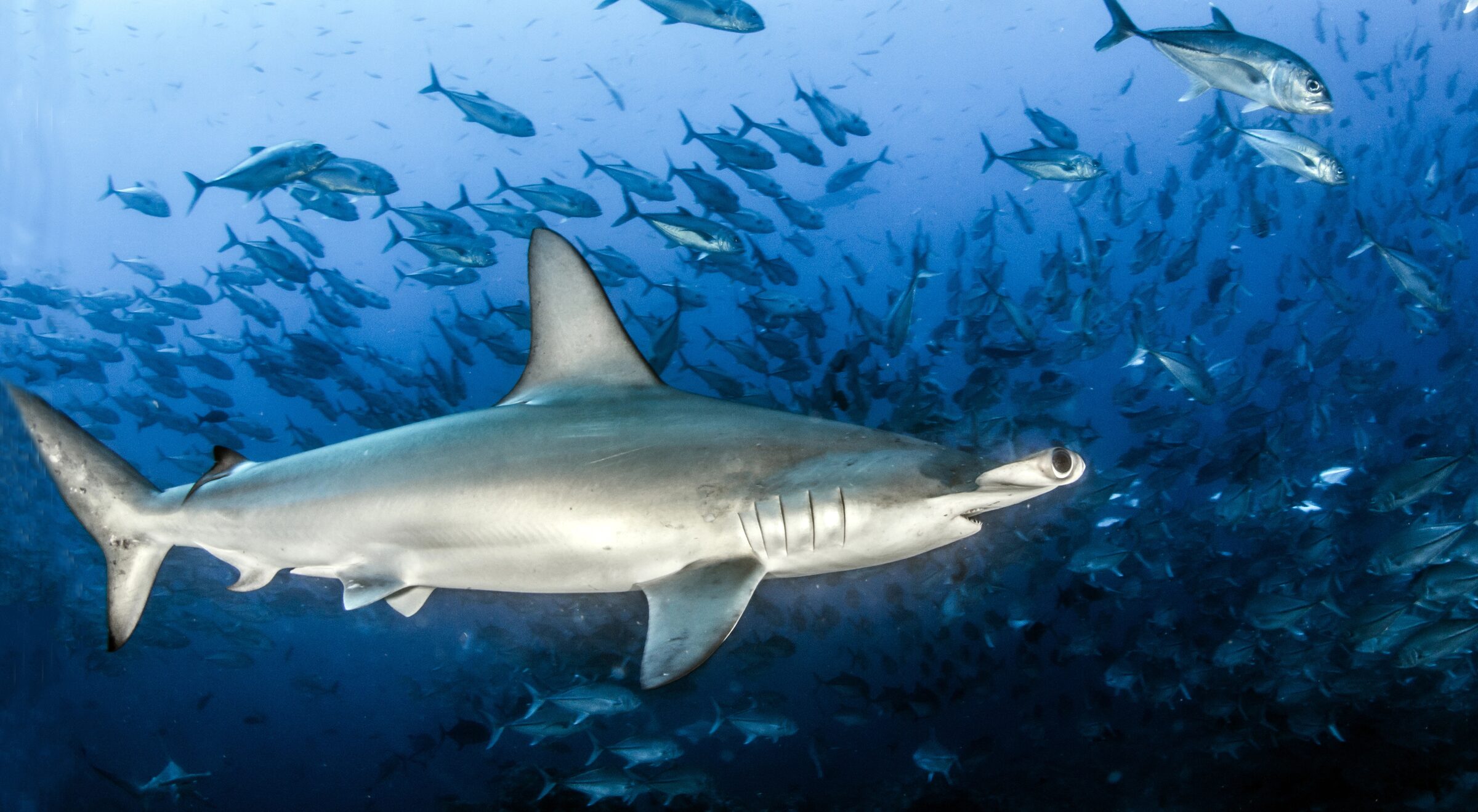
Costa Rica Diving Holidays
Private, tailor-made dive itineraries across Costa Rica’s Pacific coast, built by a local specialist team since 1998.
PLAN MY DIVING TRIP
- Costa Rica specialists since 1998
- Private, tailor-made itineraries
- Selected specialist dive operators
- Local team based in Costa Rica
You do not have to choose between diving and seeing Costa Rica. The Pacific coast has very different diving within a few hours of each other — the Catalina Islands off Guanacaste, the Bat Islands further north for experienced divers, Caño Island off the Osa Peninsula — and all of it sits alongside volcanoes, cloud forest and some of the best wildlife watching in Central America. Whether diving is the main reason for your trip or two days inside a wider journey, we build the itinerary around your certification level, the areas you want to dive and everything else you want to do while you are here.
What Kind of Diving Trip Are You Looking For?
Tell us which of these sounds like you. It changes the route, the number of nights on the coast and which dive areas make sense.

Diving as part of a Costa Rica vacation
Two to four diving days built into a wider trip, alongside volcanoes, rainforest, wildlife and beach time. The most common request we get.

Dedicated diving holiday
Diving is the priority. More days on the water, coastal bases chosen for boat access, and the rest of the itinerary built to support it rather than compete with it.

Diving & wildlife
Caño Island with Corcovado and the Osa Peninsula, or Guanacaste diving with the national parks inland. For people who want the underwater and the above-water to be equally good.

Diver + non-diver
One of you dives, the other does not. Same hotel, same trip, different mornings. We do this constantly and it works well.

Underwater photography
Fewer sites, more time at each, an operator who understands what you are trying to do, and an itinerary that leaves room for it.
More Than a Diving Trip
Most divers who come to Costa Rica are not here only to dive. The country is small enough that you can spend a morning under water off Guanacaste and be standing in cloud forest two days later. What makes that work — or not work — is the routing: which coast, in which order, with which drives and which internal flights.
That is the part we handle. You deal with one company for the hotels, the private transport, the internal flights, the guides and the dive days, and the diving is booked with specialist operators we select for the area you are in.
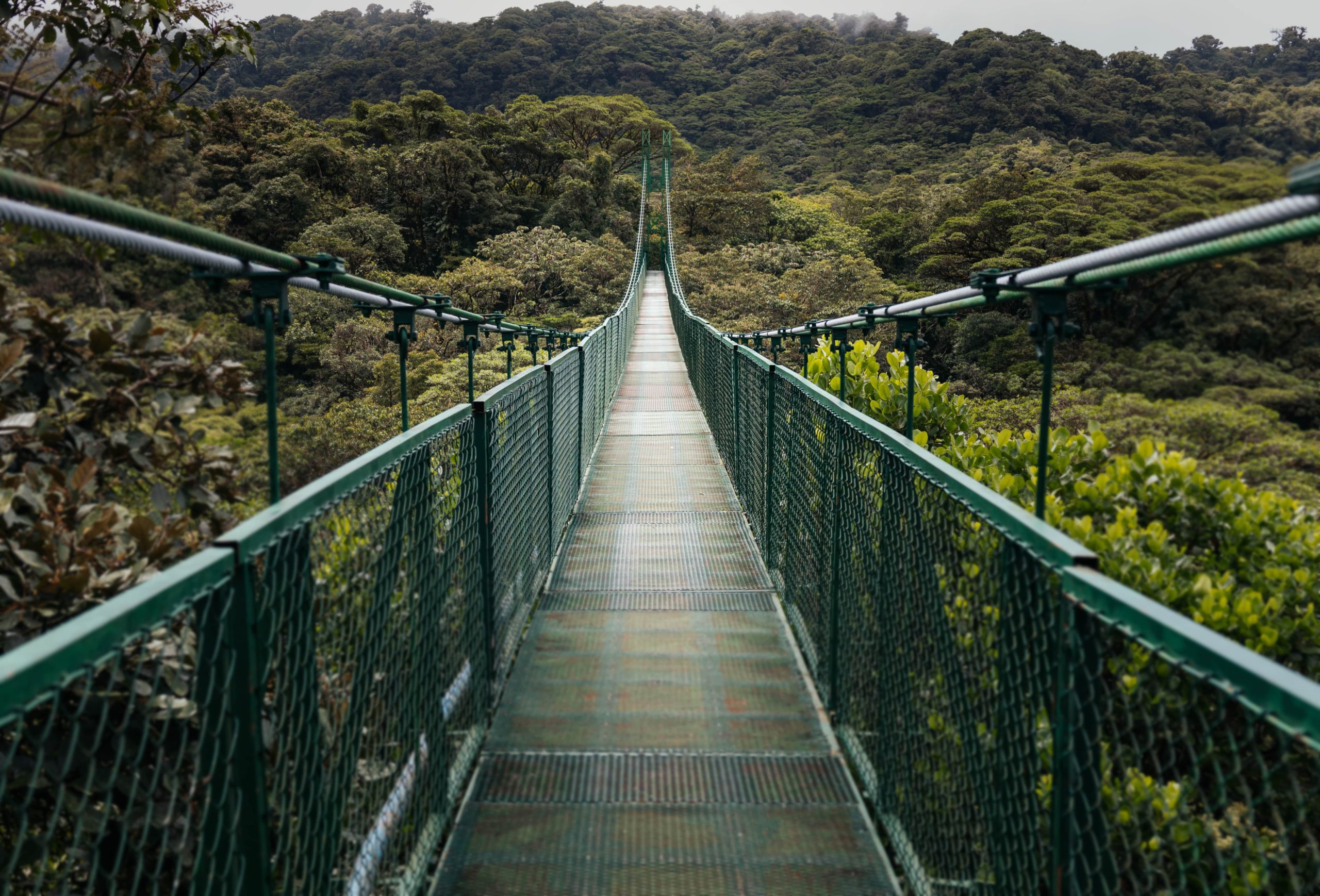
Diving + volcanoes and cloud forest
Guanacaste or Papagayo for the diving, combined with Arenal and Monteverde inland. The most popular combination we build, and the easiest logistically. See our Arenal guide and Monteverde guide.
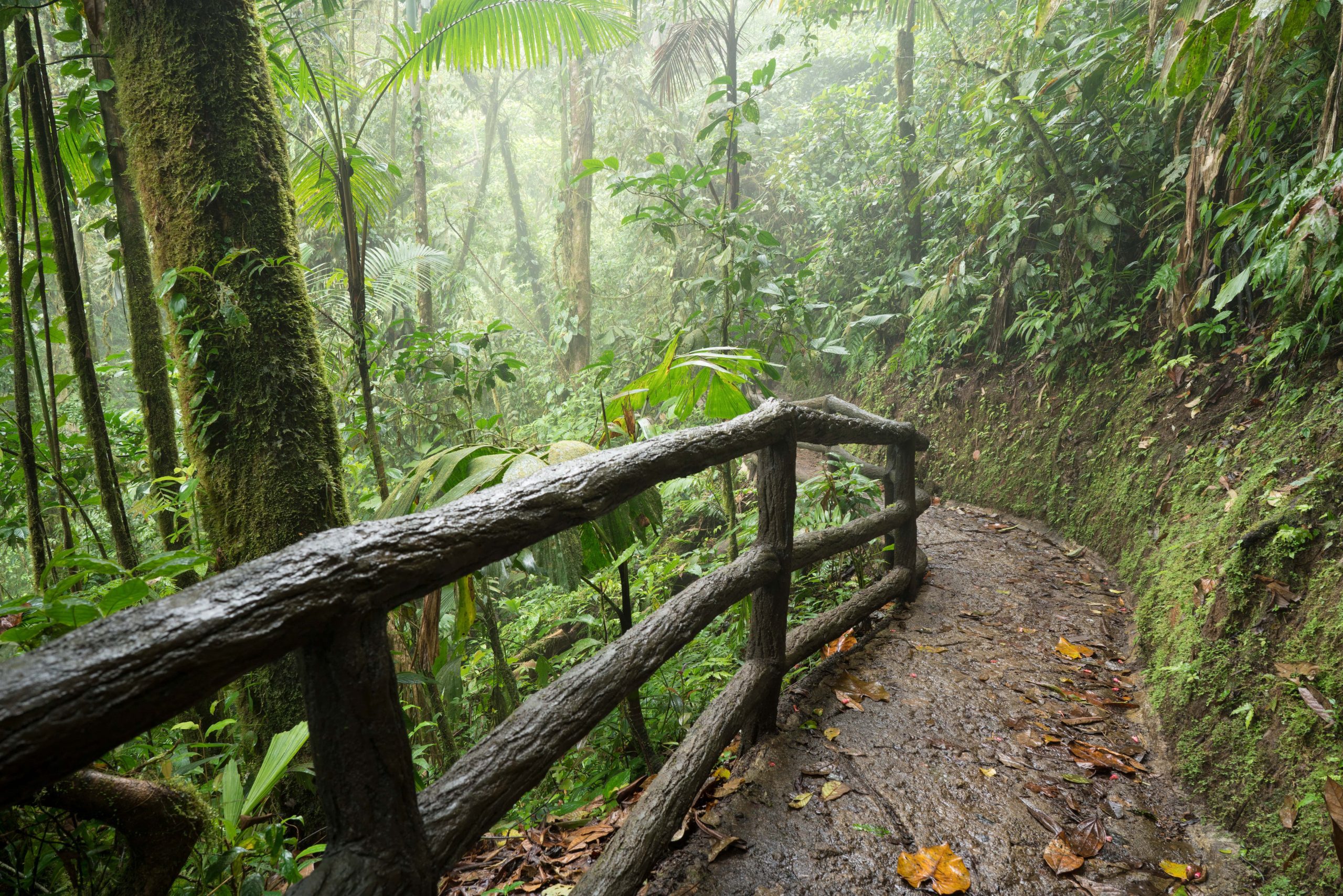
Diving + rainforest and wildlife
Caño Island diving from Drake Bay, combined with Corcovado National Park on the Osa Peninsula. The wildest part of the country above and below the water. It takes more travel time and the lodges book out early.

Diving + beach and time off
A few diving days from a comfortable coastal base, with the rest of the stay genuinely restful. Works well in , where the dive boats leave from beaches you would want to stay on anyway.

Diving + a full Costa Rica journey
Two or three regions, diving on one or both coasts, wildlife, volcanoes and a coastal finish. Our longer diving itineraries follow this shape. It needs 14 nights or more to be enjoyable rather than rushed.
Travelling With Someone Who Doesn’t Dive?
This comes up in a large share of our diving enquiries, and it is straightforward to solve.
The dive boat usually leaves early and is back by early afternoon. That leaves the non-diving partner a whole morning, and in the places where the diving is good there is generally plenty to do: a wildlife walk, a mangrove or estuary boat trip, a beach morning, a spa, a cooking class, a horseback ride along the coast, or simply a slow breakfast and a book. In Drake Bay it might be a Corcovado hike while the other one is at Caño Island. In Guanacaste it might be a day trip inland or a catamaran afternoon.
You stay in the same hotel, you have lunch together, and the rest of the itinerary — the volcanoes, the cloud forest, the wildlife — you do together. Nobody spends their holiday waiting in a hotel lobby.
Tell us who dives and who does not, and what the non-diver actually enjoys, and we will build the days around both of you rather than around the dive schedule alone.
What Would You Like to See Underwater?
Nobody can promise an animal. What we can do is put you in the right area in the right months, which is most of the battle. Tell us what interests you and we will tell you honestly whether your dates fit.
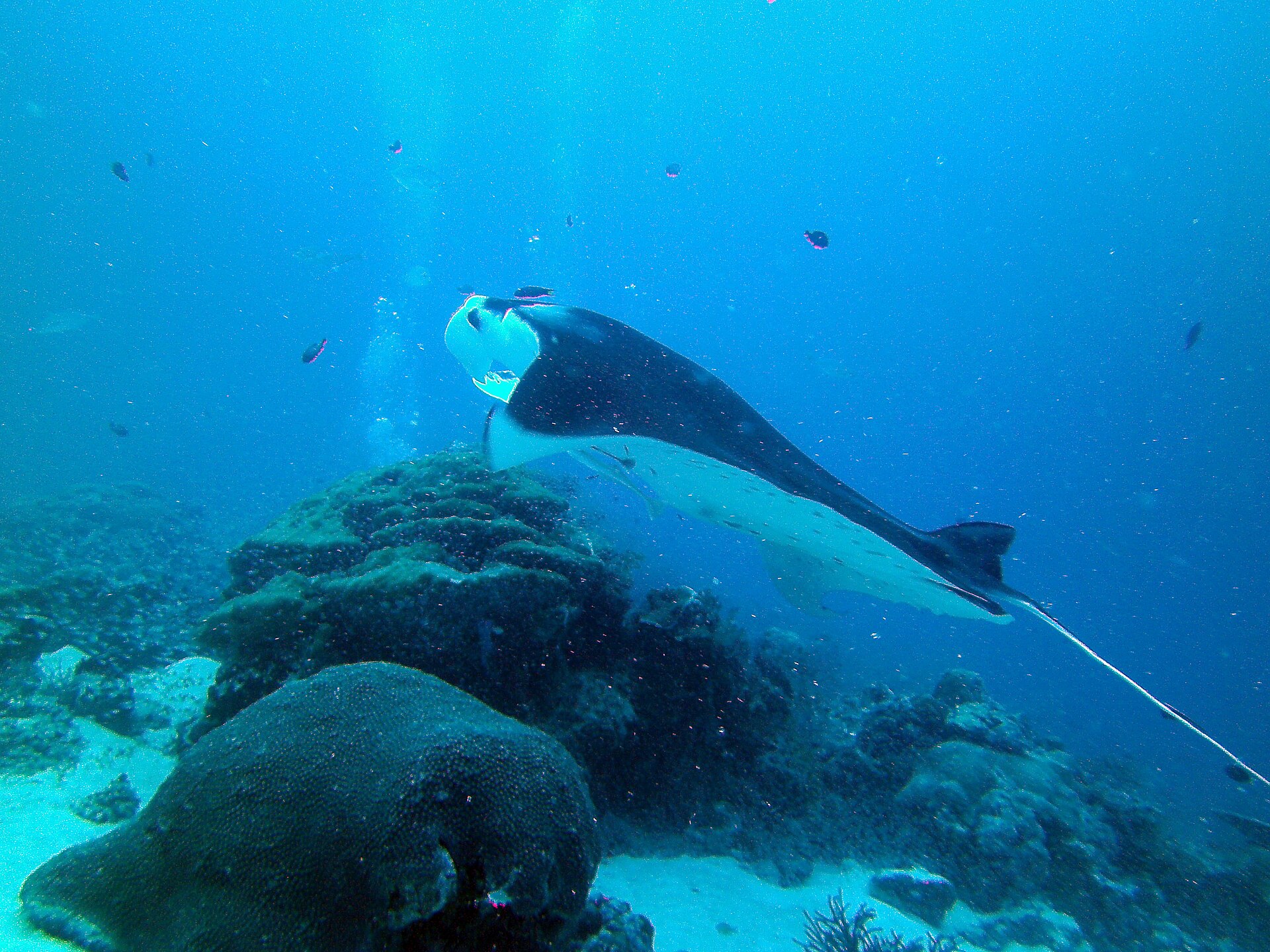 Photo: amanderson2 (CC BY 2.0), via Wikimedia Commons
Giant manta rays
Most associated with the Catalina Islands off Guanacaste. Operators report them most reliably in the cooler months, with January to March the period most often named — and cooler water and stronger conditions coming with it.
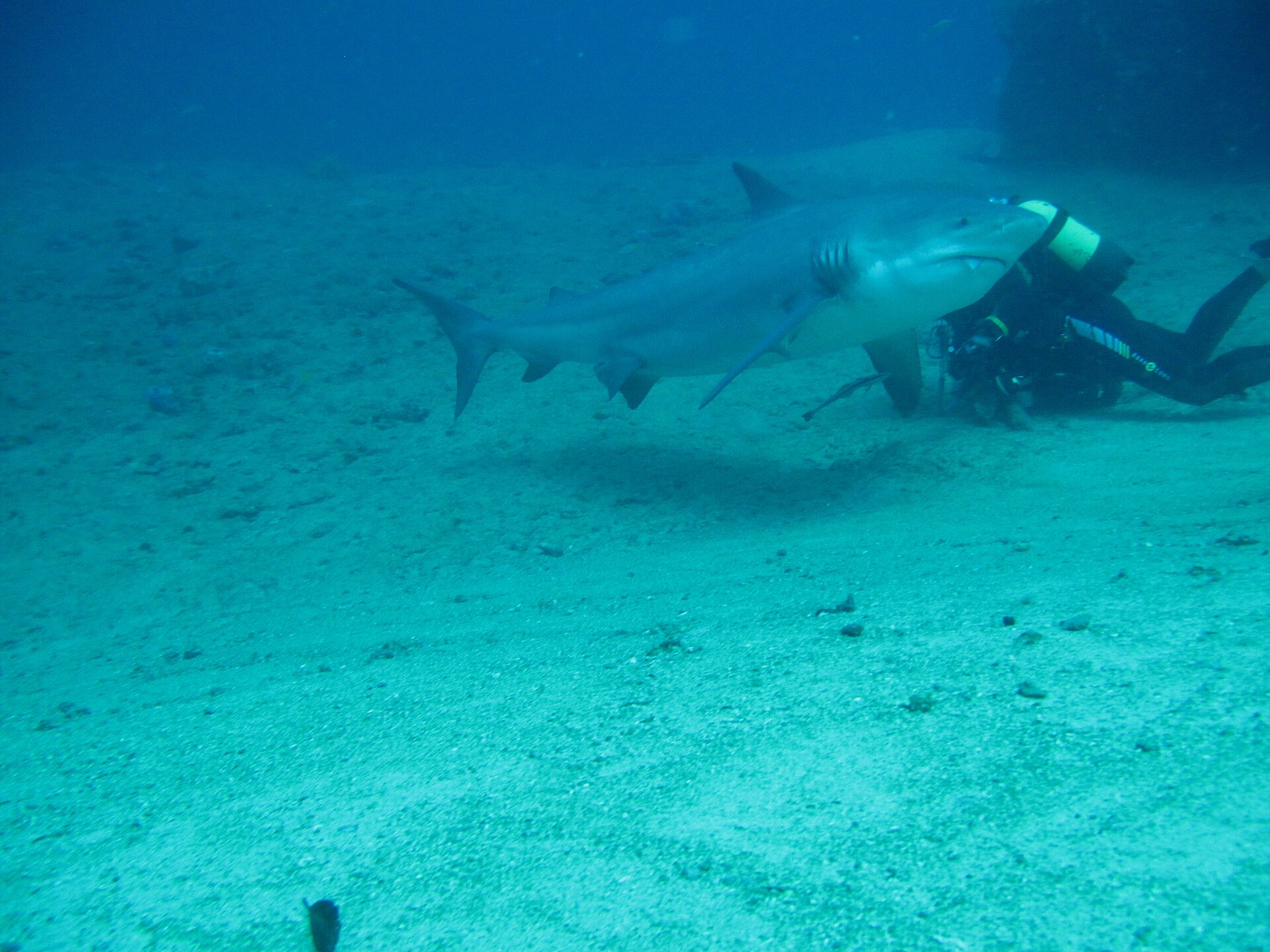 Photo: Judita bagon (CC BY-SA 3.0), via Wikimedia Commons
Bull sharks
The Bat Islands are the site Costa Rica is known for. This is an advanced dive with real current, and the boat season runs roughly mid-May to early November. Outside that window the crossing is often too rough to run.
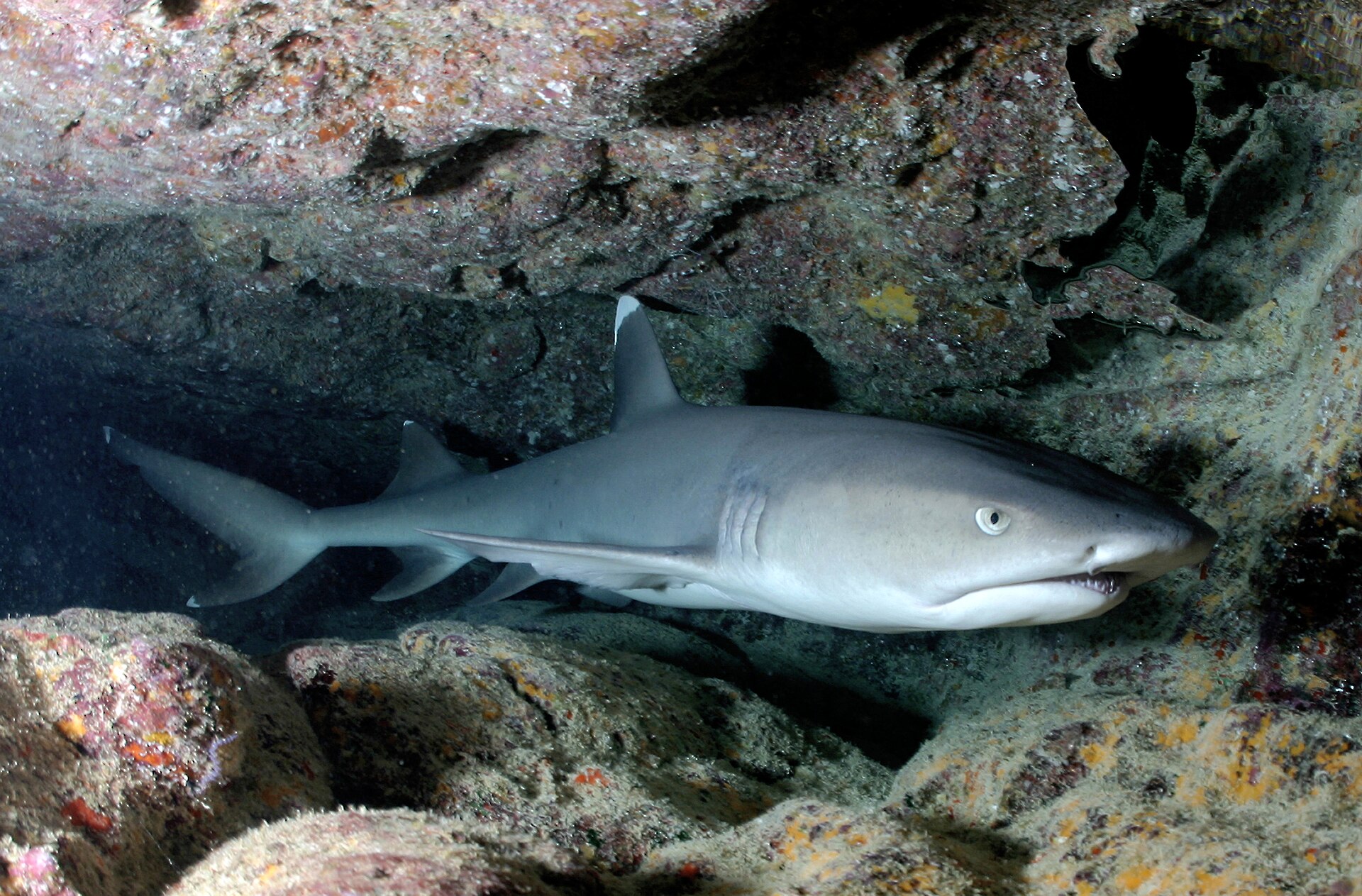 Photo: public domain, via Wikimedia Commons
Reef sharks, turtles and rays
The everyday marine life around Caño Island and, in season, the Catalinas and Papagayo. This is what most divers on a two- or three-dive-day trip actually spend their time with.
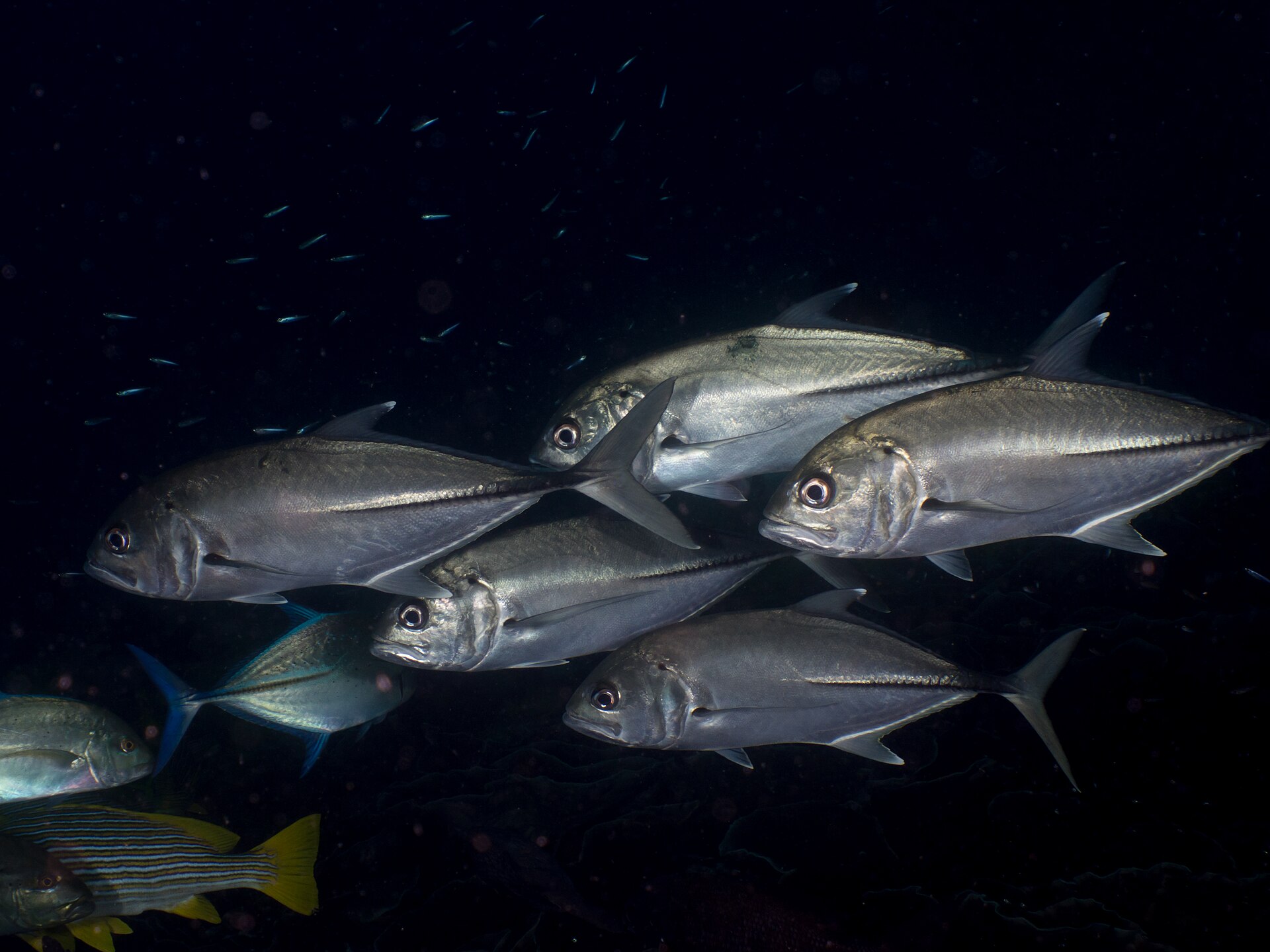 Photo: Rickard Zerpe (CC BY 2.0), via Wikimedia Commons
Schooling fish and pelagics
Big schools of jacks, snapper and grunts over the rock formations, with the chance of something larger passing through. Nutrient-rich water is why they are there.

Whales and dolphins
Humpbacks pass the South Pacific coast in two distinct windows, roughly late January to March and again around July to September. Often seen from the boat rather than under water.
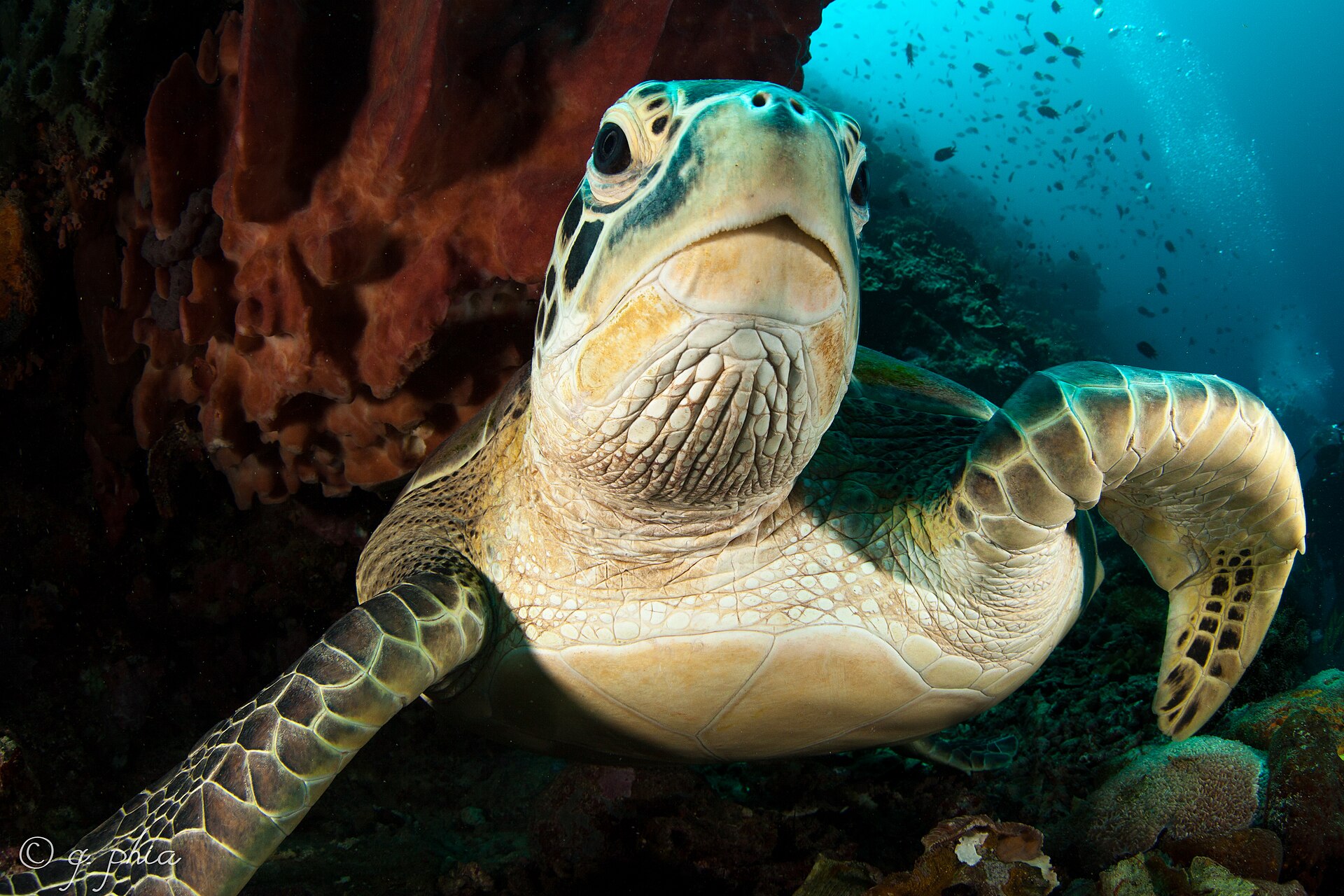 Photo: q phia (CC BY 2.0), via Wikimedia Commons
Macro and rock formations
Costa Rica’s Pacific diving is volcanic rock, boulder fields, arches and swim-throughs rather than coral gardens. Good for photographers who like structure and detail rather than wide reefscapes.
Best Diving Areas in Costa Rica
Costa Rica’s Pacific diving is volcanic rock and nutrient-rich water, not Caribbean coral. That is why the marine life is big and abundant, and also why visibility varies more than in the Caribbean. Below is what each area actually offers.

Catalina Islands (from Flamingo, Tamarindo and Playas del Coco)
Gulf of Papagayo (from Playas del Coco and Papagayo)
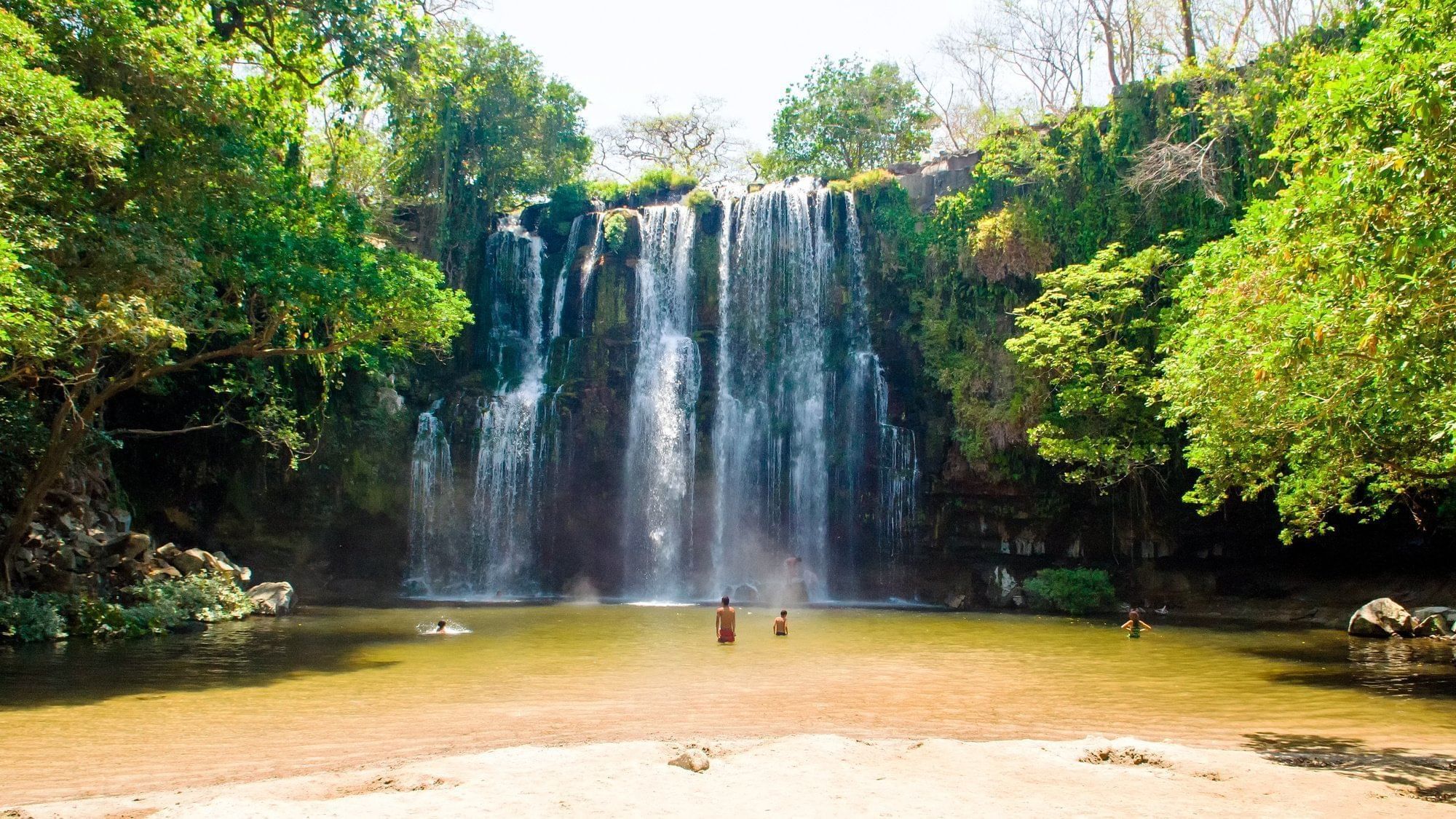
Bat Islands / Islas Murciélago (from Playas del Coco)

Caño Island (from Drake Bay and the Osa Peninsula)
Tortuga Island (Gulf of Nicoya)
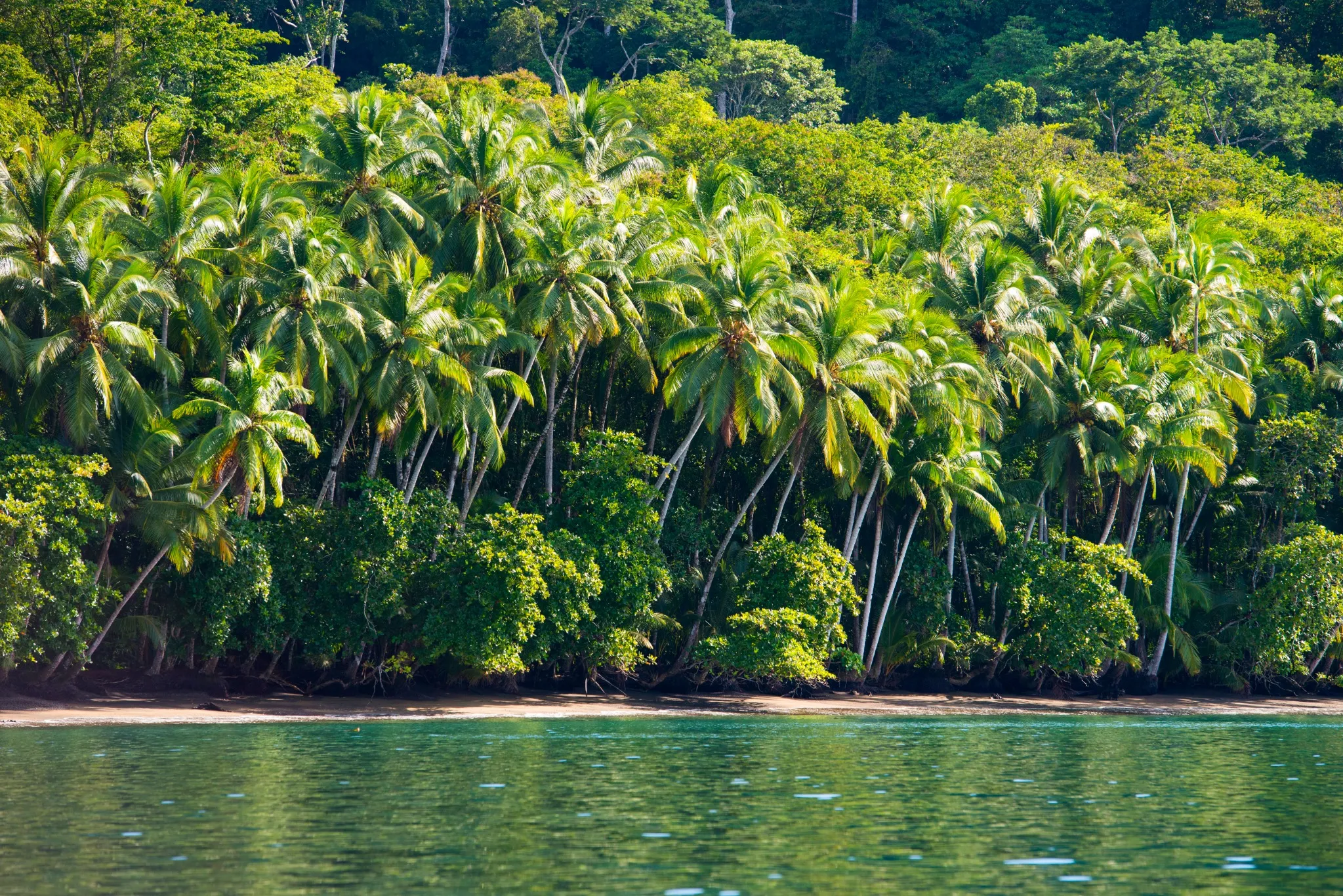
South Pacific and the Osa
Costa Rica Diving Areas at a Glance
| Area | Best for | Typical experience level | Main appeal | Best combined with | Season notes |
|---|---|---|---|---|---|
| Catalina Islands | Divers wanting marine life without a long trip | Open Water with a guide; Advanced for the tougher sites | Giant manta rays in the cooler months, rays, rock pinnacles | Arenal, Monteverde, Guanacaste beaches | Mantas most reported Jan–Mar; colder water and thermoclines then |
| Gulf of Papagayo | Easy, convenient diving from Guanacaste | Open Water; good for refreshers | Short boat rides, varied everyday sites | Guanacaste resorts, Arenal | Diveable year-round; calmer May–Nov |
| Bat Islands | Experienced divers after bull sharks | Advanced; recent diving expected | Bull sharks, strong-current diving | Northern Guanacaste, Rincón de la Vieja | Boat season roughly mid-May to early Nov |
| Caño Island | Divers who also want rainforest and wildlife | Open Water to experienced | Reef sharks, turtles, rays, big schools | Drake Bay, Corcovado, the Osa | Best visibility Dec–Feb; poorer from Aug |
| Tortuga Island | Beginners and mixed groups | Beginner-friendly | Sheltered, easy day on the water | Nicoya Peninsula, Montezuma, Santa Teresa | Sheltered year-round; visibility variable |
| Cocos Island | Dedicated experienced divers only | Experienced, current-comfortable | Schooling hammerheads, pelagic diving | A specialist liveaboard trip, not a day excursion | Drier months calmer; rainy months rougher but rich |
Conditions on any given day depend on weather, swell and tide. Treat this as a planning guide, not a guarantee.
Cocos Island — A Different Kind of Trip Entirely
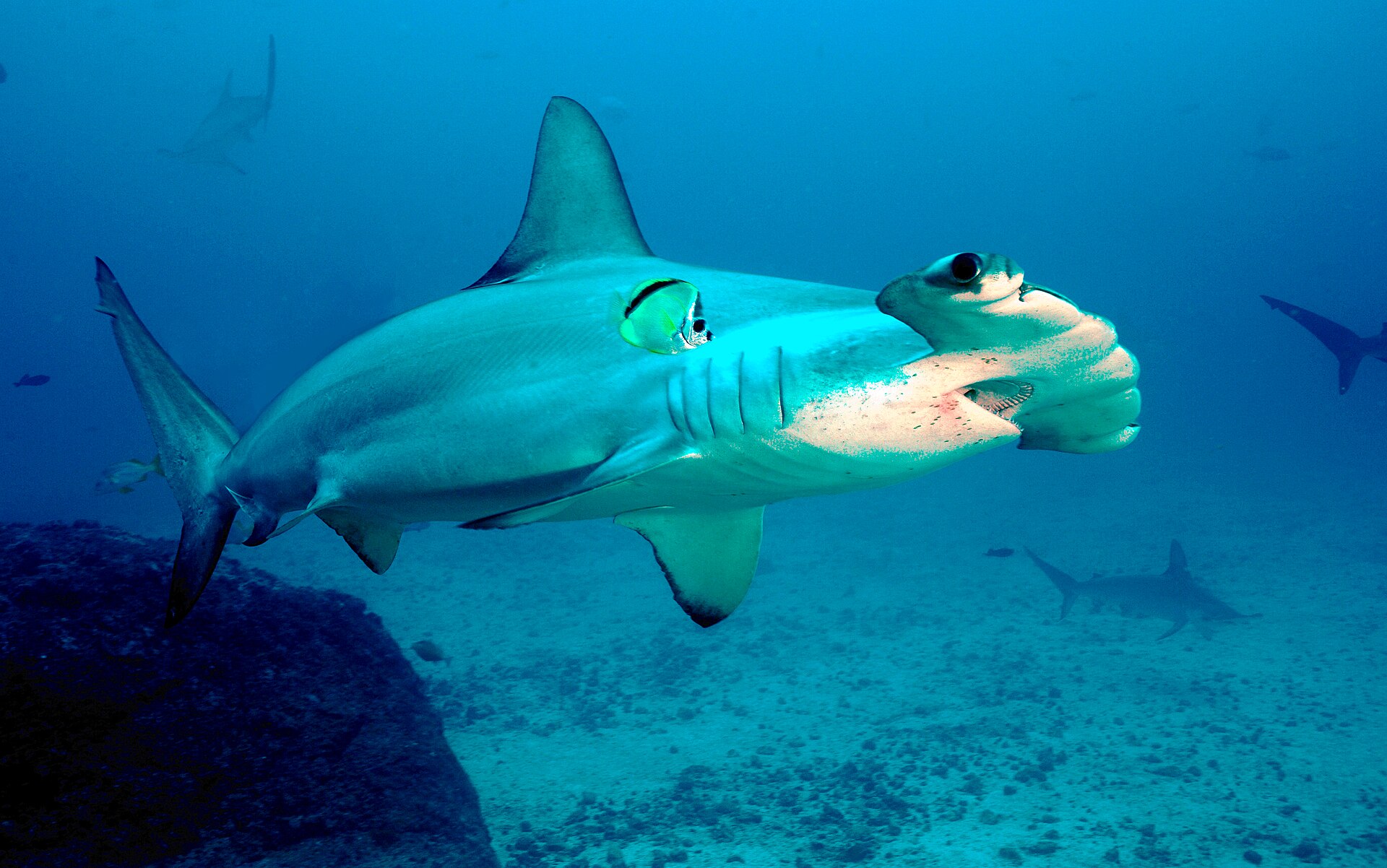 Photo: Xvic (CC BY-SA 3.0), via Wikimedia Commons
Cocos Island is not an excursion you add to a Costa Rica holiday. It sits roughly 550 km off the Pacific coast, and the crossing alone takes somewhere around 30 to 32 hours each way. It can only be dived from a liveaboard, and those trips typically run about ten days including the transit.
It is a destination for experienced, current-comfortable divers. The diving is what the island is famous for — large schools of scalloped hammerheads, plus mantas, whale sharks and other pelagics — but conditions are demanding, with real current, surge and drift diving. It is not a place to build hours.
CRS Tours does not operate liveaboards. What we can do is handle everything on land: your arrival and departure in San José or Puntarenas, hotels either side of the crossing, transfers, and a Costa Rica itinerary before or after the trip — which is what most people crossing that distance want anyway.
Featured Costa Rica Diving Itineraries
These are starting points, not fixed departures. Every one is private and gets rebuilt around your dates, your certification level and how much of the trip you want under water.
Catalina Islands, Arenal & Monteverde
Caño Island Diving & Osa Rainforest
Two Coasts: Guanacaste Diving, Volcano, Cloud Forest & Drake Bay
Costa Rica in Depth, With Diving Along the Way
On pricing. We quote every diving trip individually rather than publishing a “from” price. The cost moves a long way depending on how many dive days you want, whether those are local sites or offshore trips, hotel level, private transport, internal flights and how many of you are travelling. A headline figure would be wrong for most people. Tell us what you are after and you will get a real number for your actual trip.
When Is the Best Time to Dive in Costa Rica?
There is no single answer, because the north and south coasts do not follow the same pattern.
Northern Pacific (Guanacaste, Catalinas, Bat Islands). The dry season, December to April, brings clearer water because there is no river run-off, and it is when giant manta rays are most reported at the Catalinas. It also brings colder water, thermoclines and more surface chop; January and February can be genuinely cold by tropical standards. From May to November the water is warmer and the sea flatter, and this is the window in which the Bat Islands boats run.
Southern Pacific (Caño Island, the Osa). Roughly the reverse. December to February is the clearest period and the best time for Caño Island. From around August the rains push sediment out of the rivers and visibility drops; some lodges in the area close for part of the low season.
Marine life. Humpback whales pass the southern coast in two windows, broadly late January to March and around July to September. Bull sharks at the Bat Islands are tied to the boat season rather than a migration. Manta reports at the Catalinas cluster in the cooler months.
In practice. If you can travel any time, December to February gives you the widest choice across both coasts. If you are set on the Bat Islands, you need the middle of the year. If you want Caño Island and Corcovado together, aim for the first quarter. Tell us your dates and your priorities and we will tell you which combination actually works — and if your dates and your wish list do not fit together, we will say so. Our general guide to the best time to visit covers the wider picture.
Experience, Conditions and Safety
Before we recommend specific dive areas we will ask you a few things: your certification level, roughly how many dives you have logged, when you last dived, and how comfortable you are in current. It is not paperwork — it genuinely changes what we suggest. Someone with twelve logged dives and a two-year gap should not be sent to the Bat Islands, and an experienced diver will be bored by a schedule built around the easiest sites.
Costa Rica’s Pacific has real conditions. Surge, current, thermoclines and changing visibility are normal here, and the same site can be easy one week and demanding the next. That is part of why the marine life is what it is.
Two things worth being clear about. First, the dive operator makes the final call on the day — whether the boat goes out, whether a site is suitable, and whether you dive it. That is how it should be, and no travel company should override it. Second, if the sea cancels a dive day, we will have alternatives in the itinerary rather than a blank day.
If you are not certified and want to be, tell us early. Course options and timing vary by location and need to be built into the itinerary rather than added at the end.
Who You Dive With
We are a travel company, not a dive centre. We do not own boats and we do not employ instructors.
What we do is select the appropriate specialist dive operator for the area you are diving and the kind of diving you want, and then build the rest of the trip around those days. The operators handle the boats, the equipment, the guiding and the safety decisions. We handle the itinerary, the hotels, the transport between regions, the internal flights and everything the non-divers in your party are doing.
That division is deliberate, and it is the reason a diving trip booked through us is not the same as booking a dive shop and a hotel separately. One point of contact, one itinerary, one company that knows how the pieces connect — and specialists doing the specialist part.
Underwater Photography in Costa Rica
Photographers usually want a different trip from a group working through a dive schedule. In practice that means fewer sites and more repeat dives at the good ones, an operator who is comfortable with someone hanging back on a subject, and a route with fewer moves so you are not packing camera gear every other morning.
It also means thinking about the practical side early: extra baggage on internal flights, which have real weight limits, somewhere sensible to rinse and charge, and hotels where that is not a problem. Costa Rica suits photographers who like structure — volcanic rock, arches, boulder fields, big schools of fish against blue — rather than wide coral reefscapes.
Why Plan Your Costa Rica Diving Holiday With CRS Tours?
The complete itinerary, not just the dives
Hotels, private transport, internal flights, guides, park entries and dive days arranged as one trip with one point of contact.
Tailor-made
Diving can be the centre of the trip or two days inside it. Both are normal, and the itinerary changes accordingly.
Local knowledge
We are based in Costa Rica. We know the drive times between the dive coasts and the interior, which routes are painful in the wet season, and which coastal hotels work for early boat departures.
Specialist operators
We select the dive operator to match the area and your experience, rather than defaulting to whoever is nearest.
Solutions for non-divers
Partners and family members who do not dive get a real itinerary, not a waiting room.
Since 1998
CRS Tours has been designing customised Costa Rica trips since 1998. Read why travellers choose us and our guest reviews.
Costa Rica Diving — Frequently Asked Questions
Is Costa Rica good for scuba diving?
Yes, but it is worth knowing what kind of diving it is. The Pacific coast is volcanic rock, boulder fields and nutrient-rich water rather than Caribbean-style coral reef. That means abundant fish life and a real chance of larger animals, alongside visibility that varies more than in the Caribbean. Divers who come expecting clear-water coral gardens are sometimes disappointed; divers who come for marine life usually are not.
What are the best places to dive in Costa Rica?
The Catalina Islands and the Gulf of Papagayo off Guanacaste, the Bat Islands for experienced divers, and Caño Island off the Osa Peninsula. Tortuga Island in the Gulf of Nicoya is a gentler option. Cocos Island is in a category of its own and requires a liveaboard.
Which is better for diving: the Catalina Islands or Caño Island?
They suit different trips. The Catalinas are easier to reach, work well with Arenal and Monteverde, and are where giant manta rays are most reported in the cooler months. Caño Island has consistently good marine life, sits beside Corcovado and the Osa rainforest, and is at its clearest from December to February. If your trip is built around Guanacaste, choose the Catalinas; if it is built around wildlife and the Osa, choose Caño.
Can beginners dive in Costa Rica?
Yes. The Gulf of Papagayo, Tortuga Island and many Caño Island sites are suitable for Open Water divers with a guide. Some Catalina Islands sites have surge and current and are better once you have more experience, and the Bat Islands are not a beginner destination.
Do I need to be certified?
For most diving, yes. Introductory dives and full certification courses are available at several locations, but availability and timing vary by operator and need to be built into the itinerary in advance rather than arranged on arrival. Tell us early if you want to certify during the trip.
Can you arrange diving for experienced divers?
Yes. Tell us your certification level, your logged-dive count and when you last dived, and we will match the areas and operators accordingly, including the Bat Islands in season.
When is the best time to dive in Costa Rica?
It depends where. December to April brings clearer water and the manta reports in the north, but colder water and more chop. May to November is warmer and flatter in the north and is when the Bat Islands boats run. In the south, December to February is the clearest window for Caño Island, and visibility drops from around August.
Can I combine diving with Arenal and Monteverde?
Yes, and it is the most common combination we build. Guanacaste diving with Arenal and Monteverde inland works well logistically and gives you three completely different environments in one trip.
Can I combine diving with Corcovado and the Osa Peninsula?
Yes. Caño Island diving is run from Drake Bay, which is also the base for Corcovado. It takes more travel time to reach and the lodges are limited, so it needs booking well ahead.
What if my partner does not dive?
That is a normal request. Dive boats generally leave early and are back by early afternoon, so we build alternative activities for the non-diver during those mornings — wildlife walks, boat trips, beach or spa time — and keep the rest of the itinerary shared. Same hotel, same trip.
Can CRS Tours organise my complete Costa Rica vacation?
Yes, and that is the point of planning with us rather than booking dives directly. Hotels, private transport, internal flights, guides, excursions and the dive days come as one itinerary.
Can you organise a diving trip for a private group?
Yes. We arrange private groups including logistics, vehicles, accommodation and coordination with dive operators, and we can plan around a group leader’s existing outline.
Can you arrange Cocos Island diving?
Cocos Island is only accessible by multi-day liveaboard, and CRS Tours does not operate liveaboards. What we can arrange is everything on land: hotels either side of the crossing, transfers, and a Costa Rica itinerary before or after your trip.
Are wildlife sightings guaranteed?
No, and anyone who tells you otherwise is selling something. Manta rays, bull sharks, whales and whale sharks are wild animals with seasonal patterns. What good planning does is put you in the right area at the right time of year, which changes the odds considerably.
Plan Your Costa Rica Diving Trip
The more you tell us about your diving, the more useful our first reply will be. A Costa Rica specialist reads every enquiry personally — you will not get an automated itinerary.
Tell us how you want to dive, who is travelling and roughly when, and we will come back with a route.
Booked direct with our local Costa Rica team — not a foreign reseller.
Diving Programmes for Travel Agents & Tour Operators
CRS Tours works as a Costa Rican destination management company for agents and operators abroad. We arrange FIT diving holidays, diving built into Costa Rica round trips, small private groups, land arrangements before and after specialist liveaboard programmes, and parallel activities for non-diving travellers.