Author: Jan Centen

Luxurious infinity pool in Costa Rica with a stunning ocean view, a man and woman relaxing, showcasing crstours’ top-notch experiences."

How Much Does a Costa Rica Trip Cost? What Shapes Your Budget

It is the question everyone asks, and the honest answer is: it depends — enormously. Two people can spend a fortnight in Costa Rica and one trip can cost several times the other, with both being wonderful. Rather than quote a single figure that would mislead you, it is far more useful to understand what actually moves the budget up and down, so you can shape a trip that fits yours. Here are the factors that make the biggest difference.

Why there is no single price

Costa Rica caters to every kind of traveller, from backpackers to honeymooners in private villas. The country itself is not especially cheap by Central American standards — it is a stable, well-run place with a strong tourism industry — but what you spend is driven far more by your choices than by the destination. Accommodation, season and how you travel between places are the levers that matter most.

The season you travel

When you go has a direct effect on price. The dry season, roughly December to April, is peak time — sunniest, busiest and most expensive, with the Christmas and Easter periods dearest of all. The green season, from about May to November, brings lower rates across hotels and tours, often noticeably so, in exchange for some afternoon rain. If value matters, travelling in the shoulder months is one of the easiest ways to stretch a budget, as our guide to the best time to visit explains.
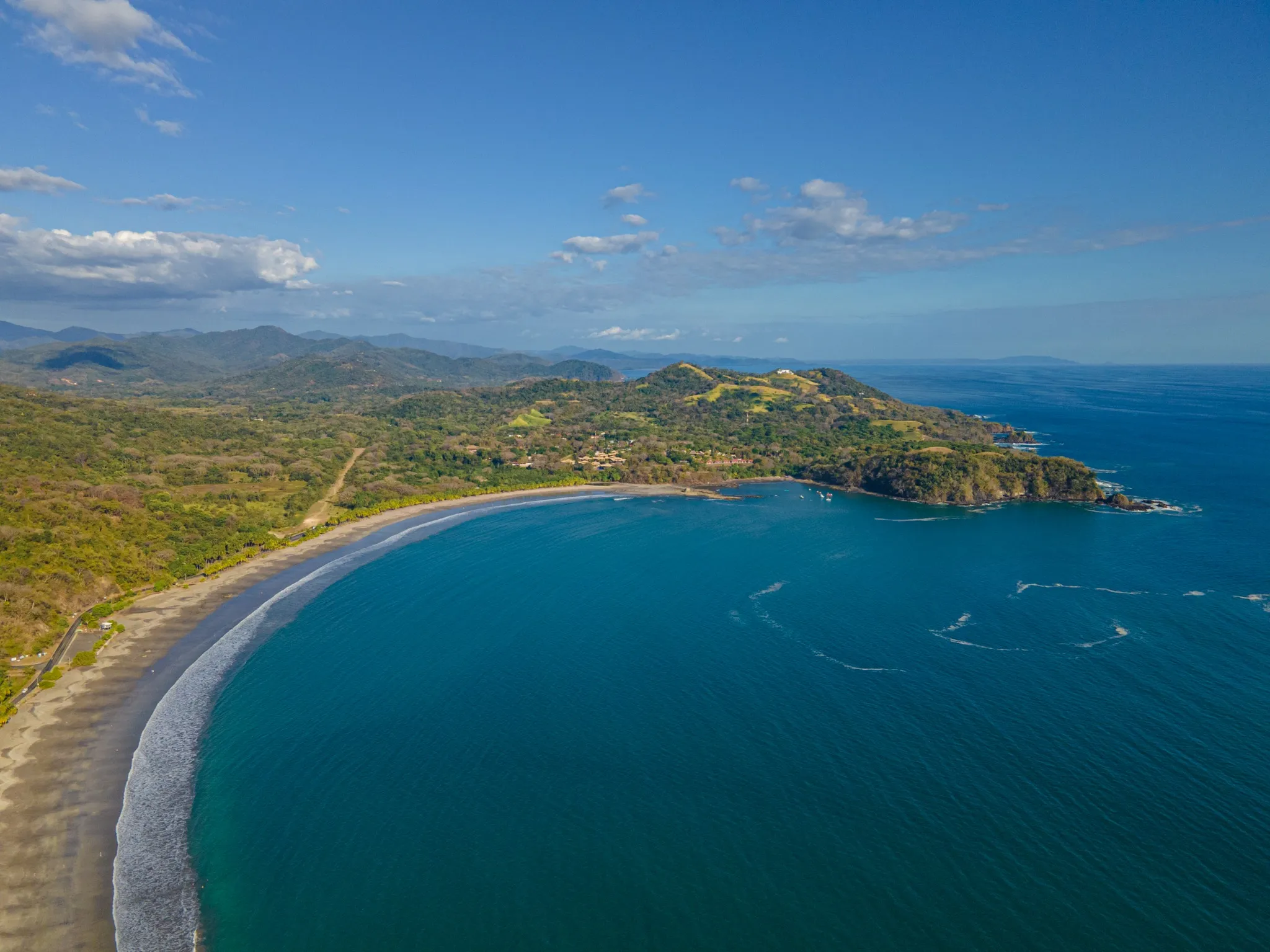
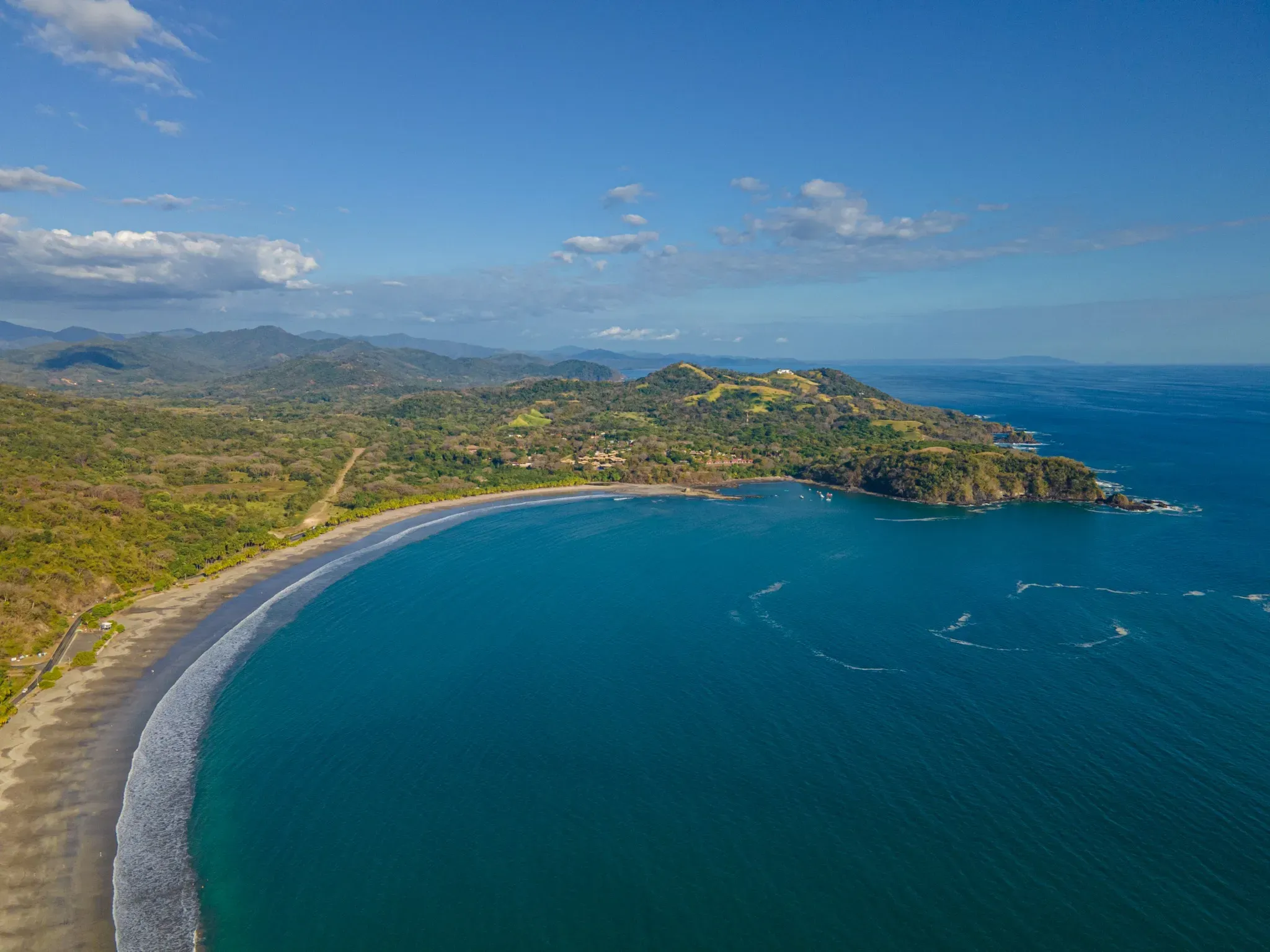
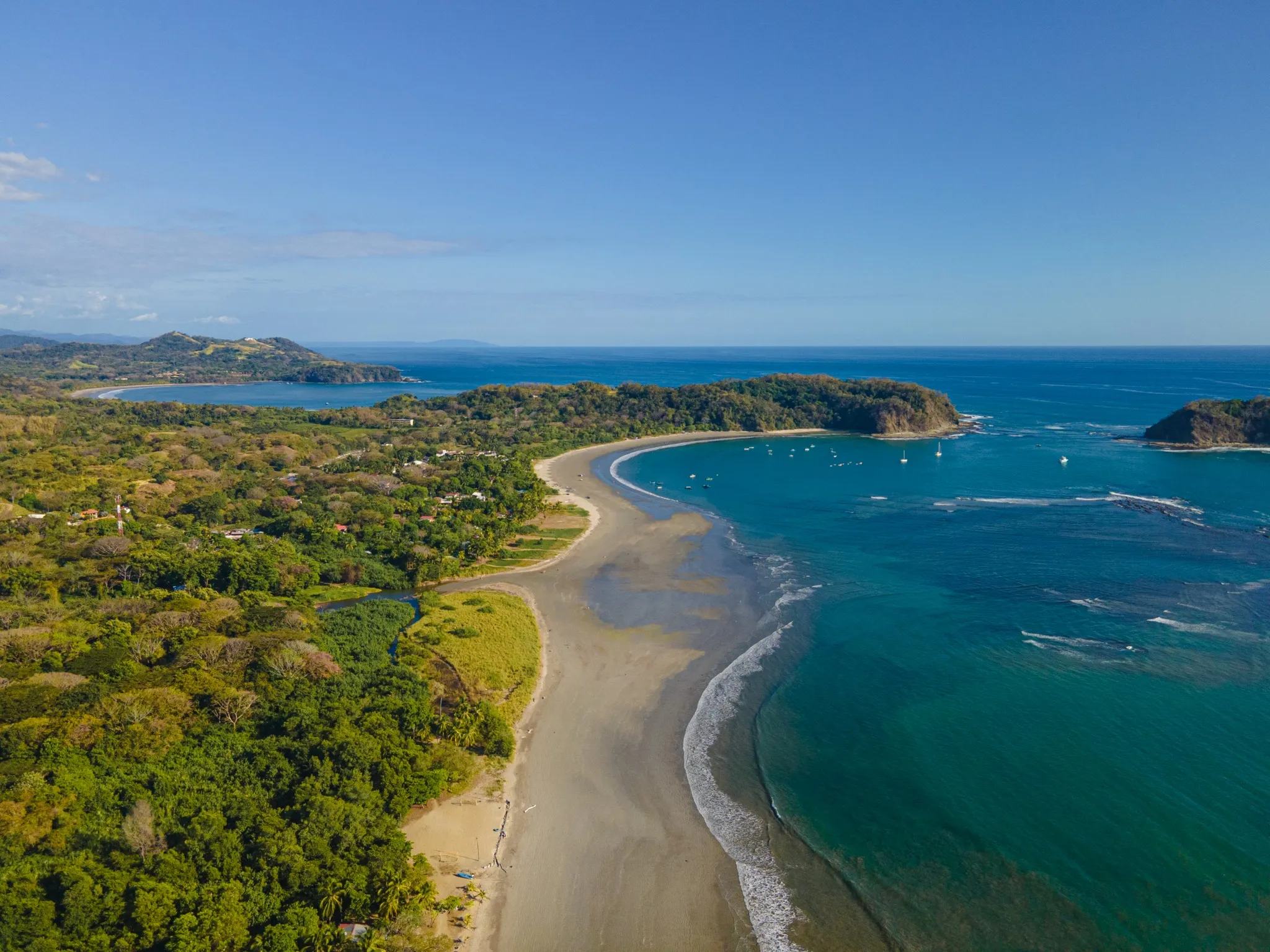
Sunny aerial view of the Costa Rica coastline

How long you stay

Trip length is the most obvious factor, but it is not perfectly linear. Longer trips cost more overall, yet some fixed costs — international flights, a rental car, certain tours — are spread across more days, so the daily average can actually fall. Deciding how many days you need is really a question of balancing time and budget together.

Your style of accommodation

This is the single biggest variable, and where budgets diverge most. The same route can be done in simple, friendly guesthouses or in world-class boutique lodges and luxury eco-resorts, and the difference between those two is dramatic. Most travellers land somewhere in the middle, mixing a few special stays with comfortable, good-value places elsewhere. Decide roughly where you want to sit on that scale and much of the rest follows.

How you get around

Transport quietly shapes the total. Self-driving, private transfers, shared shuttles and domestic flights all cost differently and suit different legs, and a fair comparison looks at the whole trip rather than any single journey. Our guide to getting around Costa Rica walks through the options; the right mix balances comfort and cost rather than simply picking the cheapest line item.

Tours, guides and activities

Costa Rica is a place you do things, and activities add up. Some experiences are inexpensive; others — private naturalist guides, small-group wildlife excursions, boat trips to remote reserves — cost more but are often what people remember most. A good itinerary is selective rather than crammed, spending on the experiences that matter to you and leaving space to simply enjoy where you are.
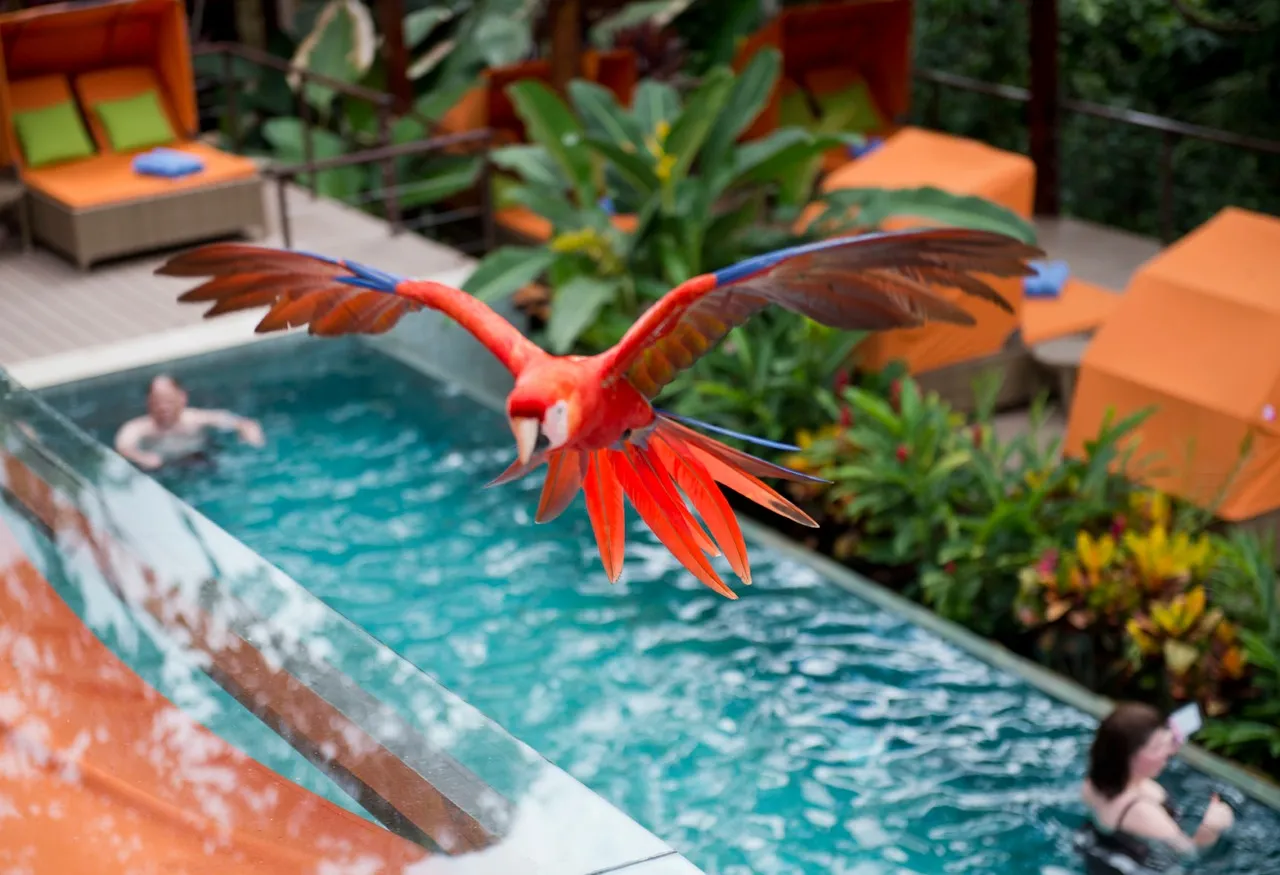
A scarlet macaw in flight in Costa Rica

Group size and who is travelling

How many of you there are changes the maths. Private vehicles, guides and villas often work out better value per person for a family or small group than for a couple, while some costs are simply per person however you travel. Families, couples and solo travellers each tend to land in different places on the budget scale for the same route.

Remote and hard-to-reach places

The wilder and more remote a destination, the more it tends to cost to reach and stay — think the Osa Peninsula or Tortuguero, where access is by small plane or boat and lodges are all-inclusive by necessity. These places are often the highlight of a trip, but they are worth planning for deliberately rather than adding on a whim.

When you book

Timing your booking helps too. The best-value hotels and the remote lodges with limited rooms fill up early, particularly for dry-season and festive travel, so planning ahead protects both your budget and your choices. Leaving it late tends to mean paying more for less availability.

Get a figure that actually fits your trip

Because so much depends on your own choices, the only truly accurate number is one built around your trip specifically. That is exactly what we do: you tell us your dates, the kind of places you would love to stay, your group and roughly the budget you have in mind, and we put together a tailored plan and a clear price — with honest guidance on where to spend and where to save. You can start your tailor-made Costa Rica trip or get in touch with our team for a personalised quote.
Costa Rica Nature & Wildlife – Green Season Special

Special price US$1,445 per person (regular price US$1,745) — save US$300 per person. Valid for travel from 1 September to 31 October 2026. Price per person sharing a double room. Availability is limited — early booking is recommended. Go beyond Costa Rica’s classic route and discover four contrasting regions rich in scenery and wildlife. This twelve-day itinerary combines the capital with the remote rainforest of Boca Tapada, the volcanic landscapes of Arenal and the cloud forest of Monteverde. Guided nature experiences are balanced with free days, creating an itinerary that feels rewarding without being rushed.

This journey visits the Central Valley around San José and the Northern Region, home to Boca Tapada and Arenal, before ending in the cloud forest — learn more about Monteverde. Explore our Costa Rica nature and wildlife tours, our off-the-beaten-path packages and birdwatching packages, view our tailor-made Costa Rica packages or speak with a local specialist for a free quote.

Costa Rica Classic – Green Season Special

Special price US$1,110 per person (regular price US$1,240) — save US$130 per person. Valid for travel from 1 September to 31 October 2026. Price per person sharing a double room. Availability is limited — early booking is recommended. Experience three of Costa Rica’s best-known destinations at a particularly rewarding time of year. This nine-day journey combines the culture of San José, the volcanic landscapes and rainforest of Arenal, and the mist-covered cloud forest of Monteverde. Private and shared transfers are arranged throughout, with guided nature experiences included and free time to personalise the journey.

This journey visits the Central Valley around San José and the Arenal area in Costa Rica’s Northern Region, before ending in the cloud forest — learn more about Monteverde. Explore our Costa Rica nature and wildlife tours, view our tailor-made Costa Rica packages or speak with a local specialist for a free quote.

"Two small planes flying over a beautiful beach with a large forest in front of the shoreline."

Getting Around Costa Rica: A Guide to Your Transport Options

Costa Rica is smaller than it feels. The distances on a map look modest, but winding mountain roads, the occasional river crossing and travel times that run longer than you would expect all shape how you get around. The good news is that you have plenty of options — from self-drive to private transfers, shared shuttles, short domestic flights and even boats — and most trips use a mix rather than a single method. Here is how each one works, and when it makes sense.

The big picture

Two things are worth knowing before you plan any route. First, distance is a poor guide to time here: a journey that looks like an hour on the map can take two or three once you factor in the terrain. Second, no single way of travelling suits an entire trip — the right answer usually changes from one leg to the next. Planning around that reality is what makes a Costa Rica itinerary feel relaxed rather than rushed.

Renting a car and driving yourself

A rental car gives you the most freedom: your own pace, spontaneous stops, and access to smaller places that other transport does not reach. It suits confident drivers and regions where sights are spread out. The trade-offs are navigation, parking, insurance and the fact that some remote lodges genuinely need a 4×4. We compare it in detail in our guide to private transfers versus a rental car, but as a rule it shines where independence adds something and the roads are manageable.

Green rural countryside and winding roads in Costa Rica

Private transfers

With a private transfer, a driver meets you and takes you door to door while you simply enjoy the view. It is the most comfortable choice after a long flight, on complicated routes, or when the group includes children or older travellers. You lose the spontaneity of a car but gain a genuinely relaxed travel day, with no parking, navigation or vehicle to worry about.

Shared shuttles

Shared shuttle services sit in the middle: tourist-oriented minibuses that run set routes between the popular destinations, cheaper than a private transfer and with no driving involved. The compromises are fixed departure times and stops to collect other travellers along the way, which makes them less practical for remote hotels but perfectly good between well-connected spots.

Domestic flights

For long distances or hard-to-reach corners, a short domestic flight can turn a punishing drive into a scenic half-hour hop. Small aircraft connect San José and Liberia with places like the Osa Peninsula, Tortuguero, Tamarindo, Nosara and Quepos. Flights save real time and the aerial views are spectacular, though the little planes have strict luggage limits, so pack accordingly.

Public buses

Costa Rica has an extensive and remarkably cheap public bus network that locals rely on every day. For budget-minded and flexible travellers it is a genuine option, but buses are slower, can be crowded, and are less convenient with luggage or a tight itinerary. They reward patience and a sense of adventure more than they suit a time-pressed holiday.

Taxis and ride-hailing

Within towns and cities, official taxis — the red ones, with orange airport taxis at San José — are metered and easy to use. Ride-hailing apps also operate in and around the capital. For getting between destinations they are rarely the practical choice, but for short local hops they are convenient and inexpensive.

Boats and water crossings

Some of the best places are reached by water, and that is part of the fun. Tortuguero, with no road access, is reached by boat through its jungle canals. The quickest way between La Fortuna and Monteverde is the scenic jeep-boat-jeep across Lake Arenal. The Osa Peninsula’s Drake Bay is typically reached by boat down the Sierpe River, and ferries cross the Gulf of Nicoya to the southern Nicoya Peninsula. These crossings are less a chore than a highlight.

A boat tour through the jungle canals of Tortuguero, Costa Rica

Which option is right for you?

Most well-planned trips combine several of these — perhaps a private transfer on arrival, a domestic flight to a remote lodge, and a rental car for a coastal stretch where independence helps. The right mix depends on your route, your group, the season and how long you have; our guides to how many days you need and the best time to visit both feed into it.

Let us handle the logistics

Working out the transport is where a lot of the stress of planning hides, and it is exactly the part we take off your hands. We match each leg of your trip to the option that fits — comfort, cost, time and the places you want to reach — so the days flow. Tell us where you would love to go and how you like to travel, and we will put the pieces together. You can start your tailor-made Costa Rica trip or get in touch with our team.

Costa Rica’s Caribbean Coast: Tortuguero, Cahuita & Puerto Viejo

The Caribbean coast of Costa Rica is another country within the country. Cross over to this side and the rhythm changes, along with the music, the food and even the colour of the sea. Afro-Caribbean culture is woven into every corner, the rainforest reaches right down to the beach, and places such as Tortuguero, Cahuita and Puerto Viejo offer a more relaxed, authentic and less-travelled Costa Rica. Many visitors arrive thinking only of the Pacific and find that the Caribbean quietly steals their heart. If you are after a different, deeply genuine side of the country, this guide is for you.

A Caribbean with its own identity

The Caribbean coast has a history and character quite unlike the rest of the country. The influence of Afro-Caribbean communities, many with Jamaican roots, together with the indigenous Bribri and Cabecar peoples, has shaped a unique culture with its own everyday language (Caribbean creole), music and cuisine. The result is a region where life moves at a gentler pace, all hammocks, bicycles and reggae drifting on the breeze. It is not the Costa Rica of the most familiar postcards, and that is precisely why it charms.

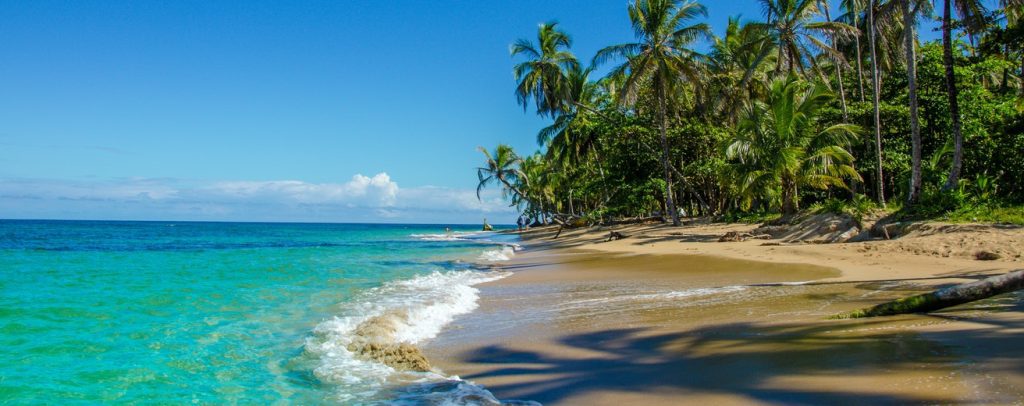
A sandy beach at Cahuita on the Caribbean coast of Costa Rica

Tortuguero: canals and turtles

To the north, Tortuguero is a maze of navigable canals reached only by boat or small plane, which lends it a remote, wild feel that is increasingly rare. Often called the “Amazon of Costa Rica”, it is explored by gliding slowly through the vegetation, spotting caimans, monkeys, colourful birds, frogs and sloths tucked among the branches.

But Tortuguero is famous above all for its sea turtles. In season, its beaches become one of the most important nesting sites in the Caribbean, when green turtles come ashore at night to lay their eggs. Witnessing it, always with authorised guides and strict respect for the animals, is deeply moving. The dates vary by species, so it is worth planning your trip around the season.

Boat trip through the canals of Tortuguero

Cahuita: village, park and beach

Further south, Cahuita pairs a laid-back, unhurried village with one of the loveliest national parks in the country. Here the rainforest spills right onto the sea: its flat, accessible coastal trail lets you walk for hours amid monkeys, sloths, raccoons and birds, with the beach always at your side. It is one of the best places on the Caribbean to watch wildlife, on your own or with a guide who will help you spot what the eye alone would miss.

Offshore, Cahuita also protects a coral reef, one of the few in the country, ideal for snorkelling in calm waters. And its beaches, pale sand and palms leaning over the sea, are exactly the Caribbean image you dream of.

Playa Negra, with dark volcanic sand, on the southern Caribbean

Puerto Viejo and the southern Caribbean

Puerto Viejo de Talamanca is the vibrant heart of the southern Caribbean: a relaxed, bohemian village with postcard beaches, cafes, local sodas and an unmistakable atmosphere. It is the perfect base for exploring the area by bicycle, the usual and most enjoyable way to get around here.

From Puerto Viejo, a coastal road links some of the finest beaches in the country. Playa Negra surprises with its dark, volcanic sand; Punta Uva is a string of turquoise coves ideal for swimming or kayaking among the mangroves; and further south, the Gandoca-Manzanillo Wildlife Refuge protects rainforest, reef and near-pristine beaches. It is an area to take slowly, one beach at a time.

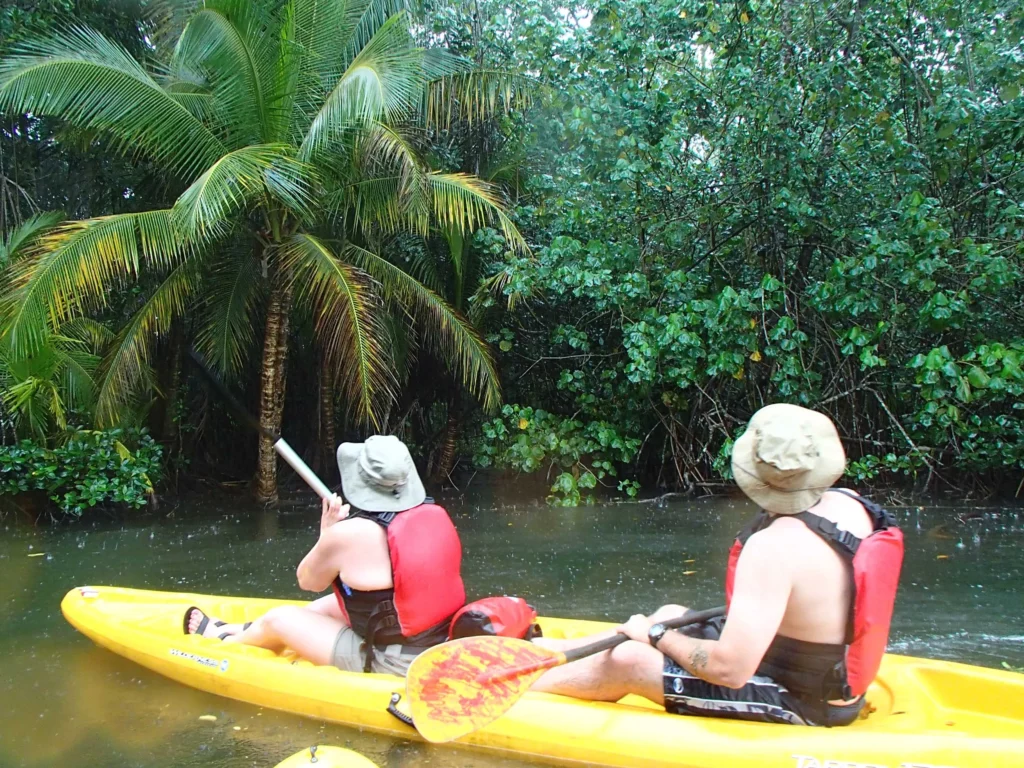
Kayaking the turquoise waters of Punta Uva

Afro-Caribbean cuisine

Eating on the Caribbean is an experience in itself, and quite different from the rest of the country. Afro-Caribbean cooking makes coconut milk its star ingredient: do not miss rice and beans cooked in coconut, Caribbean-style chicken, or a good rondon, a stew of fish, coconut and root vegetables that sums up the flavour of the region. The spiced, aromatic tastes tell the story of this coast all on their own.

The atmosphere and coast of Puerto Viejo, on the southern Caribbean

Caribbean wildlife

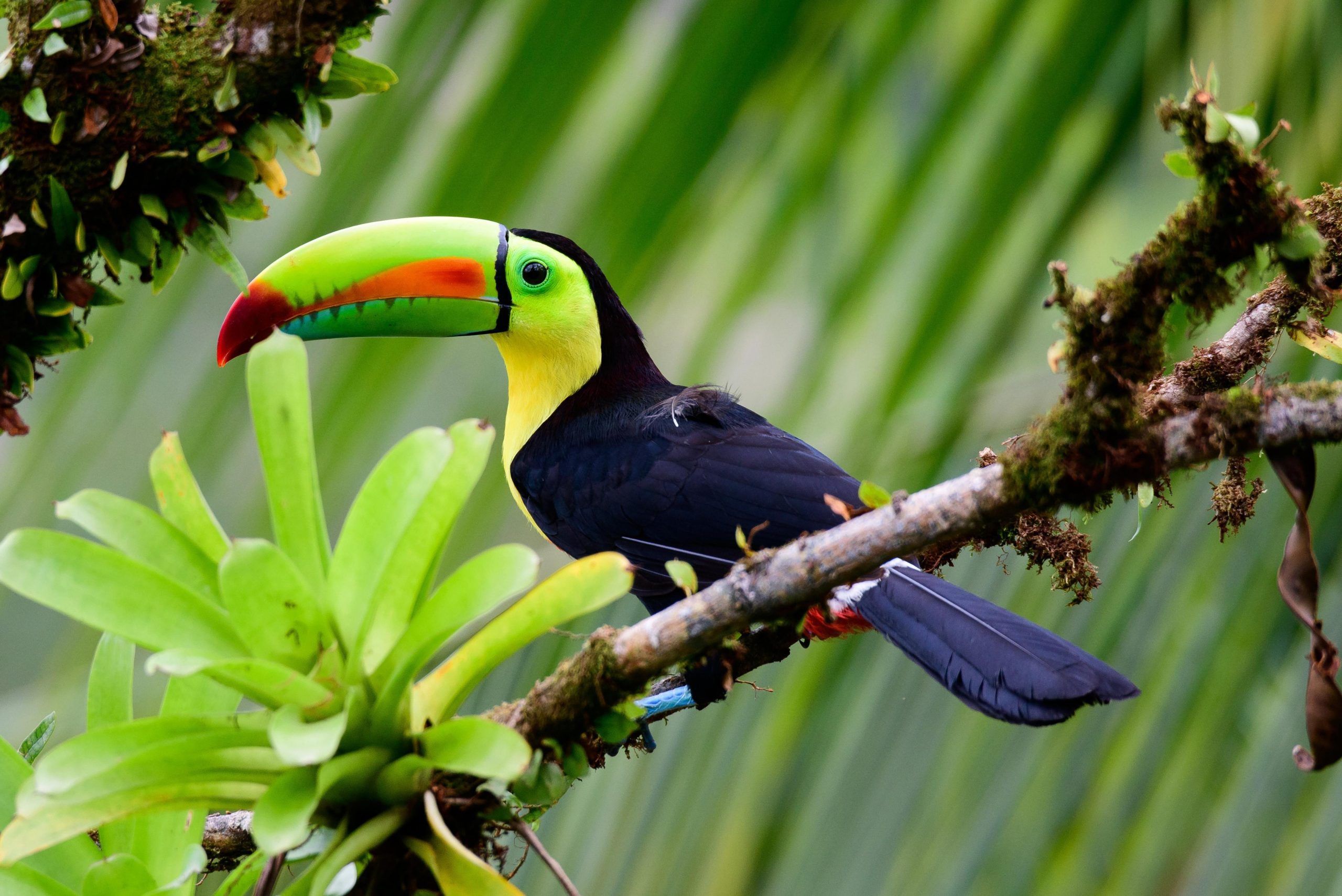
The humidity and dense rainforest make the Caribbean a paradise for wildlife. Sloths are especially common here, so much so that the area is home to rescue centres devoted to them. Add howler and white-faced monkeys, colourful frogs, toucans and a huge variety of birds, and a walk along any trail becomes almost a guarantee of memorable encounters.

A sloth, one of the stars of the Caribbean rainforest

The Caribbean climate

The Caribbean has its own rainfall pattern, different from the Pacific, and this is key when planning. Curiously, some of its finest months, with the most sunshine, do not coincide with the dry season elsewhere in the country but tend to fall around September and October, just when the Pacific is at its wettest. That makes the Caribbean an invaluable wildcard depending on your dates. Ask us and we will tell you what to expect; our guide to planning and the 10-day itinerary will help too.

Getting there and how long to stay

The Caribbean asks for a little more time, because it deserves to be enjoyed slowly. Tortuguero is usually visited as a two-night escape (reached by boat after a road transfer, or by small plane). The southern Caribbean, Cahuita and Puerto Viejo, works beautifully as a relaxed two- or three-night extension, easy to combine with the rest of the country.

Is the Caribbean worth it?

Absolutely, especially if you value authenticity, nature and a gentler pace. It is not the quickest region to travel, but it rewards you with a different Costa Rica, culturally rich and full of life. Travel in the right months and it is a gem that few first-time visitors include and almost everyone remembers as a highlight.

Shall we discover the Caribbean together? Request your tailor-made itinerary at no obligation and we will weave it into your trip.

Is Costa Rica Safe? A Practical Guide for Travellers

It is one of the most common questions we hear before a first trip, and it deserves an honest answer rather than a brochure one. The short version: Costa Rica is one of the safest countries in Latin America to visit, and the vast majority of trips pass without any trouble at all. It is a stable democracy that famously abolished its army decades ago, and tourism is central to its economy, so visitors are genuinely welcomed and looked after. That does not mean you switch your common sense off — but it does mean you can relax and enjoy the trip.

So, is Costa Rica safe?

Yes, with the ordinary precautions you would take travelling anywhere. Serious crime against tourists is rare, and the sort of problems visitors occasionally run into are almost always opportunistic rather than threatening. Costa Ricans — Ticos — are warm and helpful, the tourism infrastructure is well developed, and English is widely spoken in the places you are likely to visit. Most travellers come away wishing they had worried less.

Sunny aerial view of the Costa Rica coastline

The one thing worth watching: opportunistic theft

If anything catches visitors out, it is petty theft — a bag left on the beach while you swim, valuables visible in a parked hire car, or a phone left on a café table. The fix is simple and familiar: use your hotel safe, do not leave anything on show in the car, keep an eye on your belongings on the beach, and do not walk around flashing expensive items. Treat San José as you would any capital city and you will be fine. None of this is unique to Costa Rica; it is just good travel habit.

Staying safe on the roads

The roads are where a little planning pays off most. Rural and mountain routes can be narrow and winding, travel times are longer than the map suggests, and we generally advise against driving at night in the countryside or tackling a long drive straight after an overnight flight. If you would rather not drive at all, private transfers take it off your hands entirely. We go through the options properly in our guide to private transfers versus a rental car in Costa Rica.

Beaches, water and wildlife

The natural world is the reason you are here, and it is safe to enjoy with a bit of awareness. Rip currents are the one real hazard at some beaches, so swim where others are swimming, ask locally which beaches are safe, and do not go out of your depth if you are unsure. On land, admire the wildlife but do not feed or touch it — the animals are wild, and keeping a respectful distance is better for you and for them. A guide will always show you how to enjoy it safely.

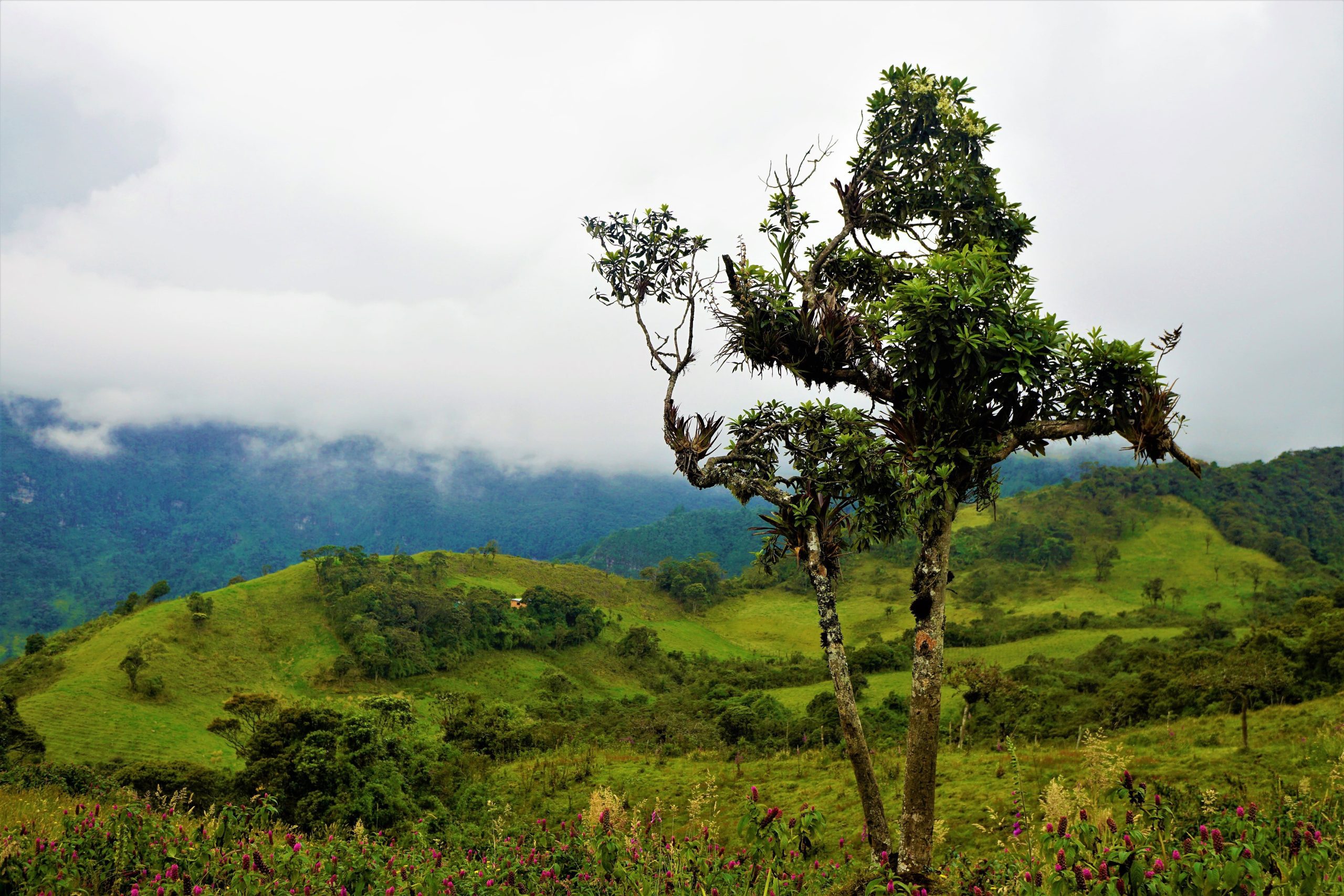
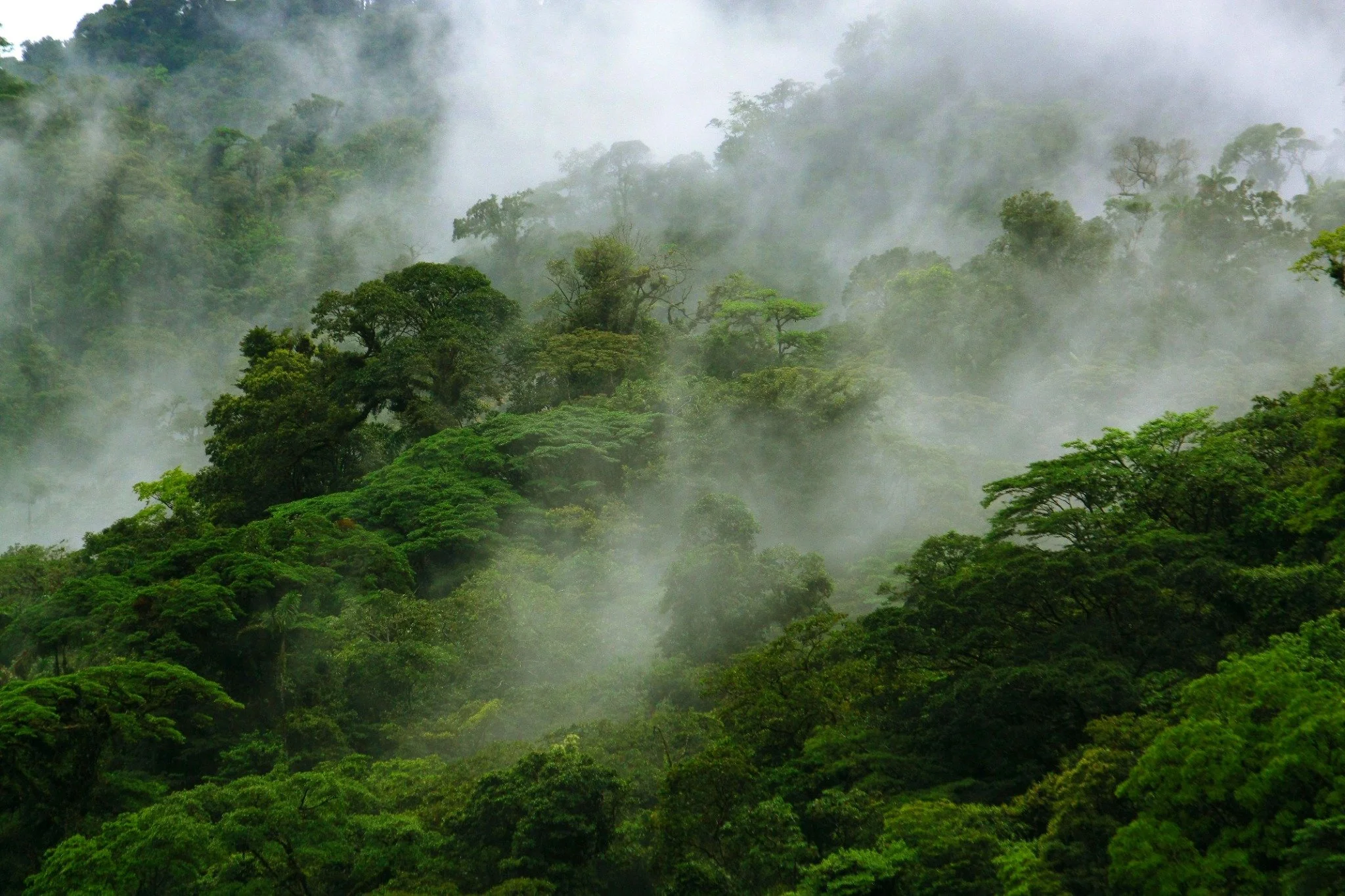
Misty rainforest-covered mountains in Costa Rica

Health and what to pack

No special vaccinations are required for most trips, though it is always worth checking current advice with your doctor or a travel clinic before you go. The main day-to-day things are sensible: strong sun protection, insect repellent for the evenings, and staying hydrated in the heat. Tap water is safe to drink in most of the country. Bring any personal medication you need, as specific brands are not always easy to find locally, and travel insurance is a must — as it is anywhere.

Solo travellers, women and families

Costa Rica is a popular and comfortable choice for solo travellers, including women travelling alone, and for families with children — the same everyday awareness applies, nothing more. Families in particular tend to feel very at ease here, which is part of why it is such a well-loved multi-generational destination. If it helps your peace of mind, a well-planned itinerary with trusted drivers, vetted hotels and someone on the ground to call removes almost all of the uncertainty.

Travel with peace of mind

The honest takeaway is that Costa Rica is a safe, welcoming place to visit, and a little common sense is all it really asks of you. Where we help is in taking the small worries off your plate entirely — building an itinerary that avoids the awkward drives, using hotels and guides we know and trust, and being reachable if anything comes up. Tell us how you like to travel and we will plan a trip you can simply enjoy. You can start your tailor-made Costa Rica trip or get in touch with our team.

This article offers general guidance only; please check the latest official travel and health advice for your own country before you travel.

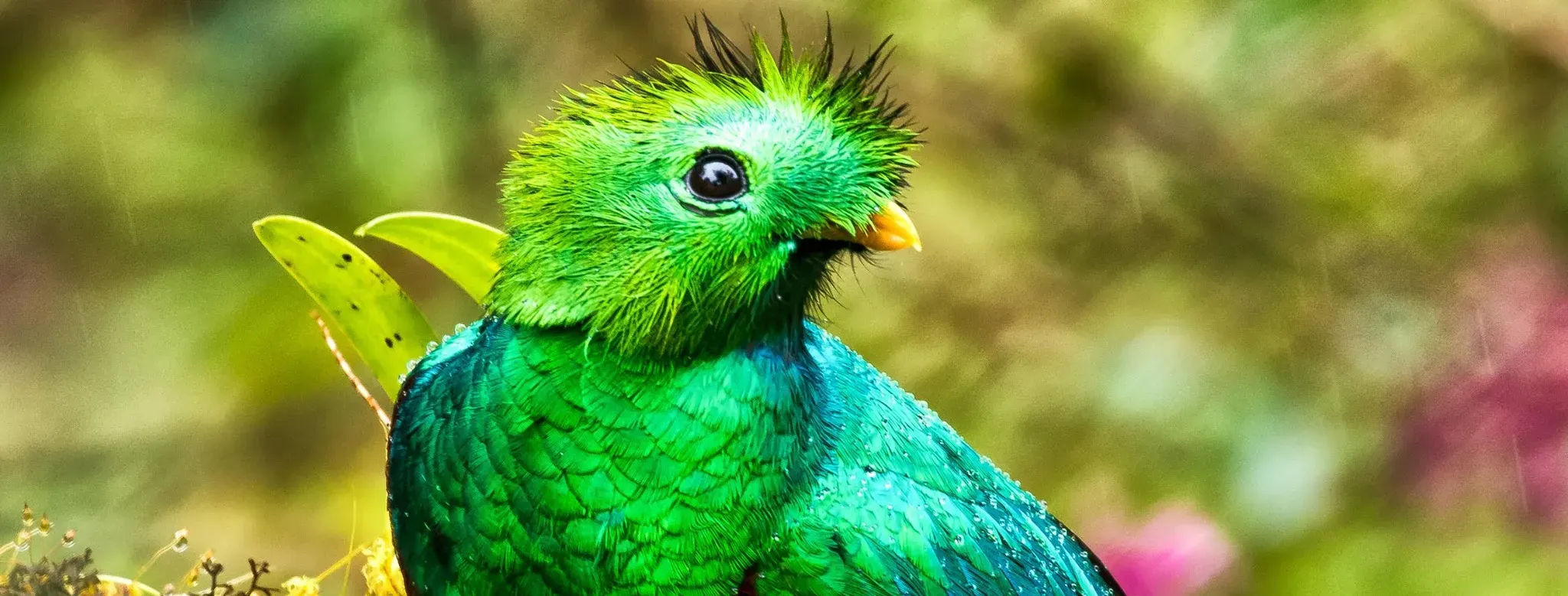
A Resplendent Quetzal perched in Costa Rica

Monteverde: A Guide to Costa Rica’s Cloud Forest

Monteverde is one of those places that stays with you. High in the mountains, more than a thousand metres up, clouds drift through the trees and wrap a unique cloud forest in mist: damp, green, hushed and teeming with life. This is the realm of the quetzal, the hummingbird and a biodiversity that has made the region famous the world over. If you are after the most magical, natural side of Costa Rica, you will find it here. In this guide we explain what to expect, what to do and how to make the most of it.

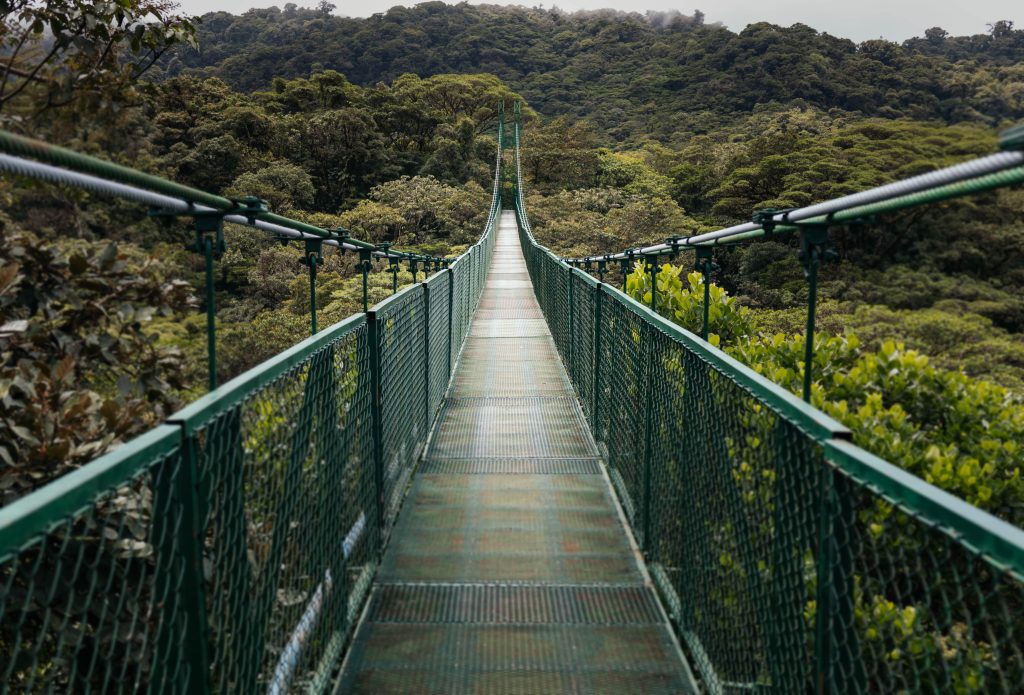
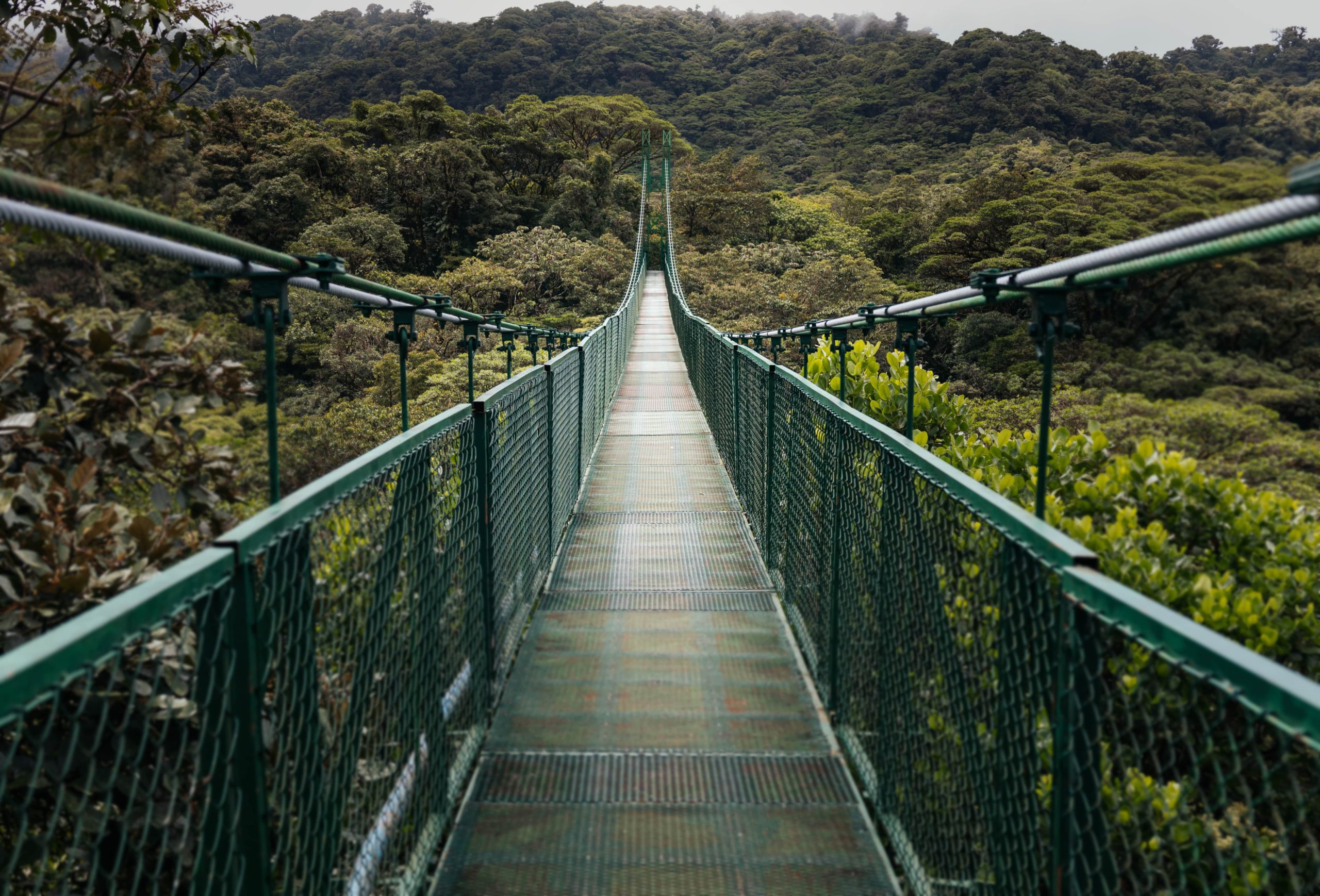
A bridge through the Monteverde cloud forest

What a cloud forest is

Unlike lowland rainforest, a cloud forest lives quite literally among the clouds. At this altitude, the constant humidity cloaks the trees in moss, ferns and orchids, creating an ecosystem of extraordinary richness where every branch is a small hanging garden. Walking its trails, with mist filtering through the branches and birdsong all around, feels almost otherworldly.

This biodiversity is no accident: Monteverde protects a considerable area of forest thanks to private reserves that have devoted decades to conservation, a pioneering model in Costa Rica of which the whole country is proud.

The hanging bridges

Exploring Monteverde by its hanging bridges lifts you to canopy level, where much of the forest life unfolds. It is a calm, spectacular way to appreciate the scale of the trees and, with luck, to cross paths with birds, monkeys and sloths in their habitat. The trails are generally accessible and suitable for almost all ages, making this one of the most rewarding activities for every kind of traveller.

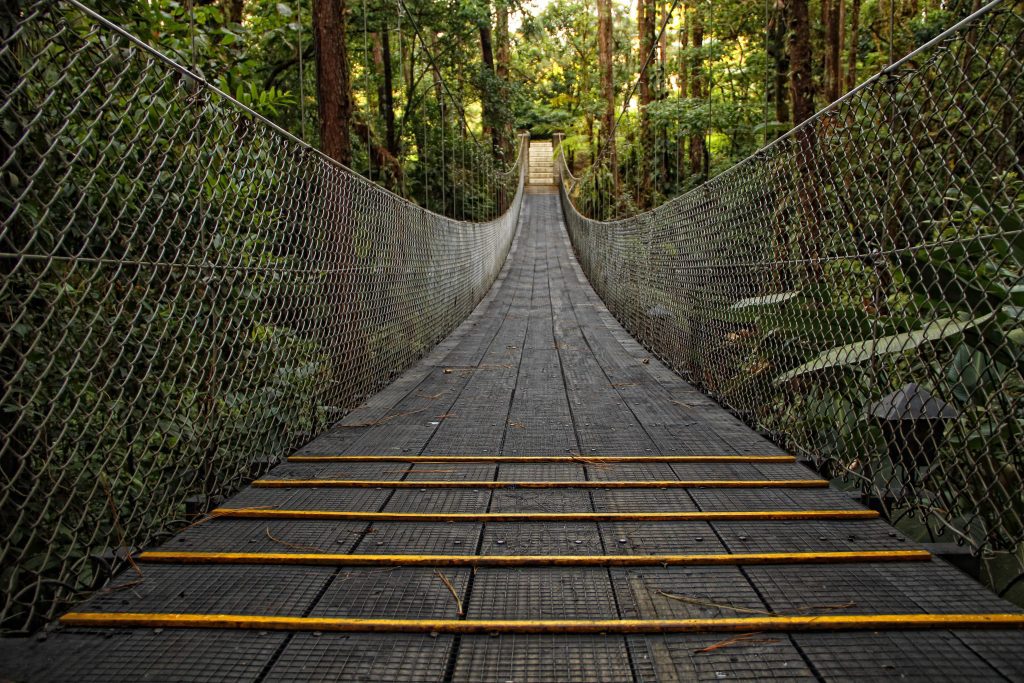
A wooden bridge through the cloud-forest greenery

Canopy and zip-lines

Monteverde is also one of the birthplaces of the canopy tour in Costa Rica. Some of the country’s first zip-lines were built here, and today the area offers circuits for every taste, from gentle, scenic runs to long, fast lines that cross entire valleys above the treetops. It is adrenaline with a view that is hard to match.

Night walks

When the sun sets, the forest changes its cast of characters. A guided night walk reveals frogs, insects, sloths and other creatures that only emerge after dark, a world that stays hidden by day. It is one of the favourite activities for those who visit Monteverde, and a different way to grasp just how alive this place is.

Guided walk through the Monteverde cloud forest

A paradise for birdwatching

Monteverde is celebrated among bird lovers. The resplendent quetzal, perhaps the most sought-after bird in Central America with its long iridescent green tail, lives in these forests alongside dozens of hummingbird species, toucans and the striking three-wattled bellbird, whose metallic call rings through the trees. A specialist guide greatly improves your chances of a sighting and will teach you to read the forest with new eyes.

Red-eyed tree frog, a resident of the humid forest

Beyond the forest

The area also offers experiences beyond the trails: coffee farms where you learn the journey from bean to cup, butterfly gardens, hummingbird gardens and dairies where you can see how the cheese Monteverde is known for is made. These are ideal for rounding off the day or for when the weather calls for something gentler.

Climate and what to pack

Because of its altitude, Monteverde is cooler and damper than the rest of the country, and the mist is part of its charm. It is worth bringing a light warm layer, a waterproof and shoes with good grip. This is not a beach destination but nature at its purest, and that is precisely why it offers such a wonderful contrast within a single trip.

Fitting it into your trip

Monteverde pairs beautifully with Arenal: the journey between the two, often with a boat crossing over the lake, is short and lovely. Two nights let you enjoy the trails, a night walk and an extra experience at an unhurried pace. See how it slots into our 10-day Costa Rica itinerary.

Shall we add Monteverde to your route? Tell us your dates and interests and we will prepare it around you.

Costa Rica 14-Day Itinerary: A Two-Week Route

Ten days is the classic first trip to Costa Rica, but fourteen is where the country really opens up. With two weeks you stop rushing between highlights and start travelling properly — adding a wilder, more remote corner and leaving room for the unplanned days that often turn out to be the best. This is a sample two-week route we plan variations of all the time. Treat it as a starting point, not a fixed package.

Is fourteen days too long for Costa Rica?

Not at all — if anything it is the length that suits the country best. Costa Rica packs enormous variety into a small space, but the winding roads mean you cover less ground in a day than you would expect. Two weeks lets you enjoy that variety without living out of the car. If you are still deciding, our guide to how many days you need in Costa Rica lays out the trade-offs.

The route at a glance

This itinerary starts gently near San José, takes in the Arenal Volcano and the Monteverde cloud forest, drops down to the central Pacific coast, and then heads into the wild Osa Peninsula before a relaxed finish. It blends adventure, wildlife and beach time, and keeps each drive manageable.

Days 1–2: Arrival and the Central Valley

Flights into San José tend to land in the afternoon, so we usually suggest a first night near the city or up in the coffee hills rather than a long drive while jet-lagged. It is an easy start, and the next morning you set off north feeling human again.

Days 2–4: Arenal and La Fortuna

The Arenal Volcano is the perfect opener. Base yourself in La Fortuna for a couple of nights and you can soak in natural hot springs, walk the hanging bridges through the rainforest canopy and visit the La Fortuna waterfall, with time left simply to enjoy the view of the cone.

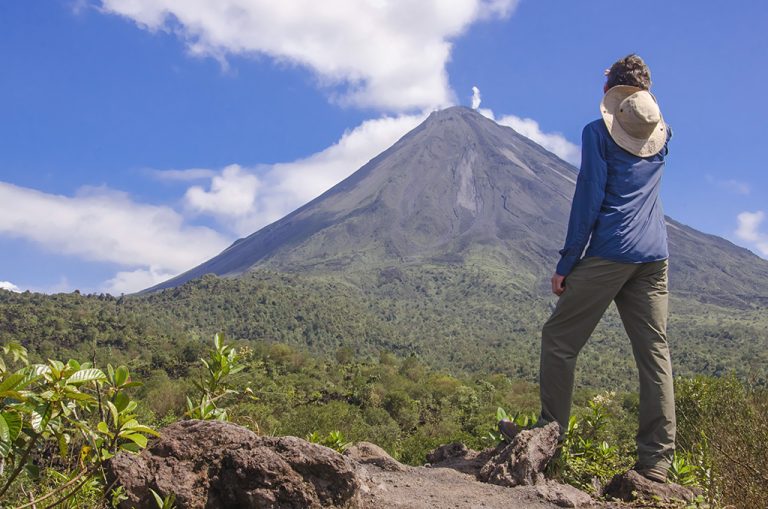
Arenal Volcano rising above rainforest under a clear blue sky

Days 4–6: Monteverde Cloud Forest

A short journey across the lake and up into the mountains brings you to Monteverde, a cool, misty world quite unlike the lowlands. Walk the canopy bridges, take a guided nature walk, or head out after dark on a night walk. It is prime territory for spotting the resplendent quetzal.

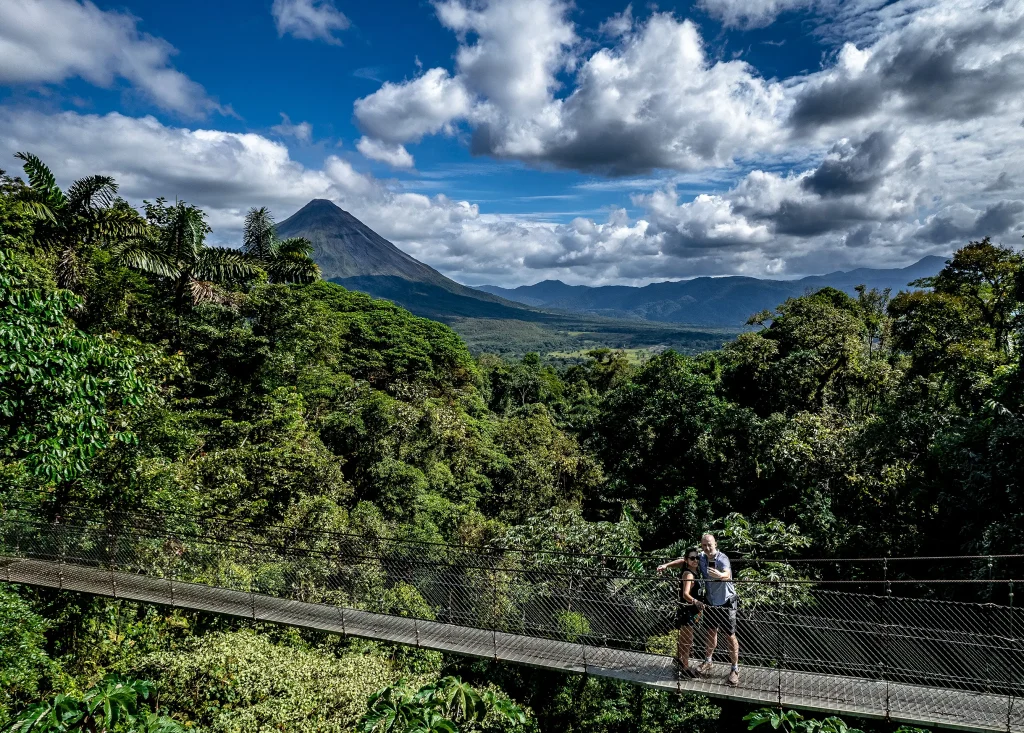
A canopy suspension bridge through the Monteverde cloud forest

Days 6–9: The Central Pacific

After the mountains, the coast is the reward. Manuel Antonio is a favourite: a compact national park where sloths, monkeys and iguanas live alongside beautiful beaches. Three nights gives you time for wildlife, sand and a slower pace.

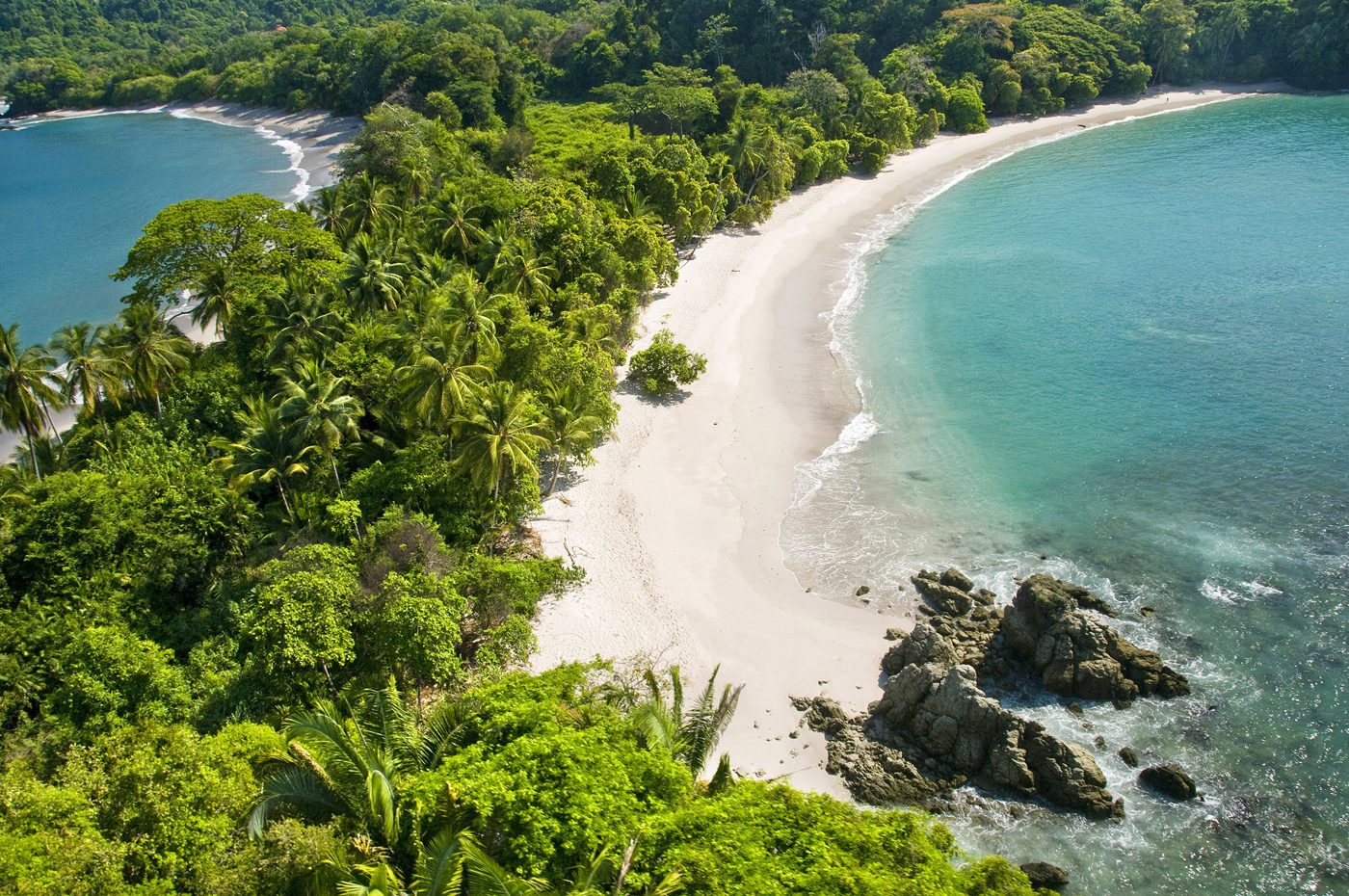
Aerial view of a beach and rainforest at Manuel Antonio

Days 9–12: The Wild South — Osa and Corcovado

This is what two weeks buys you. The Osa Peninsula, home to Corcovado National Park, is one of the most biologically intense places on Earth — scarlet macaws, tapirs and, if you are lucky, big cats. It is remote, so we often reach it by a short domestic flight to Drake Bay rather than a long drive, and it rewards you with genuine wilderness and barely another traveller in sight.

A scarlet macaw in flight in Costa Rica

Days 12–14: Slow Down, Then Home

For the final stretch we like to ease off — a last couple of nights somewhere restful before you travel back for your flight. If a remote peninsula is not your idea of a finale, the Caribbean coast around Puerto Viejo makes an equally good alternative, with a completely different culture and rhythm.

Getting around this route

Two weeks usually means a mix of transport rather than one method throughout — perhaps private transfers and a domestic flight for the longer or trickier legs, and a rental car where independence genuinely helps. We weigh it up in our guide to private transfers versus a rental car.

When to do this trip

The route works year-round, but the season shapes it — drier and busier from December to April, greener and quieter through the rest of the year. Our month-by-month guide to the best time to visit will help you choose your window.

Make this itinerary your own

This is a framework, not a fixed plan. We can swap the Osa for the Caribbean, add a coffee tour or a rafting day, build in more downtime for a family, or step the whole thing up for a special occasion. Tell us what you would love to see and how you like to travel, and we will shape a fortnight around you. You can start your tailor-made Costa Rica trip or get in touch with our team.

Arenal Volcano & La Fortuna: A Complete Guide

If one place captures the spirit of Costa Rica, it is Arenal. Its near-perfect volcanic cone presides over a region where adventure and relaxation sit side by side: you can cross hanging bridges through the rainforest in the morning and unwind in natural hot springs at the foot of the volcano by evening. La Fortuna, the town that serves as your base, is welcoming, easy-going and well set up for visitors. Here is what makes Arenal an almost unmissable stop, and how to make the most of it.

Hanging bridges in Arenal Volcano National Park

The volcano and its trails

Arenal Volcano National Park offers trails that wind through old lava flows and tropical forest, with viewpoints towards the cone. These are accessible walks, suitable for all levels, and a naturalist guide makes all the difference: they will help you spot birds, frogs and perhaps a sloth tucked away in the canopy. Catching the volcano clear, its summit rising above the forest, is one of those sights you never forget.

Trail and hanging bridge through the Arenal rainforest

Hanging bridges and canopy tours

One of the finest ways to experience the rainforest is from above. Hanging-bridge walks place you level with the treetops, with sweeping views of the forest and the volcano, and they suit almost every age. And for those after a little adrenaline, canopy (zip-line) circuits add a thrill without losing touch with nature.

Waterfalls and adventure

The area also hides spectacular waterfalls, such as the La Fortuna Waterfall, reached down a staircase through the forest for a refreshing dip in its pool. For the more active, there is white-water rafting on nearby rivers, horseback riding, mountain biking and gentle safari floats to watch wildlife. Arenal is, without doubt, the adventure capital of the country.

Hiking the trails of Arenal Volcano

Hot springs

The volcano’s heat feeds natural hot springs that range from landscaped resorts with pools, slides and gardens to simpler, wilder pools, some of them free. It is the perfect end to a day on the trails: few things are as restful as a warm soak with the murmur of the rainforest all around and, with luck, the volcano in the background.

Lake Arenal and around

At the foot of the volcano lies the country’s largest lake. Beyond its views, it is a useful link: the classic boat crossing to Monteverde traverses it, saving time and offering one of the loveliest landscapes on the route. The area is also known for its coffee and cacao farms, where you can learn about, and taste, the whole process.

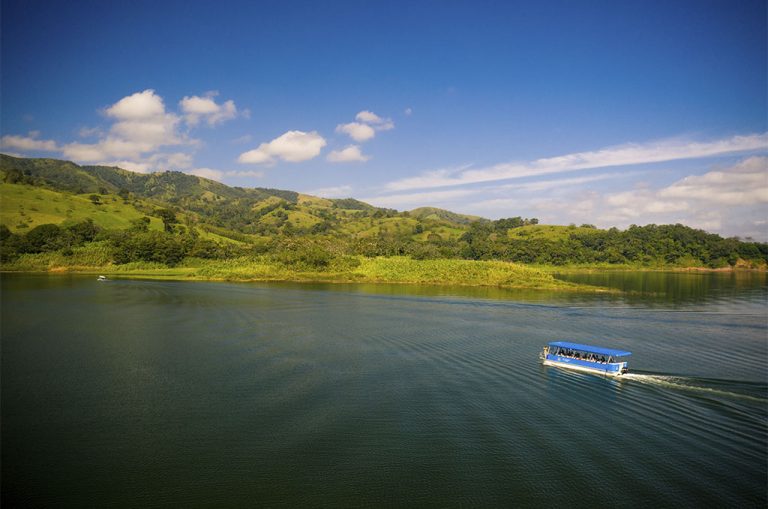
Boat crossing on Lake Arenal

How many days to spend

Two nights are usually enough to combine an adventure activity, an afternoon in the hot springs and a little free time. If you love nature and prefer an unhurried pace, an extra night is time well spent. Arenal fits beautifully near the start of almost any route; see how it slots into our 10-day Costa Rica itinerary.

Getting there

From San José, La Fortuna is a few hours away by road. Many travellers choose a private transfer to arrive relaxed and free of route-finding, and from here you can connect easily to Monteverde (often via the jeep-boat-jeep crossing) or the Pacific beaches.

Shall we include Arenal in your trip? Tell us your dates and interests and we will design it around you.

Costa Rica 10-Day Itinerary: A First-Timer’s Route

A first trip to Costa Rica usually comes down to one question: how do you fit volcanoes, cloud forest and the coast into the time you have without spending it all in the car? Ten days is the length we recommend most often, because it lets you enjoy three very different parts of the country at a comfortable pace. What follows is a sample route we plan variations of every week — not a fixed package, but a realistic starting point you can shape around your own interests.

Is ten days enough for Costa Rica?

For a first visit, comfortably yes. Ten days is long enough to combine two or three regions with a couple of nights in each, rather than the single rushed nights that make a holiday feel like one long drive. If you are still weighing up the length of your trip, our guide to how many days you need in Costa Rica talks through the trade-offs. For most first-timers, this is the sweet spot.

The route at a glance

This itinerary loops from San José up to the Arenal Volcano, across to the Monteverde cloud forest, and down to the central Pacific coast before returning to the airport. It balances adventure, wildlife and beach time while keeping the drives sensible. Here is how the ten days break down.

Days 1–2: Arrival and the Central Valley

Most international flights land in San José in the afternoon. Rather than start with a long drive while jet-lagged, we usually suggest a first night close to the city or up in the coffee hills of the Central Valley — a gentle landing after a travel day. The next morning you set off north, refreshed, towards Arenal.

Days 2–4: Arenal and La Fortuna

Arenal is the classic Costa Rica opener, and for good reason. The near-perfect volcanic cone looms over the little town of La Fortuna, and the area is packed with things to do: soaking in natural hot springs, walking the hanging bridges through the rainforest canopy, and visiting the thundering La Fortuna waterfall. Two nights here gives you a full day to explore without rushing, plus time simply to enjoy the setting.

Arenal Volcano rising above rainforest under a clear blue sky

Days 4–6: Monteverde Cloud Forest

From Arenal it is a short hop across the lake and up into the mountains to Monteverde, a misty world that feels completely different from the lowlands. This is cloud forest — cooler, greener and alive with birdsong. You can walk suspended bridges high in the canopy, join a guided nature walk to spot wildlife you would otherwise miss, or head out after dark on a night walk. Keen birdwatchers come here hoping for a glimpse of the resplendent quetzal.

A canopy hanging bridge in the Monteverde cloud forest

Days 6–9: The Pacific Coast

After the cool of the mountains, the coast is the reward. Manuel Antonio, on the central Pacific, is a favourite for a first trip: a compact national park where monkeys, sloths and iguanas live right beside some of the country’s prettiest beaches. Three nights lets you split your time between wildlife, the sand and simply slowing down. If beaches are your main draw, this stretch can just as easily be spent up in Guanacaste instead.

Day 10: Departure

On your final morning you travel back to San José for your flight home. If your departure is early, we often build in a last night nearer the airport so the journey is relaxed rather than a dawn dash.

Getting around this route

How you travel between these stops matters as much as the stops themselves. Some travellers love the freedom of a rental car; others would rather have private transfers handle the driving, especially on the mountain roads to Monteverde. There is no single right answer, and we go through it properly in our guide to private transfers versus a rental car in Costa Rica.

When to do this trip

This route works all year, but the season shapes the experience — drier and busier from December to April, greener and quieter (and better value) through the green season. Our month-by-month guide to the best time to visit will help you pick your window.

Make this itinerary your own

Think of this as a framework rather than a fixed plan. We might swap Manuel Antonio for a quieter beach, add the Caribbean coast if you have a couple more days, build in a coffee tour or a rafting morning, or slow the whole thing down for a family. Tell us what you would love to see and how you like to travel, and we will shape a ten-day route around you. You can start your tailor-made Costa Rica trip or get in touch with our team, and we will take it from there.

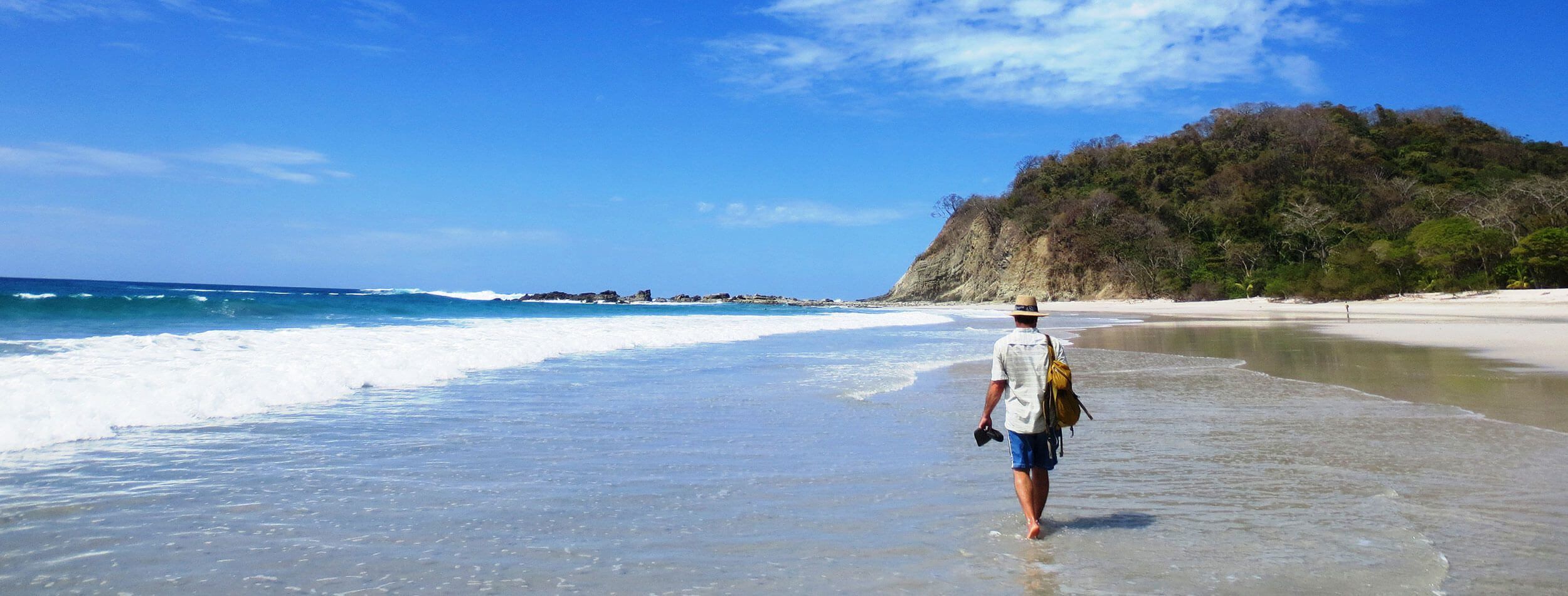
Discover the beauty of Costa Rica's coastline from above, with CRSTOURS, your expert travel agency.

Best Time to Visit Costa Rica: A Month-by-Month Guide

There is no single best time to visit Costa Rica — there is a best time for what you want. The country sits close to the equator, so the days stay a similar length all year and it never really has a cold season. What changes is the rain, and with it the crowds, the prices and which parts of the country are at their finest. Once you understand the rhythm of the two seasons, choosing your month becomes much easier.

The two seasons, briefly

Costa Ricans talk about the dry season and the green season rather than summer and winter. The dry season runs roughly from December to April and brings the reliable sunshine most people picture. The green season, from about May to November, brings afternoon rain, lush landscapes and far fewer visitors. Neither is “bad” — they simply suit different trips.

Dry season: December to April

This is the classic time to come. Mornings and afternoons are mostly sunny, the Pacific beaches are at their best, and the roads and trails are easy going. It is also the busiest and priciest stretch, especially from mid-December through the New Year and again around Easter, when Costa Ricans travel too. If you have your heart set on these dates, book well ahead — the best hotels fill months in advance. February and March tend to be gloriously dry and a little quieter than the festive peak.

Sunny aerial view of a beach on the Costa Rica coast

Green season: May to November

Do not let the word “rainy” put you off. Through much of the green season the mornings are bright and the rain arrives as a warm afternoon downpour that clears as quickly as it came. In return you get a countryside that is impossibly green, waterfalls in full flow, noticeably lower prices and space to yourself at sights that are shoulder-to-shoulder in January. September and October are the wettest months on the Pacific side and the quietest of the year — wonderful value if you do not mind planning around the weather.

The Caribbean plays by its own rules

One quirk worth knowing: the Caribbean coast, around Puerto Viejo and Tortuguero, runs on a different calendar. It can see rain when the Pacific is dry, and — this is the useful part — it is often at its sunniest in September and October, exactly when the rest of the country is at its wettest. If you are travelling in those months and want reliable beach days, the Caribbean is our quiet tip.

Month by month

January and February are peak dry season: sunny, dependable and busy. March and April stay dry and grow hotter, with Easter the one week to book around. May and June open the green season with lush scenery, bright mornings and better value. July often brings a short dry spell locals call the veranillo, or “little summer”, and is a lovely month. August stays green and marks the start of the main whale-watching season on the south Pacific. September and October are the wettest and quietest on the Pacific — and the sunniest on the Caribbean. November is the turning point, with the rains easing and the landscape at its greenest just before high season returns. December begins dry and festive, becoming busy and pricey in the final fortnight.

The best time for wildlife

If a particular animal is the reason you are coming, timing matters. Green turtles nest at Tortuguero from around July to October. Humpback whales appear off the south Pacific in two windows — roughly December to early April, and again from July to early November, the bigger season. The resplendent quetzal is easiest to see during its breeding months, about February to July, in the cloud forests of Monteverde and San Gerardo de Dota. Birdwatching is rewarding year-round, with migratory species adding to the resident cast from around September to April. If wildlife is your priority, tell us which species — we will build the trip around the right season.

A scarlet macaw in flight in Costa Rica

Fewer crowds and better value

For the best balance of decent weather, thinner crowds and gentler prices, the shoulder months are hard to beat: May, June and late November sit either side of the wettest period and often deliver bright mornings without the high-season bustle. You will also find that trip length stretches further in the green season, since your budget simply goes further — worth bearing in mind when you decide how many days to spend here.

So when should you go?

The truthful answer is that the best time depends on your priorities — sunshine, wildlife, value or quiet — and often on which regions you want to combine. That is where we come in. Tell us your rough dates and what matters most to you, and we will tell you honestly what to expect and how to make the most of the season. You can start your tailor-made Costa Rica trip or get in touch and we will plan it around the right time of year for you.

How Many Days Do You Need in Costa Rica?

Ask ten people how long to spend in Costa Rica and you will get ten different answers. The honest one is that it depends on how you like to travel and how much of the country you want to see. That said, there are some sensible guidelines, and after arranging trips here for years we have a good sense of which lengths tend to work and which leave people wishing they had planned differently.

The short answer

For a first visit, ten days is the sweet spot. It is enough to combine two or three different areas — say a volcano, a cloud forest and a beach — without spending your whole holiday in the car. If you only have a week, you can still have a wonderful time; you simply need to be realistic and pick one or two regions rather than trying to see everything. With two weeks or more, you can genuinely slow down.

Why the map is a little misleading

Costa Rica looks small. On paper you might imagine crossing it in an afternoon. In practice the roads tell a different story: they wind through mountains, ease through towns, and a journey that looks like 120 kilometres can easily take four hours. It is part of the charm — the drives are lovely — but it means you should plan around travel time, not distance. It is also why we often talk through whether a self-drive or private transfers suit your route, something we compared in detail in our guide to transfers versus rental cars.

Five to seven days: one region, properly

A week suits people who would rather see one part of the country well than rush through several. A classic short trip pairs the Arenal Volcano area — hot springs, hanging bridges and waterfalls — with a few days on the Pacific coast. You get rainforest and beach without a punishing amount of driving. It is also a good length as a honeymoon add-on or a stopover on a wider trip.

A lush green island in turquoise water on the Costa Rica coast

Eight to ten days: the classic first trip

This is what most first-timers should aim for. Ten days lets you string together three contrasting experiences — for example Arenal for the volcano and adventure, Monteverde for the cloud forest, and Manuel Antonio or Guanacaste for the coast. You move at a comfortable pace, with a couple of nights in each place rather than a single rushed one. If we had to recommend a single length, this would be it.

Twelve to fourteen days: room to breathe

With a fortnight you stop counting days and start enjoying them. You can add a more remote corner — the Osa Peninsula and Corcovado for serious wildlife, or the Caribbean coast for a completely different culture and rhythm — and still not feel rushed. Two weeks works beautifully for families, who benefit from a gentler pace, and for anyone who wants a proper mix of activity and downtime.

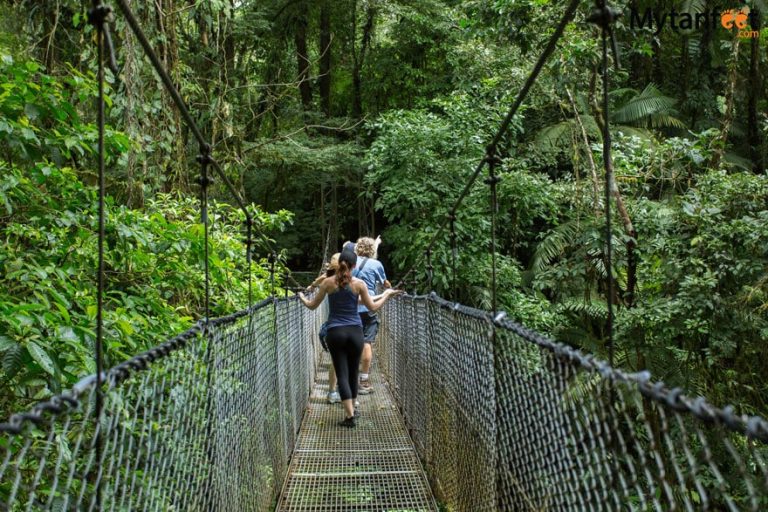
Travellers crossing a hanging bridge in the Costa Rica rainforest

More than two weeks

If you are lucky enough to have three weeks or more, Costa Rica rewards it. You can combine the north, the south and the Caribbean, spend real time in the national parks, and leave space for the kind of unplanned days that often become the best part of a trip. Longer stays also lend themselves to slower, lower-impact travel — something we are always happy to encourage.

How to decide what is right for you

A few questions usually settle it. How far are you travelling to get here, and does a long flight justify a longer stay? Do you want to tick off the highlights or sink into one or two places? Are you travelling with children, who need a gentler rhythm? And what time of year are you coming — the season affects which regions are at their best, which we cover in our month-by-month guide to visiting Costa Rica. The right answer is the one that matches your pace, not someone else’s itinerary.

The mistakes we gently talk people out of

The most common one is trying to fit too much in. Five regions in ten days looks thorough on a spreadsheet and feels exhausting in real life. The second is underestimating transfer times, so half the holiday disappears into the car. The third is leaving no margin at all — no free afternoons, no room for a spontaneous day. A good itinerary needs to breathe.

Let us build it around you

There is no single correct answer to how long you need — only the right length for your trip. That is exactly what we do: we take your dates, your interests and your pace, and shape an itinerary that fits. Tell us roughly how long you have, and we will tell you honestly what is realistic and what we would prioritise. You can start your tailor-made Costa Rica trip or simply get in touch, and we will take it from there.


Trusted Expertise and Strong Partnerships – CRS Tours, Your Reliable Travel Companion
Save Travels CRS Tours
Instituto Costarricense de Turismo
Certificación de sostenibilidad turística
Corcovado foundation
Tripadvisor Travelers Choice Awards 2025 - CRS Tours
Code of conduct CRS Tours
essential costa rica
Global ethics
Pack for a purpose
Hours

Monday to Saturday: 8:00am – 5:00pm

Costa Rica Time = GMT-6
(Central Standard Time, no daylight saving)

Contact Info

Email: 
contact@crstours.com

Toll-Free number from the US:
+1 (800) 431-0137

Phone Costa Rica: 
+506 4001-7794

WhatsApp: 
+506 6108-3327

© 2026 CRS Tours S.A., Costa Rica. All Rights Reserved.
Website developed by César Otárola - OtarolaPhoto.com

Request a call back