


Guanacaste, Costa Rica
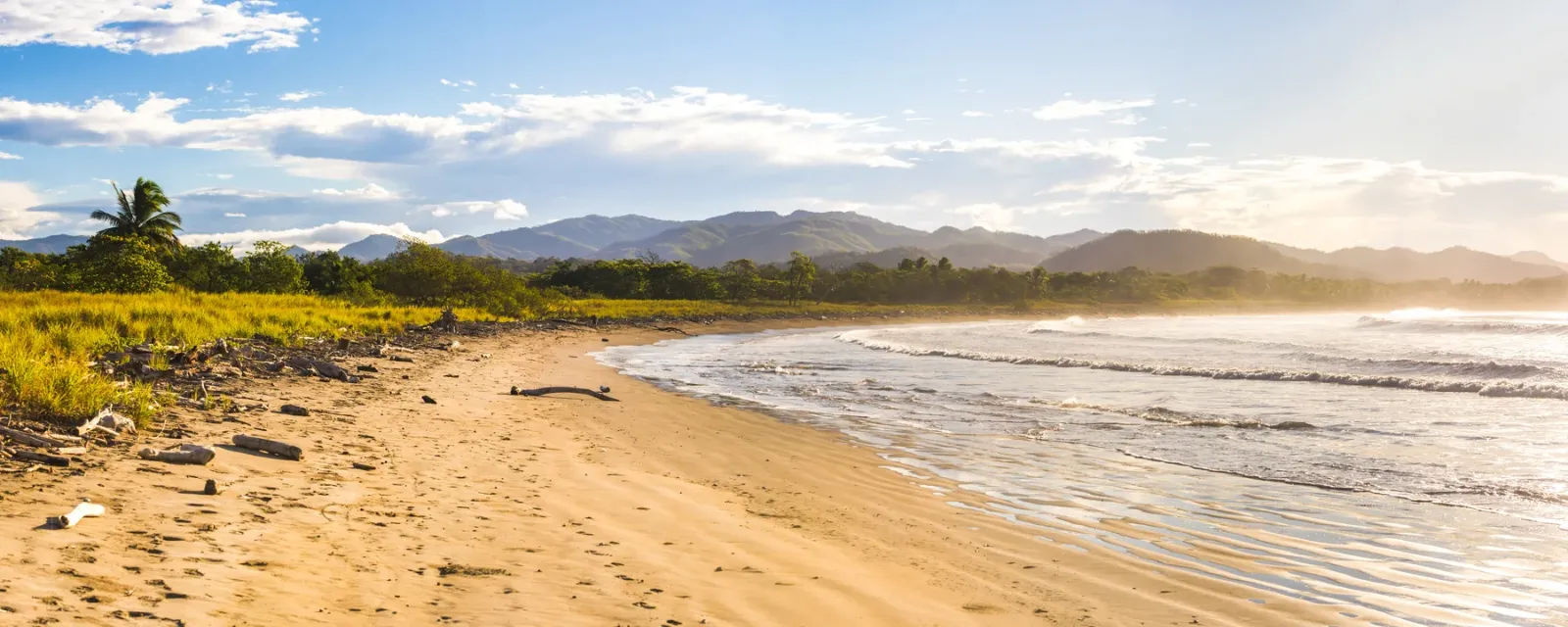
Guanacaste has the driest, most reliable weather in Costa Rica and the country’s best sunsets.
Guanacaste is the north-west corner of Costa Rica: dry forest, cattle country and a long Pacific coastline with more good beaches than any other province. It is where most people go when they want sun they can count on.
It is also the easiest region to reach. Liberia airport is about half an hour from the northern beaches, which saves you the four-hour drive from San José. If your trip is short, or you are ending on the coast, flying in or out of Liberia is usually worth it.
What Guanacaste is not is jungle. The forest here is tropical dry forest – it drops its leaves in the dry season and turns brown, then explodes green within days of the first May rains. If you have come to Costa Rica mainly for rainforest and wildlife, pair Guanacaste with Arenal or the south rather than making it the whole trip.
The beaches
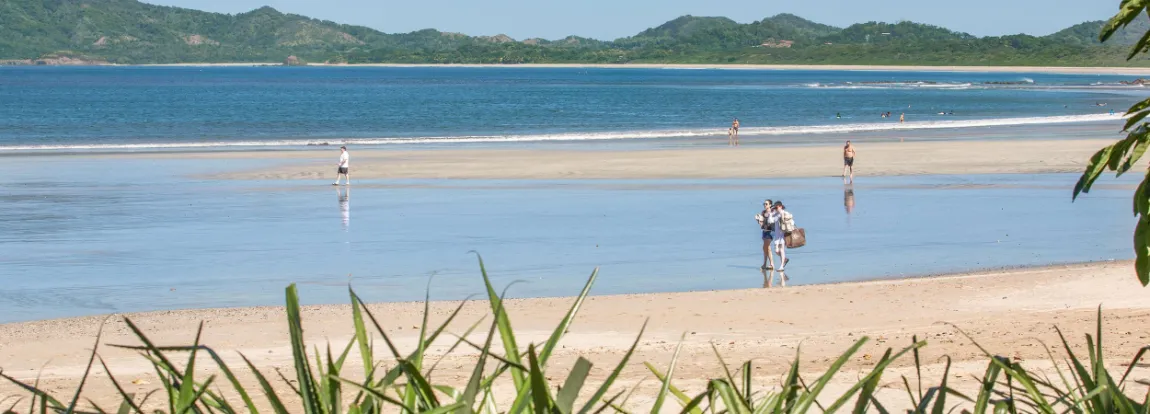
Tamarindo
The busiest beach town in the province, and the easiest place to learn to surf. Plenty of restaurants and a proper evening. If you want quiet, we place you just outside it – Langosta and Avellanas are ten minutes away and far calmer.
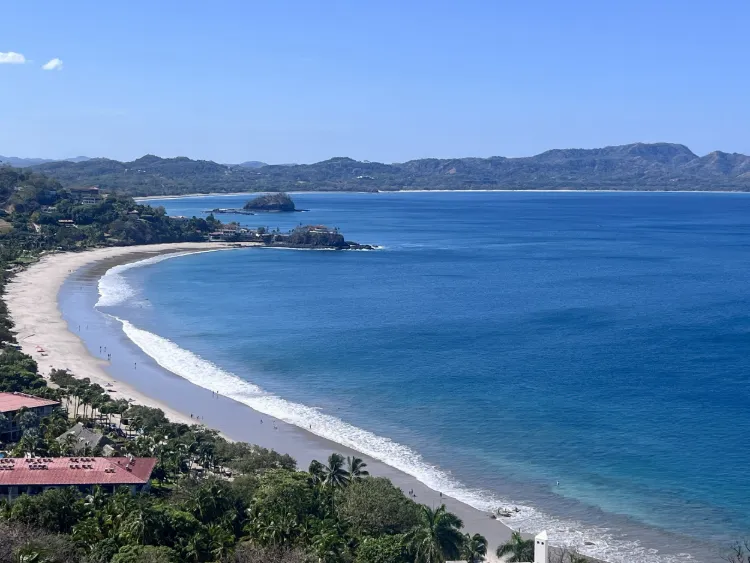
Playa Conchal and Flamingo
Conchal is made of crushed shell rather than sand, which makes the water an unusually clear blue. Flamingo, next door, is the sailing and sport-fishing base. Both are calmer than Tamarindo and better for swimming.
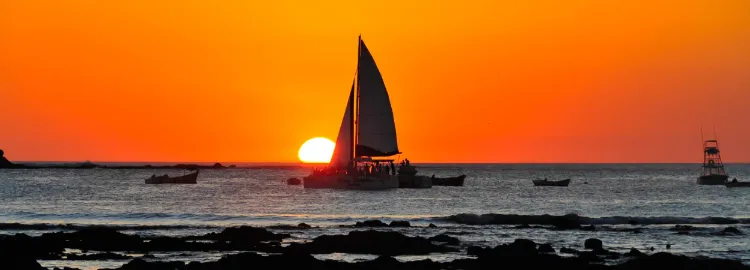
Papagayo and Playa Hermosa
Sheltered bays in the far north, twenty-five minutes from Liberia airport. The water is calm almost year round, which makes this the best stretch for swimming, snorkelling and families who do not want surf.
The Nicoya Peninsula
South of Tamarindo the coast road runs out and the peninsula begins. Nosara and Santa Teresa are the surfing and yoga end of Costa Rica – smaller, slower, a little harder to reach, and much loved by the people who go. Montezuma, on the southern tip, is smaller again.
Getting around Nicoya takes longer than the map suggests. Several stretches are gravel and a few river crossings close after heavy rain, so we build the driving times realistically rather than optimistically.
The peninsula is also one of the world’s Blue Zones, one of a handful of places where people routinely live past ninety.
Inland: volcanoes, dry forest and hot springs
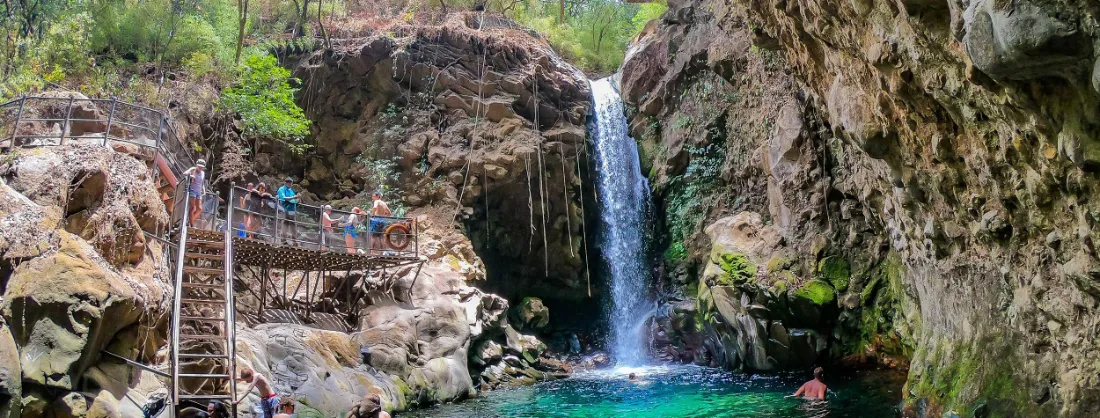
Rincón de la Vieja National Park sits an hour inland from Liberia: an active volcano with mud pots, steam vents, waterfalls and a good half-day of walking. It is the antidote to a week of beach.
Santa Rosa National Park, further north, protects the largest remaining stretch of tropical dry forest in Central America, and is one of the better places in the country to see wildlife in the dry season simply because the trees have no leaves to hide behind.
Río Perdido, on the flank of the Miravalles volcano, has a thermal river running through a canyon. It appears in several of our itineraries and is one of the places guests write to us about afterwards.
Where we put people
These are hotels we book ourselves rather than a list copied from a brochure. Every one of them can be swapped for something simpler or grander.
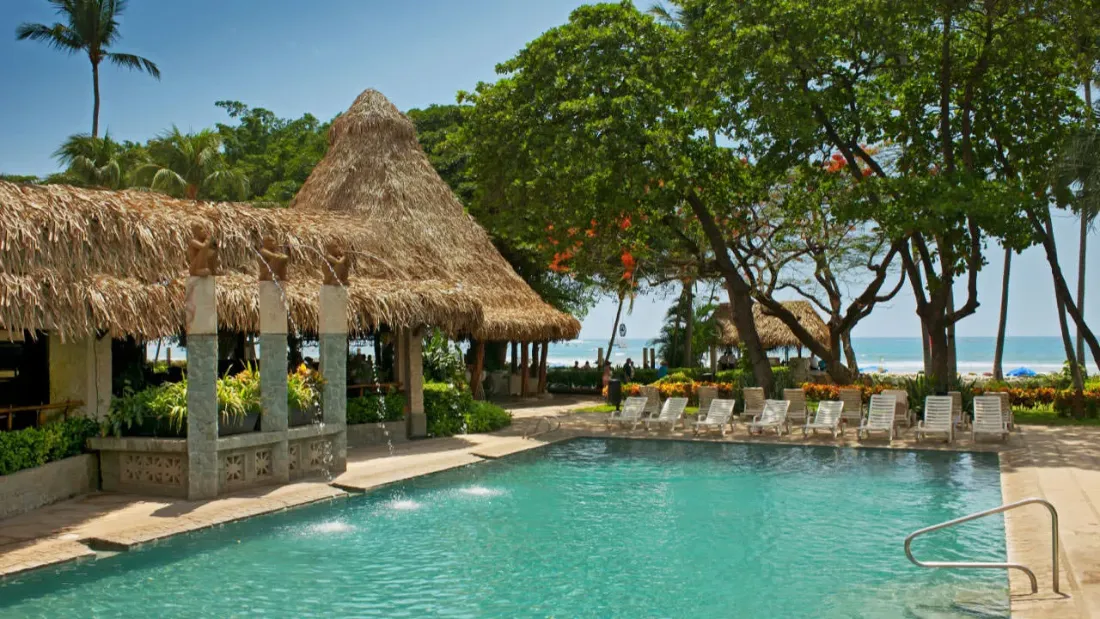
- Cala Luna Boutique Hotel & Villas, Tamarindo – villas a short walk from the beach, quiet, good for couples and small families.
- Rio Perdido, Guanacaste highlands – thermal river, canyon, and almost nobody else there.
- Papagayo and Playa Hermosa – the widest choice at the top end, from beach hotels to full resorts, all within half an hour of Liberia airport.
- Nosara and Santa Teresa – smaller boutique hotels and surf lodges, best if you are staying at least four nights, since getting there takes half a day.
Honestly, when to come
December to April is the dry season and here that means genuinely dry – often not a drop for weeks. It is also the busiest and priciest, and the landscape turns brown.
May to August is our own favourite. The province turns green, the rain usually comes as an afternoon shower rather than a day of it, and prices drop.
September and October are the wettest. Guanacaste stays drier than the rest of the Pacific coast in these months, so if you are travelling then, this is often where we send you.
Practical notes
Getting there. Liberia airport serves the northern beaches directly – twenty-five minutes to Papagayo, about an hour to Tamarindo. From San José it is four to five hours by road, or a forty-minute domestic flight. Nosara and Santa Teresa take longer than the distance suggests.
How many nights. Three is enough to unwind if you are ending a trip here. Five or more if the beach is the point rather than the reward.
A rental car helps in Guanacaste more than anywhere else, because the good beaches are spread out and the interesting inland bits are an hour away. If you would rather not drive, we use private transfers and arrange excursions with a driver.
Sun. It is hotter and drier here than the rest of the country, routinely in the mid-thirties in March and April. Plan the walking for early morning.
Trips that include Guanacaste
Everything we run is built from scratch, so treat these as starting points rather than fixed departures. They are real routes that spend proper nights in this region, not just a night near the airport.
- 8-Day Costa Rica Family Tour — in and out of Liberia, with Arenal and Monteverde first and three nights on the Guanacaste coast at the end. The shortest way to combine volcano, cloud forest and beach.
- Secret Trails of Costa Rica — eleven days taking in Rincón de la Vieja, then three nights at Nosara on the quieter side of the Nicoya Peninsula.
- Costa Rica Diving & Adventure — three nights at Flamingo for the diving off the Catalinas, then on to Monteverde and Drake Bay.
- Voices of the Forest — a birding route that finishes with two nights at Rancho Humo on the Tempisque, the dry-forest side of Guanacaste most visitors never see.
Talk to someone who lives here
Tell us roughly when you want to travel and what the rest of your trip looks like, and we will tell you honestly how many nights Guanacaste is worth for you – and whether it belongs at the start or the end. There is no charge for a proposal.
Trips built around a theme: honeymoons · birdwatching · diving · tailor-made trips