

Food and Drink in Costa Rica: Gallo Pinto, Casado and Coffee
Most people book Costa Rica for the volcanoes and the rainforest. Food rarely makes the brochure. Yet it is almost always one of the things travellers keep talking about afterwards, usually with some surprise, because nobody expected much of it beforehand.

The cooking here is mild. No fiery peaks, no complicated sauces. Rice, beans, vegetables, fruit, fish. If you only eat in hotels for the first few days, you quickly assume that is all there is. That changes the moment you sit down in a village restaurant, or cross over to the Caribbean side, where everything is cooked with coconut and suddenly tastes like another country.
Gallo pinto: how every day starts
Breakfast is warm and it is the same every morning: gallo pinto. Rice and black beans go into the pan together with onion, red pepper and coriander, and the cooking liquid from the beans stains the rice a greyish brown. Hence the name, spotted rooster.
Alongside it you usually get a fried egg, a warm tortilla, a spoonful of natilla and a few slices of fried ripe plantain. Natilla is a thin sour cream, milder than the soured creams you know at home. And there will be a bottle of Salsa Lizano on the table. That sauce is hard to describe: brown, faintly sweet and sour, somewhere in the direction of Worcestershire sauce but gentler. Ticos put it on everything. Take a bottle home, it is the best souvenir you will ever find in a supermarket.
On the Caribbean coast the same dish is called rice and beans and the rice is cooked in coconut milk. Same base, different world.
For the record: Nicaragua claims gallo pinto as well. That argument has never been settled and is cheerfully kept alive on both sides of the border.
The casado and the soda
If you eat only one thing in Costa Rica, make it the casado. Rice, beans, a salad of cabbage and tomato, fried plantain, often a scoop of picadillo made with chayote or potato, and next to it chicken, fish, pork or beef. The name means married man. The idea behind it: everything neatly together on one plate, the way a wife used to send her husband off to work.
You eat it in a soda. That is not a soft drink but a small neighbourhood restaurant. Six tables, a blackboard with the dish of the day, mother in the kitchen. Sodas are the smartest thing you can do with your travel budget and just about the only place where you sit among the people who actually live there.
Go between twelve and two. Lunch is the main meal here. In the evening many families eat lightly and most sodas are closed.
What else to try
Olla de carne is the Sunday stew. Beef simmered for hours with yuca, corn on the cob, chayote, carrot and squash. Often you get the broth first and the meat afterwards.
Sopa negra is black bean soup with a poached egg in it. Sounds heavy, is not.
Chifrijo is on the menu in almost every bar: rice, beans, crisp fried pork and pico de gallo in a bowl, with tortilla chips on the side. Meant to be shared, usually not shared.
Ceviche here is made with corvina, cured in lime juice with onion and coriander. Milder than the Peruvian version, and it often arrives with crackers, which takes a moment to get used to.
Patacones are green plantain, flattened and fried twice. On the coast they come with almost everything, along with a black bean dip.
And around Christmas everything revolves around tamales. Corn dough with meat and vegetables, steamed in banana leaf. Families make a hundred of them in a single afternoon. If you are offered one, say yes.
The Caribbean coast cooks differently
Puerto Viejo and Cahuita are in the same country but cook in another tradition. The Afro-Caribbean community brought coconut, ginger and thyme with them, and you taste it in the first bite.
Rice and beans is the base, with a whole chilli simmered in for aroma without making the dish hot. Rondon is the Sunday dish, from the English run down: fish or meat slowly thickening in coconut milk with root vegetables. It takes hours, so order it a day ahead. Pati is a savoury pastry parcel with Jamaican roots, handy on the road. Pan bon is a dark, lightly sweet bread with cheese and fruit baked into it.
Drink agua de sapo with it, a lemonade of ginger, lime and raw cane sugar. The name means toad water. It tastes better than that.
Guanacaste runs on corn
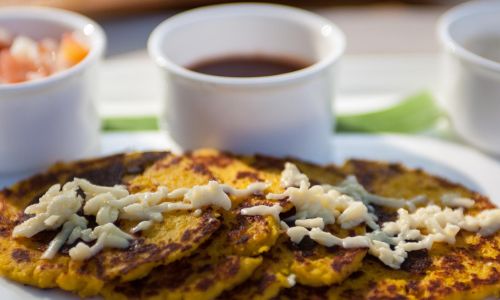
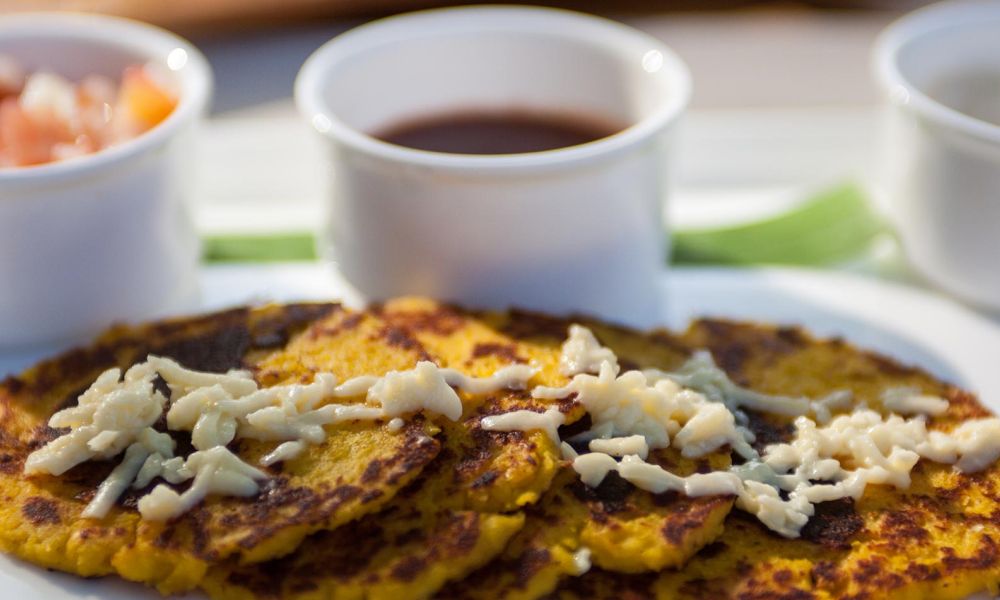
In the dry northwest tortillas are still made by hand and baked on a clay griddle. Ask for chorreadas, thick pancakes of fresh sweetcorn, served with natilla. Arroz de maiz is a hearty corn porridge with chicken, proper country food. Along the road you will find stalls selling cajetas, sweet blocks of milk and sugar, and rosquillas, hard corn biscuits that only become edible once you dunk them in your coffee.
Fruit you have never heard of
Mango, papaya and pineapple you know. It gets interesting after that.
Mamon chino is a hairy red ball you squeeze open; inside is something between a lychee and a grape. Guanabana is creamy and slightly sour and works best in a shake. Cas is a small green guava, quite sharp, usually served as a drink. Pejibaye is a boiled palm fruit that tastes more like potato than fruit. You buy it in a bag at the roadside with a blob of mayonnaise on top, and it is exactly as odd as it sounds.
The best place to see all of this is the feria del agricultor, the farmers market held in almost every town on Saturday morning. Go early. By nine the best of it is gone.
Coffee
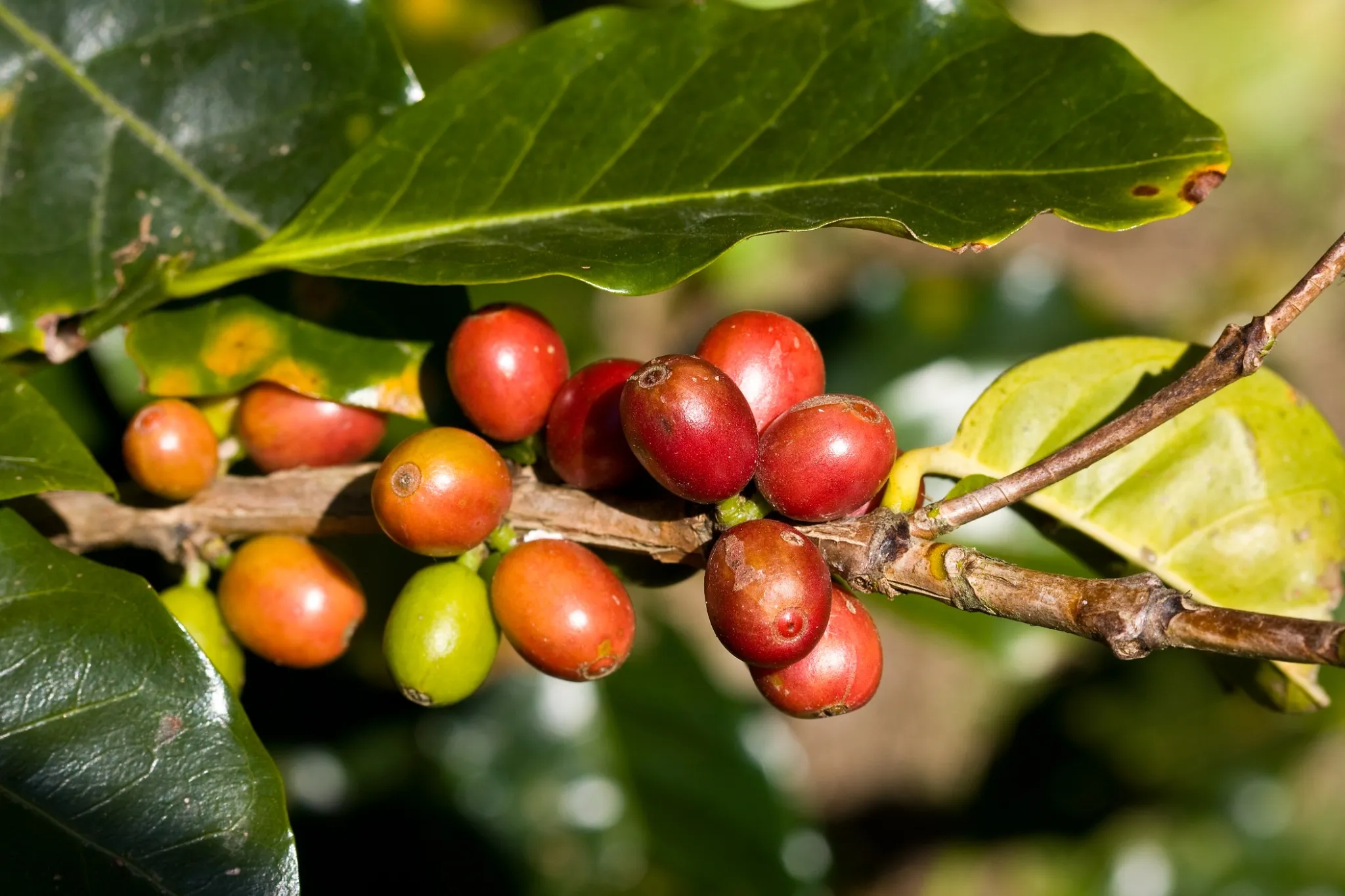
Coffee built this country. In the nineteenth century Costa Rica was the first in Central America to trade it seriously, and the proceeds paid for the National Theatre in San Jose, among other things. A law still in force allows arabica and nothing else.
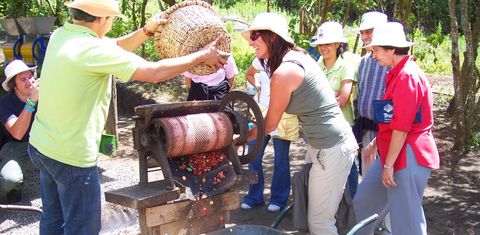
Tarrazu is the best known region, south of the capital, where the beans ripen slowly at altitude. Beyond that there is the Central Valley, Tres Rios, Naranjo, Orosi and the area around Monteverde. Half a day on a finca is, to my mind, one of the better outings on any tour. You walk through the bushes, see the beneficio where the beans are hulled and dried, and taste at the end why a light roast is something entirely different from what sits in your cupboard at home.
At home Ticos brew their coffee with a chorreador, a wooden stand holding a cotton sock through which you pour hot water. They cost almost nothing and fit in a suitcase. You order either cafe negro or cafe con leche; with the latter the hot milk usually arrives separately.
Cacao
On the Caribbean side cacao is what coffee is in the highlands. Bribri and Cabecar families have grown it for centuries and now give tours on their own land. You see the pods growing straight out of the trunk, taste the white pulp around the beans that is surprisingly fresh, smell the fermentation boxes and grind a portion yourself on a stone at the end. After that you look at a supermarket bar rather differently.
What to drink
Ask for a batido or a refresco natural: fruit in the blender, with water or with milk. Add sin azucar if you would rather not have three spoons of sugar, because they go in as standard. Agua dulce is hot water with dissolved cane sugar, the drink of the coffee pickers. Horchata is a rice drink with cinnamon.
Beer is Imperial or Pilsen, and around San Jose and the coastal towns there is a decent craft beer scene by now. The national spirit is guaro, distilled from sugar cane, usually the Cacique brand. The favourite shot is chiliguaro: guaro with tomato juice, lime and tabasco, ice cold and down in one. If you want to take something home, a Costa Rican rum such as Centenario is a better choice than the guaro.
Vegetarian, vegan, allergies
Vegetarians have an easy time here. Rice, beans, vegetables, egg and fruit are the core of the cooking. Ask in a soda for a casado vegetariano and nobody will make a fuss. Vegan works too, just watch the natilla and the cheese, so add sin queso, sin natilla. Places like Nosara, Santa Teresa, Monteverde and Puerto Viejo have proper vegan restaurants.
With a gluten allergy you are fine on corn tortillas, rice and beans. Do have your allergy written on a card in Spanish; in practice that works better than explaining. Nuts and peanuts barely appear in the traditional kitchen.

Practical notes
Tap water is fine to drink in most of the country and tastes perfectly good. In a few remote coastal towns filtered water is better, and your accommodation will tell you so without being asked. Bring a refillable bottle.
Your bill usually already includes 13 percent tax and 10 percent service. An extra tip is therefore not required. Those who are happy round up. For guides and drivers it is different, there a tip is customary.
The food is not spicy. If you want heat, ask for salsa picante or for the jar of fermented chillies that is often on the table.
Three phrases you will need. Buen provecho you say to anyone who is eating, including strangers you walk past. La cuenta, por favor is the bill, please. And que me recomienda will almost always get you something better than the menu.
How we build this into a trip
Food is the shortest route into a country. We make sure you do not end up in hotel restaurants for the whole trip. A morning on a coffee finca, a cacao visit with a Bribri family, a cooking class in a village, or simply a guide who knows which soda in which town is worth stopping for. Those are often the stories that stay with people.
Plan your trip to Costa Rica and request a personal, tailor-made proposal with no obligation.