There are some things about Costa Rica that many travelers do not know before arriving. Some are cultural, some are practical, and others simply explain why this small country feels so different from many other destinations.
So, if you are planning a trip to Costa Rica, here are a few useful and curious facts that may help you understand the country a little better.
Why are Costa Ricans called Ticos?
Costa Ricans often call themselves Ticos and Ticas. “Tico” is used for men and “Tica” for women.
It is not a formal word, but it is used with pride. You will hear it everywhere: in conversations, in advertising, in tourism, in sports and in everyday life.
The word is also connected to the friendly and relaxed way Costa Ricans speak Spanish. In Costa Rica, people often use diminutives like “momentico” or “cafecito,” and that way of speaking became part of the country’s identity.
How do last names work in Costa Rica?
Costa Ricans usually have two last names.
Traditionally, the first last name came from the father and the second from the mother. For example, if the father’s first surname is Rodríguez and the mother’s first surname is Mora, the child would commonly be registered as Rodríguez Mora.
A wife does not automatically take her husband’s last name after marriage. In daily life, some people may use their spouse’s name socially, but legally each person keeps their own surnames.
In recent years, Costa Rica also moved toward more flexibility in the order of surnames, allowing people to choose the order rather than making the father’s surname first by default. Source: AP News
Why do radio stations play the Costa Rican national anthem?
Costa Ricans have a strong sense of national identity, and the national anthem is part of daily culture.
For many years, radio stations played the anthem early in the morning, usually around 7:00 a.m. In public schools, it is also common for students to sing it during civic events and special national celebrations.
The National Anthem of Costa Rica is called “Noble patria, tu hermosa bandera.” Its music was first adopted in 1852, and the lyrics became official later. Source: Encyclopaedia Britannica / National Anthem reference
What does Pura Vida mean?
Pura Vida literally means “pure life,” but in Costa Rica it means much more than that.
You can use it to say:
“Hello.”
“I’m fine.”
“Everything is good.”
“Thank you.”
“Goodbye.”
“No problem.”
So, if someone asks you “¿Cómo está?”, you can simply answer “Pura Vida.”
It is not just a phrase for tourists. Costa Ricans really use it in everyday life, and it reflects a relaxed, positive and friendly way of seeing things.
How big is Costa Rica?
Costa Rica is a small country, but it has a lot packed into a compact territory.
The country has an area of about 51,100 km², which makes it slightly larger than Switzerland. Source: United Nations Costa Rica Country Facts
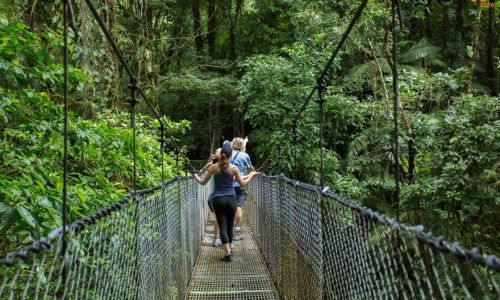
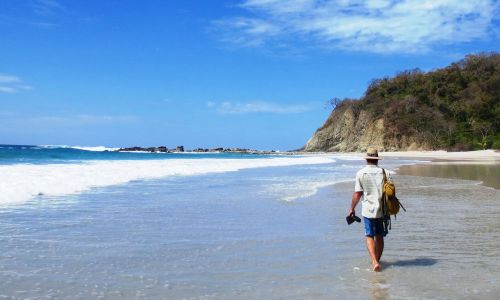
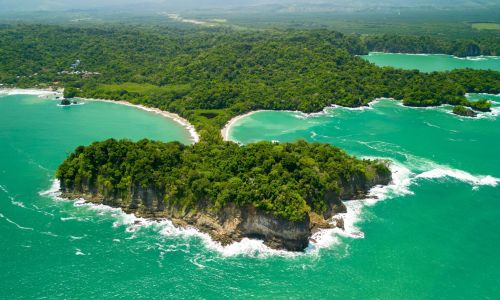
Even with its small size, Costa Rica has coastlines on both the Pacific Ocean and the Caribbean Sea. That means travelers can experience beaches, volcanoes, rainforests, cloud forests, rivers and mountains without needing long domestic flights.
Why is Costa Rica so biodiverse?
Costa Rica is one of the most biodiverse countries in the world.
Although it represents only a tiny portion of the planet’s surface, Costa Rica is home to around 6% of the world’s biodiversity, according to the official tourism board. Source: Visit Costa Rica
That is one of the main reasons why travelers come here for wildlife, birdwatching, rainforest hikes, national parks and nature photography.
You can find monkeys, sloths, toucans, hummingbirds, frogs, sea turtles, whales and hundreds of bird species, depending on the region and season.
Read about Responsible Tourism in Costa Rica.
What is a “soda” in Costa Rica?
In Costa Rica, a soda is not only a soft drink. It is also the name for a small local restaurant.
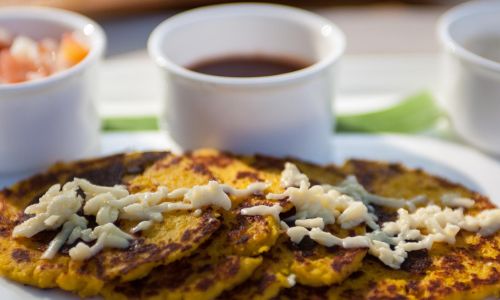
Sodas are usually simple, casual and affordable. They are one of the best places to try traditional Costa Rican food without paying tourist-restaurant prices.
What food can you eat in a Costa Rican soda?
Costa Rican food is usually based on rice, beans, vegetables, plantains, salad and a protein such as chicken, beef, pork, fish or eggs.
Common dishes include:
Casado: rice, beans, salad, plantains and a protein.
Gallo pinto: rice and beans mixed together, often eaten for breakfast.
Olla de carne: a traditional beef and vegetable soup.
Arroz con pollo: rice with chicken, vegetables and spices.
Chifrijo: rice, beans, pork, pico de gallo and tortilla chips.
A simple tip: if a soda is full of locals, that is usually a good sign.
Does Costa Rica have an army?
No. Costa Rica does not have a standing army.
After the 1948 civil war, Costa Rica made the historic decision to abolish its army. This was later formally included in the 1949 Constitution, which states that the army as a permanent institution is outlawed. Source: UNESCO Memory of the World
This is one of the facts Costa Ricans are most proud of. Instead of maintaining a permanent army, the country has focused heavily on education, health, democracy and conservation.
What are speed bumps called in Costa Rica?
Speed bumps are very common in Costa Rica, especially near schools, towns, residential areas and rural roads.
Many people call them “muertos,” which literally means “dead people” in Spanish. The name is informal, but you will hear it often.
Some of them are painted yellow, some are not very visible, and some can feel surprisingly high. So, when driving in Costa Rica, it is better to slow down before entering small towns or areas with pedestrians.
Is it normal to see someone with a machete in Costa Rica?
Yes, especially in rural areas.
A machete is not necessarily a weapon in Costa Rica. For many farmers and workers, it is a basic everyday tool. It is used for cutting grass, working on farms, cleaning paths, harvesting, cutting banana plants or working in coffee plantations.
So, if you see someone walking with a machete in the countryside, it is usually nothing to worry about.
Why is Costa Rica famous for eco-tourism?
Costa Rica is one of the world’s most recognized eco-tourism destinations.
The country protects around a quarter of its territory through national parks, biological reserves, wildlife refuges and other protected areas. The official tourism board states that the National System of Conservation Areas protects about 25% of the national territory. Source: Visit Costa Rica
This is why Costa Rica is such a good destination for travelers who want nature, wildlife and outdoor experiences without feeling too far from comfortable hotels and professional tourism services.
Why is the Nicoya Peninsula famous?
The Nicoya Peninsula is famous because it is considered one of the world’s Blue Zones.
A Blue Zone is an area where people tend to live longer and healthier lives. In Costa Rica, this includes several cantons in Guanacaste, such as Nicoya, Santa Cruz, Carrillo, Hojancha and Nandayure. Source: Visit Costa Rica
Many people connect this longevity with a mix of lifestyle, food, family, community, physical activity, sunshine and the Costa Rican idea of “Pura Vida.”
What does “rojo” mean in Costa Rica?
In Costa Rica, a rojo means a 1,000 colones bill.
The word “rojo” means “red,” and it is used because the 1,000 colones banknote has traditionally been associated with that color.
So, if someone says something costs “cinco rojos,” it means it costs 5,000 colones.
It is useful to know this before visiting local restaurants, markets or small shops.
Why are addresses in Costa Rica so different?
Addresses in Costa Rica can feel unusual for visitors.
Instead of only using street names and numbers, many people still give directions based on landmarks, distances and turns.
For example:
500 meters north and 100 meters east from the old theatre, San José.
Or:
5 blocks north and 1 block east from the old theatre, San José.
A “cuadra” usually means a block, and people often estimate it as around 100 meters.
This system can sound confusing at first, but locals are very used to it. Hotels, tour operators and transportation companies usually provide clearer directions, map links or GPS coordinates.
What is “María” in a Costa Rican taxi?
In Costa Rica, the taxi meter is commonly called “María.”
If you take an official taxi, especially in San José or the Central Valley, it is a good idea to check that the María is turned on before the trip starts.
If the driver does not turn it on, you can politely ask:
“¿Puede poner la María, por favor?”
This means: “Can you turn on the meter, please?”
Official taxis in Costa Rica are usually red, with a yellow triangle on the door. In some beach towns or rural areas, fares may be agreed in advance, but in cities the meter is normally expected. Source: Costa Rica Guide
Final thoughts
Costa Rica is easy to enjoy, but it becomes even more interesting when you understand the small details behind the culture.
Words like Tico, Pura Vida, rojo, soda or María may seem simple, but they help you connect with the country in a more natural way.
And that is part of what makes traveling in Costa Rica so special. It is not only about volcanoes, beaches, rainforests and wildlife. It is also about the people, the way they speak, the way they give directions, the way they eat, and the way they live everyday life with a little more Pura Vida.